


Hey there! As a supplier of UHMWPE Tailings Tubing, I often get asked how this amazing tubing resists impact. Well, let's dive right into it.
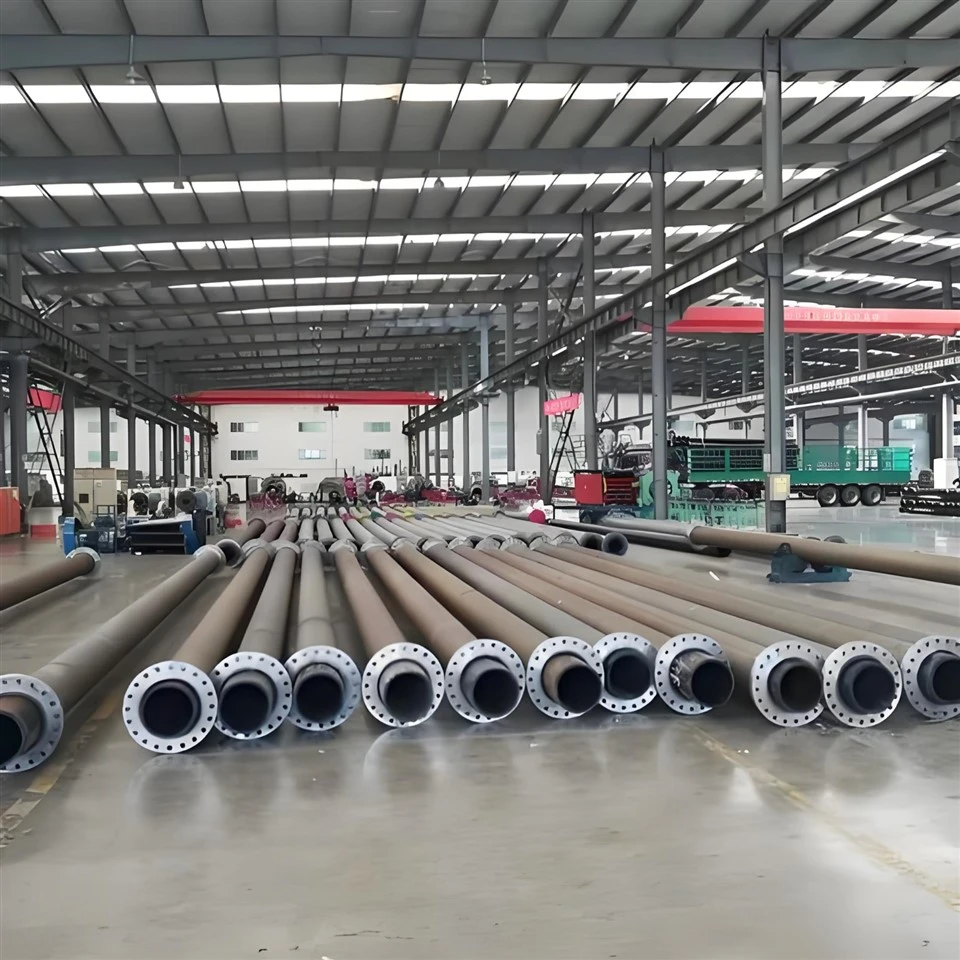

First off, what is UHMWPE? UHMWPE stands for Ultra-High Molecular Weight Polyethylene. It's a thermoplastic polymer with an extremely high molecular weight. In simple terms, it's a super - tough plastic. And when it comes to tailings tubing, this toughness is a game - changer.
One of the key factors in UHMWPE Tailings Tubing's impact resistance is its high molecular weight. The long chains of molecules in UHMWPE are entangled in a way that gives the material a lot of strength. When an impact occurs, these long chains can stretch and absorb the energy of the impact. Instead of breaking immediately, the tubing deforms slightly, spreading the force over a larger area. This is like a football player wearing a padded suit. The padding spreads the force of a tackle, reducing the chance of injury. Similarly, the molecular structure of UHMWPE spreads the impact force, protecting the tubing from cracking or shattering.
Another aspect is the low coefficient of friction of UHMWPE. This means that when tailings or other abrasive materials flow through the tubing, there's less friction between the material and the inner wall of the tubing. With less friction, there's less wear and tear on the tubing. And a well - maintained inner wall is better able to resist impacts. Think of it like a well - polished car. A polished car is less likely to get scratched when something hits it lightly, and the same principle applies to UHMWPE Tailings Tubing.
UHMWPE also has excellent ductility. Ductility is the ability of a material to deform under tensile stress without breaking. When an impact happens, the tubing can stretch and bend to some extent. This stretching allows the tubing to absorb the shock energy. It's like a rubber band. When you pull a rubber band, it stretches instead of snapping right away. UHMWPE Tailings Tubing can do a similar thing when faced with an impact, which helps it stay intact.
Now, let's talk about how these properties compare to other types of pipes. For example, HDPE Mortar Pipe. HDPE (High - Density Polyethylene) is also a popular material for pipes. However, its molecular weight is lower than that of UHMWPE. This means that HDPE pipes are generally not as good at resisting impacts as UHMWPE Tailings Tubing. HDPE pipes may crack or break more easily when subjected to high - energy impacts.
In the mining industry, where tailings are often transported under high pressure and with a lot of force, the impact resistance of UHMWPE Tailings Tubing is crucial. Tailings can contain large particles and sharp objects that can cause significant damage to ordinary pipes. But UHMWPE Tubing can handle these challenges. It can withstand the constant flow of abrasive tailings and occasional impacts from large rocks or other debris.
The production process of UHMWPE Tailings Tubing also plays a role in its impact resistance. During manufacturing, the tubing is carefully extruded or molded to ensure a uniform molecular structure. Any defects or inconsistencies in the structure could weaken the tubing and make it more prone to impact damage. By using advanced production techniques, we can produce tubing with a consistent and high - quality molecular arrangement, which further enhances its ability to resist impacts.
Moreover, UHMWPE Tailings Tubing has good chemical resistance. In the mining environment, tailings may contain various chemicals. These chemicals can corrode ordinary pipes over time, weakening them and making them more vulnerable to impacts. But UHMWPE is resistant to many chemicals, so it maintains its strength and integrity even in harsh chemical environments. This chemical resistance, combined with its impact resistance, makes it a reliable choice for long - term use in tailings transportation.
If you're in the market for pipes for tailings transportation, you might also consider UHMWPE Abrasion Resistant Pipe. This type of pipe shares many of the same properties as UHMWPE Tailings Tubing. It has high impact resistance, low friction, and good chemical resistance. The main difference is that the Abrasion Resistant Pipe is specifically designed to handle highly abrasive materials. Whether you choose the Tailings Tubing or the Abrasion Resistant Pipe, you're getting a product that can stand up to tough conditions.
When it comes to installation, UHMWPE Tailings Tubing is relatively easy to handle. Its light weight compared to some other pipe materials makes it easier to transport and install. And because it's impact - resistant, there's less risk of damage during the installation process. This means less downtime and lower installation costs.
In addition to its physical properties, UHMWPE Tailings Tubing also has a long service life. This is a huge advantage for mining companies and other industries that rely on tailings transportation. A longer service life means less frequent pipe replacements, which saves money in the long run. And with its ability to resist impacts, the tubing can maintain its performance over an extended period.
If you're looking for a reliable solution for tailings transportation, UHMWPE Tailings Tubing is definitely worth considering. Its unique combination of high molecular weight, low friction, ductility, chemical resistance, and excellent production quality make it a top - notch choice for withstanding impacts.
So, if you're interested in learning more about UHMWPE Tailings Tubing or want to discuss your specific requirements for tailings transportation, don't hesitate to get in touch. We're here to help you find the best solution for your needs. Whether it's for a small - scale operation or a large - scale mining project, we can provide you with high - quality UHMWPE Tailings Tubing that will serve you well.
References:
- "Plastics in Engineering Applications" - A comprehensive book on the use of plastics in engineering, which includes detailed information on UHMWPE and its properties.
- Industry reports on mining pipe materials, which compare the performance of different types of pipes in tailings transportation.


