


As a supplier of Pe Pipe Elbow, I've been deeply involved in understanding the various aspects of these fittings, especially their acoustic performance. In this blog, I'll delve into what the acoustic performance of PE pipe elbows entails, its influencing factors, and its significance in different applications.
Understanding Acoustic Performance in PE Pipe Elbows
Acoustic performance refers to how well a material or a component can transmit, absorb, or reflect sound waves. In the context of PE pipe elbows, acoustic performance is crucial as it can affect the overall functionality and user experience in piping systems.
PE (Polyethylene) is a widely used thermoplastic polymer known for its excellent chemical resistance, flexibility, and durability. When it comes to pipe elbows, which are used to change the direction of fluid flow in a piping system, the acoustic performance can impact the noise levels generated during fluid movement.
Sound Transmission
One of the key aspects of acoustic performance is sound transmission. When fluid flows through a PE pipe elbow, it can generate noise due to turbulence, friction, and changes in flow direction. The design and material properties of the PE pipe elbow play a significant role in determining how much of this noise is transmitted through the pipe and into the surrounding environment.
PE pipe elbows with smooth inner surfaces tend to reduce the generation of turbulent flow, which in turn reduces the noise levels. Additionally, the density and thickness of the PE material can also affect sound transmission. A denser and thicker PE pipe elbow can act as a better sound barrier, reducing the amount of noise that escapes from the pipe.
Sound Absorption
Sound absorption is another important factor in the acoustic performance of PE pipe elbows. When sound waves hit the inner surface of the pipe elbow, some of the energy can be absorbed by the material. PE materials have inherent sound - absorbing properties, but these can be enhanced through the addition of special additives or by modifying the internal structure of the pipe elbow.
For example, some advanced PE pipe elbows are designed with a porous inner layer that can trap sound waves and convert their energy into heat, thereby reducing the overall noise levels in the piping system.
Factors Influencing the Acoustic Performance of PE Pipe Elbow
Material Properties
The type of PE resin used in the manufacturing of the pipe elbow is a critical factor. High - density polyethylene (HDPE) is commonly used due to its higher strength and better chemical resistance compared to low - density polyethylene (LDPE). HDPE also generally has better acoustic performance because of its higher density, which helps in reducing sound transmission.
The molecular structure of the PE material can also influence acoustic performance. A more ordered molecular structure can result in a more uniform material, which may lead to better sound - absorbing and sound - insulating properties.
Design and Geometry
The design of the PE pipe elbow, including its radius of curvature and wall thickness, can significantly affect its acoustic performance. A larger radius of curvature can reduce the turbulence of the fluid flow, resulting in lower noise generation. On the other hand, a thicker wall can provide better sound insulation.
The shape of the elbow can also play a role. Elbows with a more gradual bend are less likely to cause sudden changes in flow direction, which can reduce the generation of noise.
Installation Conditions
The way the PE pipe elbow is installed can also impact its acoustic performance. Proper alignment and secure connection of the pipe elbow to the rest of the piping system are essential. Loose connections can lead to vibrations, which can generate additional noise.
The presence of supports and hangers along the pipe can also affect acoustic performance. Well - placed supports can reduce the movement of the pipe, thereby minimizing the noise generated by vibrations.
Significance of Acoustic Performance in Different Applications
Residential Plumbing
In residential plumbing systems, the acoustic performance of PE pipe elbows is of great importance. Quiet operation of the plumbing system is highly desirable to avoid disturbing the occupants of the house. PE pipe elbows with good acoustic performance can reduce the noise of water flowing through the pipes, such as the sound of running water in the bathroom or the kitchen. This can enhance the overall comfort of the living environment.
Industrial Applications
In industrial settings, the acoustic performance of PE pipe elbows can have a significant impact on the working environment. Piping systems in factories often carry fluids at high pressures and flow rates, which can generate a considerable amount of noise. By using PE pipe elbows with good acoustic performance, the noise levels in the workplace can be reduced, which is beneficial for the health and safety of the workers.
Moreover, in some industrial processes where the quality of the product can be affected by vibrations and noise, such as in precision manufacturing, the use of PE pipe elbows with excellent acoustic performance is crucial to ensure the stability of the process.
Comparing PE Pipe Elbows with Other Fittings
When comparing PE pipe elbows with other types of pipe fittings, such as HDPE Tee Fitting and HDPE Fusion Fittings, the acoustic performance can vary.

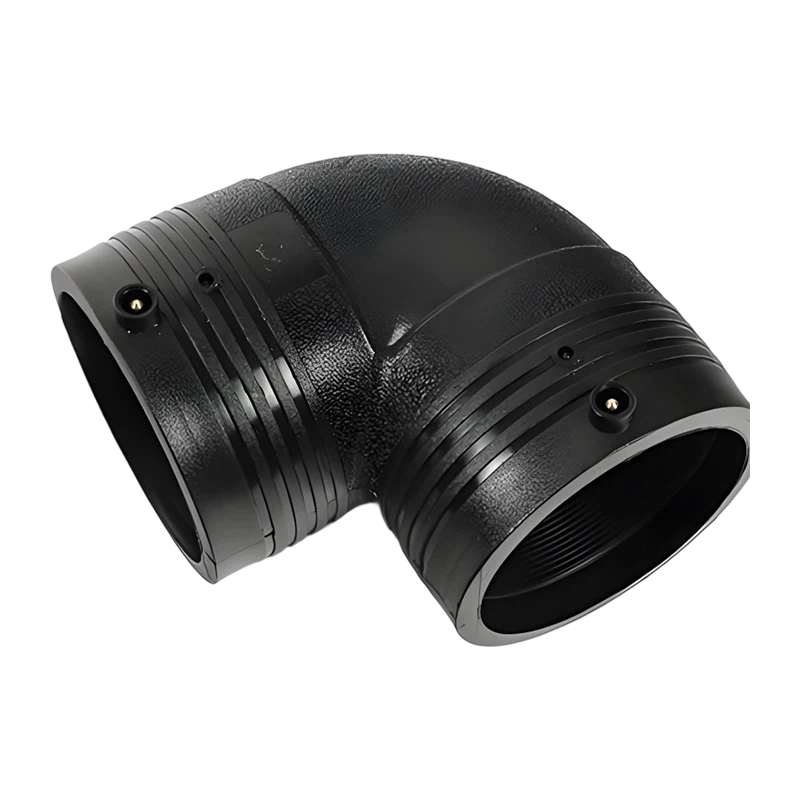
HDPE tee fittings, which are used to connect three pipes at a single point, may generate more noise due to the more complex flow patterns. However, if they are designed with similar acoustic - enhancing features as PE pipe elbows, such as smooth inner surfaces and appropriate wall thickness, they can also have good acoustic performance.
HDPE fusion fittings, which are joined together by heat fusion, can provide a more seamless connection compared to other types of fittings. This can reduce the chances of leaks and vibrations, which in turn can improve the acoustic performance of the overall piping system.
Improving the Acoustic Performance of PE Pipe Elbow
Material Selection and Modification
As mentioned earlier, choosing the right type of PE resin is crucial. In addition, manufacturers can modify the PE material by adding fillers or additives that can enhance its acoustic properties. For example, adding sound - absorbing particles to the PE resin during the manufacturing process can improve the sound - absorbing capacity of the pipe elbow.
Design Optimization
Designers can optimize the shape and dimensions of the PE pipe elbow to reduce noise generation. Computational fluid dynamics (CFD) simulations can be used to analyze the flow patterns inside the pipe elbow and make design adjustments accordingly. For example, adjusting the radius of curvature or the angle of the bend can help in reducing turbulence.
Conclusion
In conclusion, the acoustic performance of Pe Pipe Elbow is a complex but important aspect that needs to be considered in various piping applications. By understanding the factors that influence acoustic performance, such as material properties, design, and installation conditions, we can manufacture and install PE pipe elbows that offer excellent noise - reducing capabilities.
If you're in the market for high - quality PE pipe elbows with superior acoustic performance, I encourage you to reach out for a procurement discussion. We can work together to find the best solutions for your specific needs.
References
- "Plastic Pipes Handbook" by Berndt - Michael Fink
- "Fluid Mechanics and Hydraulic Machines" by R. K. Bansal
- Research papers on the acoustic properties of polyethylene materials in leading engineering journals.


