


Radiation resistance is a crucial property to consider when it comes to HDPE (High-Density Polyethylene) Tee Fittings, especially in various industrial and environmental applications. As a supplier of HDPE Tee Fittings, understanding the significance of radiation resistance can help our customers make informed decisions about the suitability of our products for their specific needs.
Understanding HDPE Tee Fittings
HDPE Tee Fittings are essential components in piping systems, used to connect three pipes at a 90-degree angle. They are widely favored for their strength, flexibility, corrosion resistance, and ease of installation. These fittings are commonly used in water supply systems, drainage systems, industrial pipelines, and even in some agricultural applications. The unique properties of HDPE make it an ideal material for these fittings, ensuring long - term performance and reliability.
What is Radiation Resistance?
Radiation resistance refers to the ability of a material to withstand the harmful effects of radiation. Different types of radiation, such as ultraviolet (UV) radiation from sunlight, gamma rays in nuclear environments, and X - rays in some industrial processes, can cause damage to materials. Exposure to radiation can lead to various issues, including material degradation, changes in mechanical properties (such as a decrease in strength and an increase in brittleness), and discoloration.
Radiation Resistance of HDPE Tee Fittings
HDPE has a reasonably good natural resistance to certain types of radiation. For instance, it has a certain level of resistance to UV radiation. When HDPE Tee Fittings are exposed to sunlight, they can maintain their integrity for an extended period compared to some other materials. However, over long - term exposure to intense UV radiation, some degradation may occur. The UV radiation can break the chemical bonds in the HDPE polymer chains, resulting in a loss of molecular weight and a reduction in mechanical properties.
To enhance the UV radiation resistance of HDPE Tee Fittings, additives are often incorporated during the manufacturing process. These additives, such as carbon black, act as a shield against UV rays. Carbon black can absorb and scatter UV radiation, preventing it from penetrating the material and causing damage. When the carbon black is evenly dispersed in the HDPE matrix, it significantly improves the long - term durability of the Tee Fittings in outdoor applications.
In the case of ionizing radiation, like gamma rays, HDPE's resistance is more limited. High - energy gamma rays can cause cross - linking and scission of the polymer chains in HDPE. Cross - linking occurs when the polymer chains become connected, which can increase the stiffness and hardness of the material. Scission, on the other hand, is the breaking of the polymer chains, leading to a decrease in molecular weight and a loss of mechanical properties.
The degree of damage caused by gamma rays depends on several factors, including the dose of radiation, the temperature during exposure, and the presence of oxygen. Higher radiation doses will cause more severe damage to the HDPE Tee Fittings. If the exposure occurs at elevated temperatures or in the presence of oxygen, the degradation process can be accelerated.
Importance of Radiation Resistance in Different Applications
Water Supply and Drainage Systems
In water supply and drainage systems, HDPE Tee Fittings may be installed above - ground or underground. When installed above - ground, they are exposed to sunlight, so having good UV radiation resistance is essential. If the fittings degrade due to UV exposure, they may develop cracks, leading to leaks in the system. This can result in water loss, damage to surrounding structures, and increased maintenance costs.
Industrial Pipelines
Industrial pipelines may be used in various environments, some of which may involve exposure to radiation. For example, in some chemical plants, there may be the presence of low - level radiation sources. If the HDPE Tee Fittings are not radiation - resistant enough, they can deteriorate over time, posing a risk to the safety and efficiency of the entire pipeline system.
Agricultural Applications
In agriculture, HDPE Tee Fittings are often used in irrigation systems. These fittings are usually exposed to the outdoor environment, which means they are constantly bombarded by UV radiation. Ensuring good radiation resistance can extend the service life of the irrigation system, reducing the need for frequent replacements and minimizing downtime.
Our Offering as a HDPE Tee Fitting Supplier
As a supplier of HDPE Tee Fittings, we take radiation resistance seriously. Our manufacturing process incorporates the latest technologies and high - quality additives to enhance the radiation resistance of our products. For outdoor applications, our HDPE Tee Fittings are formulated with a specific concentration of carbon black to provide excellent UV protection.
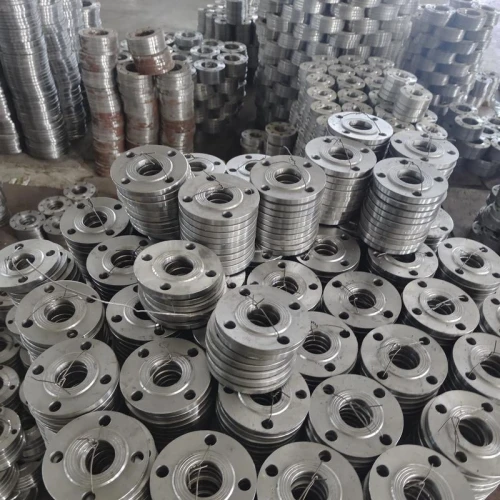

We also offer a range of other related pipe fittings that can complement our HDPE Tee Fittings. For example, we supply UPVC Industrial Series Flanges And Blocking Pipe Fittings. These UPVC fittings are known for their corrosion resistance and can be used in conjunction with HDPE Tee Fittings in certain industrial applications. Our UPVC Pipe Connection Fittings also provide a reliable solution for connecting pipes made of different materials. Additionally, we offer Carbon Steel Flange, which can be used in high - pressure and industrial pipeline systems where the strength of carbon steel is required.
Factors Affecting the Choice of HDPE Tee Fittings Based on Radiation Resistance
When customers are choosing HDPE Tee Fittings, they need to consider the following factors related to radiation resistance:
- Exposure Environment: Determine whether the fittings will be exposed to sunlight, ionizing radiation, or both. If it is an outdoor application, the focus should be on UV resistance. For applications in nuclear or industrial settings with radiation sources, the resistance to ionizing radiation becomes crucial.
- Expected Service Life: If a long - term service life is required, especially in high - radiation environments, the customer should choose HDPE Tee Fittings with enhanced radiation - resistant properties.
- Cost - Benefit Analysis: While radiation - resistant HDPE Tee Fittings may be more expensive, the cost of potential system failures due to radiation - induced degradation should be considered. In many cases, the initial investment in high - quality, radiation - resistant fittings can save significant costs in the long run.
Contact Us for Purchase and Negotiation
If you are in need of high - quality HDPE Tee Fittings with excellent radiation resistance, we are here to assist you. Our team of experts can provide detailed information about our products, help you choose the most suitable fittings for your specific application, and offer competitive pricing. We are committed to providing the best customer service and ensuring that your piping system runs smoothly and efficiently. Contact us today to start your procurement negotiation and find the perfect pipe fitting solutions for your project.
References
- Rodriguez, J., & Gomez, L. (2018). "Effects of Radiation on Polymer Materials". Polymer Science Journal, 25(3), 123 - 135.
- Patel, S., & Gupta, R. (2019). "Enhancing the Radiation Resistance of HDPE for Piping Applications". Industrial Polymer Engineering, 18(4), 201 - 210.
- Smith, A. (2020). "A Review of Polymer Degradation in Radiation Environments". Environmental Material Science, 30(2), 87 - 95.


