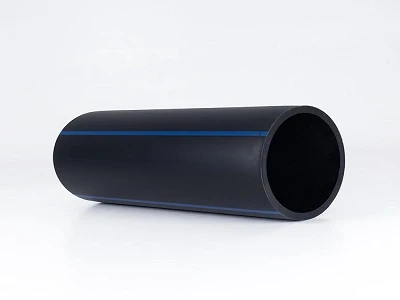
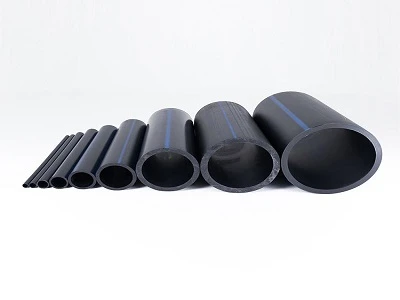
1. Medium-to-high pressure fluid transport
When system pressure exceeds what standard HDPE can economically handle (e.g., >1.0–1.6 MPa), PSP pipes become attractive.
Steel layer → provides high hoop strength
Inner/outer plastic layers → prevent corrosion and scaling
Typical uses:
Urban water supply trunk lines
Industrial pressurized pipelines
Firefighting systems
2. Corrosive or chemically aggressive environments
If you're dealing with water or fluids that would corrode carbon steel - but you still need structural strength - PSP offers a hybrid solution.
Inner PE layer isolates the fluid
Steel core avoids deformation or creep issues
Typical uses:
Chemical plant pipelines
Seawater or reclaimed water transport
Mine water systems
3. Situations requiring long-term dimensional stability
Compared to HDPE, PSP pipes have:
Lower thermal expansion coefficient
Better resistance to creep deformation
This matters when:
Temperature fluctuates significantly
Pipeline alignment must remain stable (e.g., above-ground installations)
4. Retrofit or replacement of steel pipelines
PSP pipes are often used when upgrading old steel systems because they:
Maintain similar pressure ratings
Eliminate internal corrosion issues
Reduce maintenance costs
Typical uses:
Old municipal steel pipe replacement
Industrial pipeline rehabilitation
5. Projects demanding both rigidity and moderate flexibility
PSP pipes sit between rigid steel and flexible plastics:
More rigid than HDPE → better for straight runs and pressure systems
Still lighter and easier to install than steel
6. Environments where oxygen permeability must be minimized
Unlike pure PE pipes, the steel layer acts as a barrier:
Reduces oxygen ingress
Helps protect downstream equipment (e.g., pumps, boilers)
When NOT to choose PSP pipes
It's just as important to rule them out:
Highly abrasive slurry transport → choose UHMWPE instead
Large-diameter, low-pressure systems → HDPE is more cost-effective
Frequent bending or trenchless coiling → PSP is less flexible
Ultra-corrosive external environments without proper coating → steel core can still be a risk