


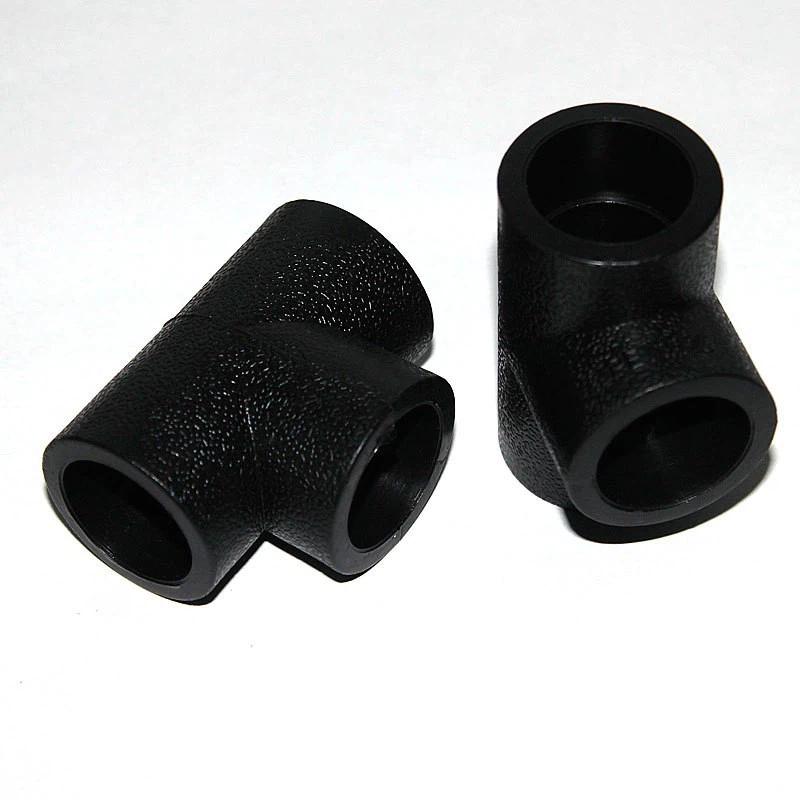


Why Choose HDPE Tee Fittings?
Let me tell you straight-HDPE tee fittings aren't just some boring pipe part you grab because you have to. They're the kind of solution that makes you think, "Why didn't I use these sooner?" Imagine a fitting that doesn't flinch when it's up against acids, alkalis, or those gnarly organic solvents-stuff that'd eat through metal like a rusty nail through cardboard. Even the most caustic fluids? They just bounce off HDPE.
And let's talk about metal, shall we? We've all seen those old metal fittings-they start out fine, then a few years go by, and suddenly they're rusted, leaky, and ready to quit. HDPE? It stays solid for decades, like that reliable tool in your garage that never lets you down. This isn't just about "durability"-it's about peace of mind. No last-minute runs to replace a broken fitting, no crew sitting around waiting because a part failed, no project getting pushed back because of something preventable. That's the good stuff right there.
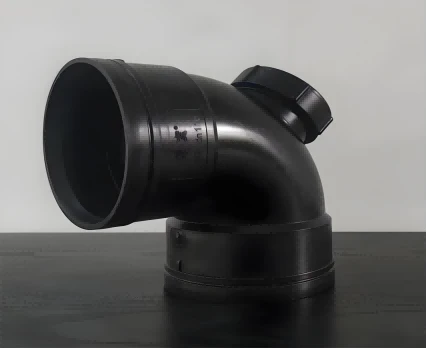
But wait, there's more. These fittings are tough as hell-like, "drop a tool on it and it just laughs" tough. Accidental bumps? Shifting dirt from a storm? A sudden spike in fluid pressure that'd crack regular parts? HDPE doesn't care. And here's the kicker: it's light. Like, 70% lighter than steel. No need to rent a crane just to move a few fittings, no sore backs for your team hauling heavy stuff around, and shipping costs that won't make you stare at your budget and sigh.
Pair that with fusion welding? Oh, you're golden. The joints are so smooth, so tight, they might as well be one piece of pipe-no leaks, no headaches later. If your project's all about getting things done right and not messing with the planet? HDPE tees aren't just an option. They're the kind of choice that makes you feel smart, now and down the line.
Product Specification
|
Category |
Details |
|
Size |
20~315 |
|
Wall Thickness (mm) |
DN20~DN315 |
|
Working Pressure (MPa) |
0.6~1.6 |
|
Material Grade |
PE80;PE100; |
|
Operating Temperature (℃) |
-40~60 |
|
Tensile Strength (MPa) |
≥20 (PE80), ≥22 (PE100) |
Product Properties
Let's get real about HDPE's chemical resistance-this isn't "meh, it holds up okay" stuff. It's "dump industrial wastewater on it, douse it with agricultural chemicals, and it still looks like new" tough. No corrosion, no falling apart, no giving in. It outlasts the harsh stuff, plain and simple.
And that light weight? It's not just a nice-to-have-it's a money-saver. Less weight means cheaper shipping (who doesn't love that?), and easier installation means your crew isn't wasting hours fighting with heavy parts. They can get the job done faster, and faster usually means cheaper, too.
Then there's fusion tech-you pair HDPE with that, and you get joints that lock in quick and stay locked. No fumbling with tricky connections, no worrying if it'll hold. These joints stick around for years, taking whatever the world throws at them without breaking a sweat.
Let's chat resilience, too. Ever had a pipe crack because of a sudden bump or a weird pressure spike? With HDPE, that's a non-issue. It handles shocks and impacts like a pro-no cracked pipes, no system shutdowns, even when something goes wrong. And leaks? Forget about 'em. Fusion-welded joints erase that risk entirely.
Oh, and the lifespan? Up to 50 years when you use 'em right. That's not just a product-that's an investment. You buy these once, and you don't have to think about replacing them for decades. That's the kind of reliability that makes your job easier, year after year.
Application
Here's the thing about HDPE tee fittings: they shine where other parts die. Think about the gross, sludge-filled channels of city water systems-metal rusts there, regular plastic cracks. HDPE? It's fine. Industrial plants with all those corrosive fluids that eat through everything else? HDPE doesn't bat an eye. Even the baking hot, dry fields where farmers water crops-temperatures that make other fittings brittle? HDPE stays strong.
Soil contaminants? Doesn't care. Harsh industrial liquids? Nope. Sweltering heat? Nada. It proves its worth over and over, in places where other parts just can't hack it.
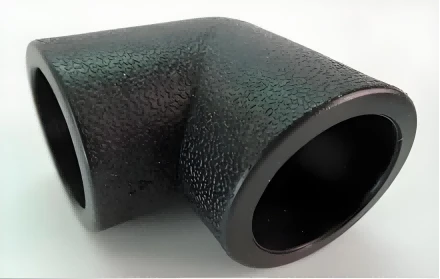
City engineers swear by these for drinking water and wastewater-and for good reason. They're nontoxic, no lead, and they meet standards like NSF/ANSI 61. When it comes to public health, you don't cut corners-and HDPE doesn't make you.
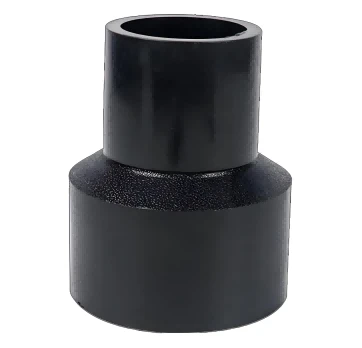
Farmers? They count on HDPE too. Irrigation water needs to get to crops evenly, even in soil that's super acidic or alkaline. Crops don't wait around for a faulty fitting to get fixed-HDPE makes sure the water flows, no matter what the dirt's like.
In industrial spots? Chemical plants, oil rigs, sewage treatment places-anywhere you've got aggressive fluids? HDPE's the go-to. It doesn't just work-it works when the pressure's on, when the stuff inside is harsh, when you can't afford a breakdown.
Even the weird, specific jobs love it. Moving coolant in treatment plants? Connecting pipes in fish farms that deal with salt water? Even fixing up household plumbing? HDPE fits right in. It barely needs any maintenance, it stays reliable year after year, and it helps build pipelines that're smarter and greener. One fitting at a time, it's making infrastructure better.
Physical Properties
|
Property |
Value / Description |
|
Density (g/cm³) |
0.94–0.96 (PE80), 0.95–0.97 (PE100) |
|
Abrasion Resistance |
Mass loss ≤0.05 g (per ASTM D4060 test); |
|
Coefficient of Friction |
0.2–0.3; |
|
Thermal Expansion Coefficient (10⁻⁵/℃) |
1.5–2.0 |
|
Water Absorption (%) |
≤0.01 |
QA & QC
We don't just "make" HDPE tee fittings-we build 'em like we're gonna use 'em ourselves. Quality starts way before we even fire up the machines. Every batch of HDPE (whether it's PE80 or PE100) gets put through the wringer first. Density has to be between 0.94 and 0.97 g/cm²-no ifs, ands, or buts. PE80? It's gotta hit that 20 MPa mark, every single time. No shortcuts, no exceptions. We want every lot to work like a charm, because if it's not good enough for us, it's not good enough for you.
Then the final fittings? They get even tougher tests. We crank up the pressure to 1.5 times the nominal value-and leave it there for a full hour. Not a single drop can leak. If it does? It doesn't leave our shop.
We freeze 'em, too-down to -40°C-and test how well they take a hit. Why? Because a fitting that cracks in the cold is useless when winter rolls around. We're not gonna let you deal with that.
Bonding strength? We check that, too. If the bond isn't as strong as the HDPE itself? It's out. No weak links allowed-your system's only as strong as its weakest part, and we don't do weak.
And every lot? It spends 7 days soaking in pH 2 and pH 12 solutions. The kind of stuff that'd break lesser fittings? We make sure HDPE handles it, easy.
This isn't just checking boxes. It's our word. When you buy our HDPE tee fittings, you're not just getting a part. You're getting something that'll work reliably, hold up for years, and stay consistent-no matter what the real world throws at it. That's the promise we stand behind.
Hot Tags: hdpe tee pipe fitting, China hdpe tee pipe fitting factory


