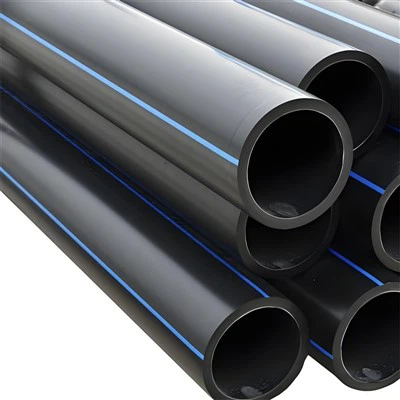
Polyethylene Pipes for Water Supply: Safety, Durability, Versatility - All in One Pipe
Water Safety That Speaks for Itself
Water is life - and the pipe that carries it? It better be trustworthy. Polyethylene Pipes for Water Supply are crafted from food-grade PE80/PE100 resin, checks every box for global drinking water standards: NSF/ANSI 61, WHO, EN 12201. No harmful gunk leaches into your water-zero, zip, none. And those ultra-smooth inner walls? They're like a non-stick pan for bacteria and scale, keeping water fresh and clean for decades. No buildup, no weird tastes, just pure H2O, every time.


Tough Enough to Outlast the Years (and the Elements)
These aren't your average pipes. Corrosion? Rust? Chemicals? They laugh them off - whether it's grungy soil, chlorine, or mineral-heavy water trying to wear them down. With a 50+ year lifespan, they're built to outlast the neighborhoods they serve, the farms they hydrate, the cities they grow with. But here's the kicker: they're flexible, too. Ground shifts? Freeze-thaw cycles? No problem. They bend instead of breaking, cutting down on those costly, headache-inducing repairs.
Installation That Saves Time, Money, and Sanity
Heavy lifting? Not with these. Polyethylene Pipes for Water Supply are lighter than a feather next to concrete - only 1/8 the weight. This means lower transport costs, fewer transport workers, 30 to 50 per cent savings, and the use of metals and cement. They are well integrated with non-excavation techniques: horizontal drilling, pipe bursting, without damaging lawns, roads and sidewalks. Simple, efficient and economical.

We've Got Your Back - Here's How
Pipes That Pass Boot Camp
Ever seen a pipe go through boot camp? Ours do. Every batch faces:
• Hydrostatic pressure tests? Pushed to 1.5x its working pressure - for 1000 straight hours.
• Impact tests at -20°C? Cold doesn't scare them.
• Dimensional checks? No cutting corners on size - none.
Certified by ISO 9001, ASTM D3035, AWWA C906 - with receipts, from raw material to finished pipe. You get the full story, every time.
Logistics That Keep Your Project On Track
Small diameters (≤63mm) come coiled on metal reels, swaddled in protective wrap - no kinks, no scrapes. Larger ones (≥75mm) ship as 6m/12m straight lengths, perched on wooden pallets with end caps to keep gunk out. We partner with global logistics pros, so you get them in 5–10 days internationally, 2–5 days domestically. No delays, no excuses.
The Perks That Make These Pipes Stand Out - Basic Specs
|
Parameter |
Details |
|
Nominal Diameter |
16mm – 1200mm (we'll customize for big projects, no problem) |
|
Wall Thickness |
2.3mm – 80mm (varies by SDR: SDR11 for high pressure, SDR17 for medium) |
|
Length |
6m/12m (straight); 50m/100m (coiled, small diameters) |
|
Material |
PE80/PE100 (food-grade HDPE/MDPE resin - safe, plain and simple) |
|
Working Pressure |
0.6MPa – 1.6MPa (depends on SDR and diameter) |
|
Connection Methods |
Butt fusion, electrofusion, mechanical couplings (flanges, compression) |
They Do It All
Whether it's quenching homes, weaving through city mains, hydrating rural towns, irrigating farmland, or fueling industrial lines - Polyethylene Pipes for Water Supply rise to the task. Harsh environments? They thrive. Coastal areas (salt? No sweat), deserts (UV rays? Bring 'em on), cold climates (freezes? They flex, not crack) - no place is too tough.
Why They Beat the Rest
- Metal pipes? Rust, corrode, turn into leaky messes. These? Stay smooth, strong, no drama.
- PVC pipes? Crack under pressure, especially in cold. These? Bend, bounce back, keep going.
- Concrete pipes? Need cranes to move, get clogged with roots. These? Easy to handle, root-proof - no blockages, ever.
And they're green, too: 100% recyclable at the end of their long life. Fusion joints seal tight - no leaks, which means less water waste. Perfect for water-scarce spots.
Tips to Keep Them Going Strong
Installation Hacks
• Fusion (butt or electrofusion)? Use certified gear and pros who know their stuff. Goal: joints stronger than the pipe itself. Heat? 180–200°C for HDPE - no guesswork.
• Trench install? Bury at least 600mm deep (or below the frost line in cold spots) with sand/gravel bedding. No sharp rocks - they're not fans.
• Trenchless? Test the soil first. Hidden rocks or debris? They can scratch the pipe - avoid that.
Maintenance? Barely Needed
• Above-ground pipes? Check once a year for UV damage. If they're in direct sun, slip on a protective sleeve - easy fix.
• Hard water areas? Flush the system now and then to clear sediment. Keeps flow smooth.
• Keep 'em away from strong solvents (gasoline, etc.) and open flames-they melt around 120°C. Common sense, really.
We're With You, From First Query to Final Install
Before You Buy
• Free samples? Sure - just cover freight. Test 'em out, see for yourself.
• Our tech team? They'll help pick the right diameter, SDR, and connections for your project. No guesswork, just answers.
• Custom lengths? We've got you. Even project-specific designs (like pressure drop math for long mains).
After You Buy
• 30-day returns on unopened, unused pipes. Change your mind? No hard feelings.
• Warranties? 10 years for home use, 15 for municipal/industrial. We stand by our pipes.
• 24/7 tech support? Call anytime if installation hits a snag. We've got your back.
FAQs
Q: Hot water?
A: They handle cold to warm (up to 40°C). For 60°C+, go with PPR pipes - they're better for that.
Q: Max pressure?
A: Up to 1.6MPa (SDR11) for small diameters (≤110mm) - tough enough for high-pressure city mains.
Q: Work with existing metal pipes?
A: You bet. Transition fittings (brass-to-PE adapters) make retrofits a breeze.
Polyethylene Pipes for Water Supply aren't just about moving water - they're about moving it safely, reliably, and sustainably. For 50+ years, and then some. Because when it comes to water, good enough isn't enough.
Hot Tags: polyethylene pipes for water supply, China polyethylene pipes for water supply factory