CPVC vs UPVC: Key Differences Explained
1. Material Composition
UPVC (Unplasticized Polyvinyl Chloride)
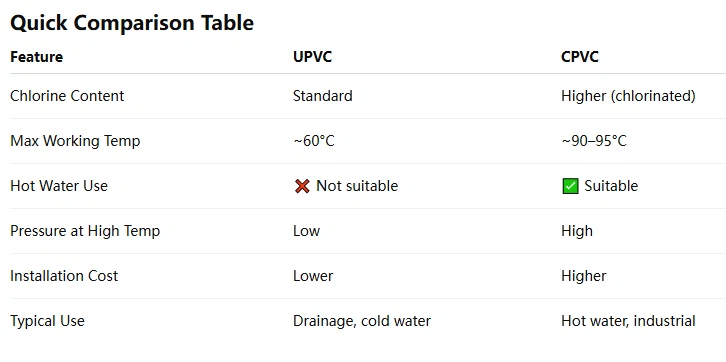
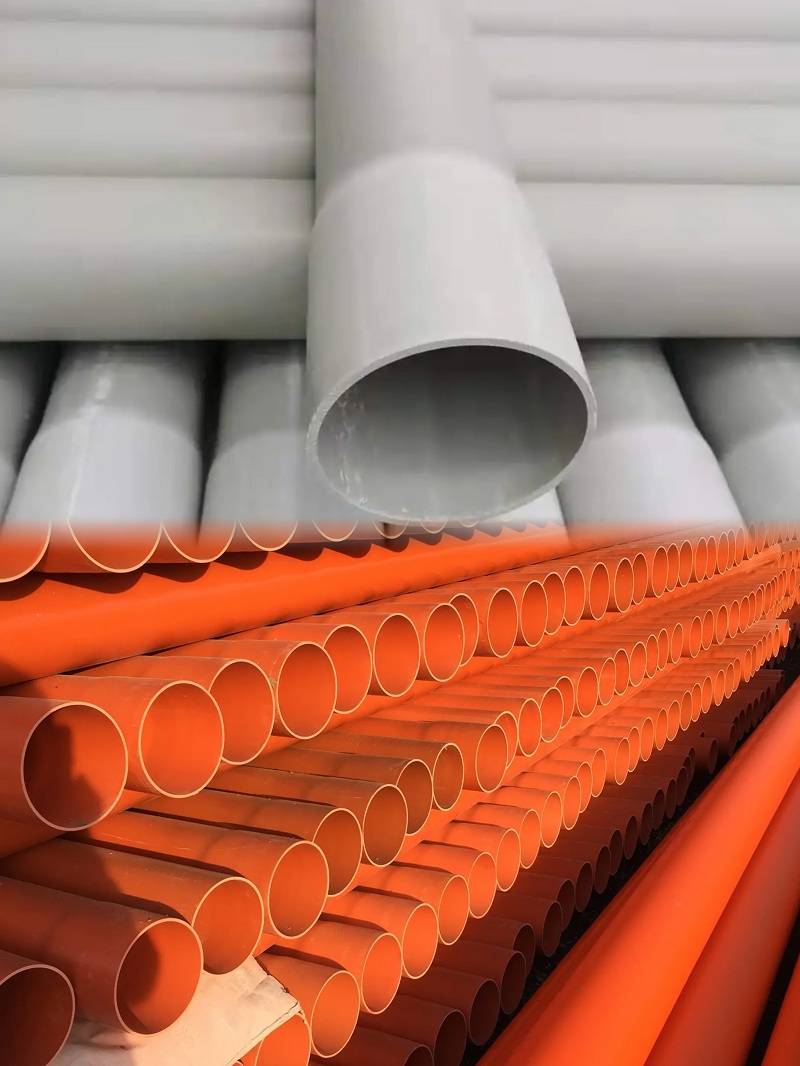
Rigid PVC without added plasticizers. It offers high mechanical strength and good chemical resistance but limited heat tolerance.
CPVC (Chlorinated Polyvinyl Chloride)
PVC that has undergone additional chlorination, increasing its chlorine content. This modification significantly improves heat resistance and pressure performance.
2. Temperature Resistance
UPVC:
Maximum continuous operating temperature is typically ≤ 60°C (140°F).
CPVC:
Can handle continuous temperatures up to 90–95°C (194–203°F), making it suitable for hot water systems.
➡ Key difference: CPVC is designed for high-temperature applications, while UPVC is not.
3. Pressure Rating
UPVC:
Higher pressure ratings at lower temperatures, but pressure capacity decreases rapidly as temperature rises.
CPVC:
Maintains stronger pressure performance at elevated temperatures due to its enhanced molecular structure.
4. Installation and Joining
UPVC:
Joined using standard PVC solvent cement; installation is simple and cost-effective.
CPVC:
Requires CPVC-specific solvent cement formulated to handle higher temperatures and pressure.
5. Chemical and Corrosion Resistance
Both CPVC and UPVC provide excellent resistance to corrosion, scaling, and many chemicals.
CPVC offers better resistance to hot corrosive fluids and certain industrial chemicals.
6. Typical Applications
UPVC Applications:
Cold water supply systems
Drainage and sewer pipelines
Irrigation systems
Electrical conduit and cable protection
CPVC Applications:
Hot and cold water plumbing
Residential and commercial hot water systems
Industrial fluid handling at elevated temperatures
Fire sprinkler systems (where approved)
7. Cost Comparison
UPVC: More economical and widely used for standard applications.
CPVC: Higher material and installation cost due to enhanced performance.