Introduction
A mine drainage pipeline can gradually lose hydraulic performance without developing a visible leak.
One possible reason is buildup on the internal wall.
Mine water may contain dissolved salts, minerals, suspended particles, or other substances that can accumulate inside a pipeline. Over time, deposits can reduce the effective flow area and change the internal surface.
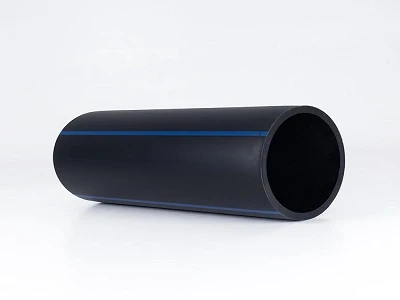
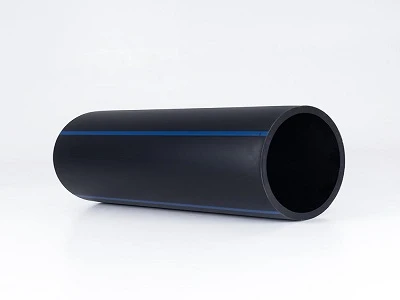
For an HDPE Mining Pipe, the polyethylene inner wall has a smooth surface and relatively low adhesion. This can help reduce the tendency of certain deposits to attach firmly to the pipe wall.
That makes the internal surface an important consideration when selecting an HDPE mine drainage pipe for long-term mine water service.
Mine Water Can Leave Deposits Behind
Not all drainage water is chemically or physically clean.
Water from underground workings can contain dissolved minerals and salts. Depending on the mine geology and water chemistry, deposits may gradually form on the inside of a drainage pipeline.
The problem may start slowly.
The pipe continues to carry water, but the internal surface becomes rougher or the available flow area becomes smaller.
As buildup continues, hydraulic resistance can increase.
This is one reason the internal condition of a long HDPE drainage pipe deserves attention during material selection.
HDPE Does Not Create a Rust Layer
There is an important difference between HDPE and steel.
Steel exposed to corrosive mine water can gradually develop corrosion products on the internal surface. The pipe wall itself can also lose material over time.
HDPE does not rust.
The polyethylene wall is inherently resistant to many acids, alkalis, salts, and other chemicals encountered in mine water, subject to actual chemical concentration and temperature.
For an HDPE pipe for mine water, this means the pipeline does not develop the steel-type corrosion layer that can progressively change the internal surface.
That is valuable in chemically aggressive drainage systems.
Smooth Is Not the Same as Anti-Scaling
It is tempting to simply describe HDPE as an "anti-scaling pipe."
That would be too broad.
HDPE has a smooth, low-adhesion surface, which can reduce the tendency of some materials to stick to the wall. But actual scale formation depends on the chemistry of the water.
pH, dissolved minerals, temperature, concentration, suspended solids, and flow conditions can all affect deposition.
Therefore, HDPE anti-scaling pipe should not be treated as a claim that scaling is impossible.
The more accurate point is that the polyethylene surface provides less opportunity for certain deposits to firmly attach compared with rough, corroded, or heavily deteriorated internal surfaces.
Why Internal Deposits Matter in Long Drainage Lines
A short drainage line may tolerate some buildup without creating an immediate operating problem.
Long mine drainage systems are different.
A small change in internal diameter can become more meaningful over a long pipeline.
Deposits can increase surface roughness.
Flow resistance can change.
The available flow area can decrease.
Maintenance may become necessary.
In an underground mine, cleaning a long drainage pipeline is rarely as simple as cleaning a short exposed pipe.
This is where the long-term surface condition of an HDPE dewatering pipe becomes relevant.
Low Adhesion Can Help Maintain the Internal Surface
The polyethylene surface of HDPE has relatively low surface energy and low adhesion compared with many conventional materials.
For mine water applications, this characteristic can make it more difficult for certain deposits and contaminants to firmly attach to the pipe wall.
The benefit is not that the pipe remains perfectly clean under every condition.
Instead, the internal surface is less likely to develop the heavily corroded and rough condition associated with aging metal pipe.
For long-term HDPE pipe for mining, this can contribute to more stable internal flow conditions.
Water Chemistry Still Matters
The pipe material should not be selected without understanding the mine water.
A buyer considering HDPE mine drainage pipe should provide information such as pH, dissolved salts, chemical composition, temperature, suspended solids, and operating pressure.
This is especially important when the water contains unusually high concentrations of minerals or chemicals.
HDPE provides strong chemical resistance in many mine water environments, but chemical compatibility should still be verified against the actual medium.
This is a more reliable approach than assuming that every type of mine water will behave the same way.
Where This HDPE Advantage Is Most Useful
The low-adhesion inner surface is particularly relevant to mine water and drainage systems that need to operate for long periods with limited access for maintenance.
Typical applications include underground mine drainage, mine dewatering, mine water transfer, and buried water pipelines.
It can also complement another important HDPE characteristic: the smooth inner wall.
The smooth surface helps maintain favorable hydraulic conditions, while the low-adhesion nature of polyethylene can reduce the tendency for certain deposits to accumulate on the surface.
These are related advantages, but they are not exactly the same.
HDPE Mining Pipe Parameters
|
Parameter |
Typical Specification |
|
Material |
HDPE |
|
Nominal Diameter |
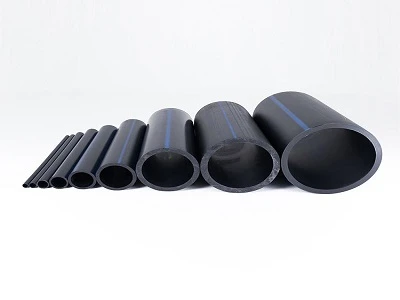
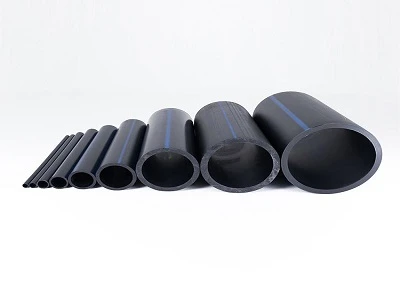
DN50–DN1200 |
|
Pressure Range |
PN1.0–PN10 |
|
Standard Length |
9 m / 12 m |
|
Connection |
Butt Fusion / Electrofusion |
|
Applications |
Mine Drainage, Mine Water, Dewatering |
|
Installation |
Underground / Buried / Surface |
For chemically aggressive or mineral-rich mine water, actual water chemistry and operating temperature should be checked before final material selection.
What Should Buyers Look At?
For an HDPE Mining Pipe used in mine water service, the question is not simply whether the pipe is resistant to deposits.
The buyer should consider what is actually inside the water.
If the mine water contains dissolved salts, minerals, or suspended solids, the potential for buildup should be considered together with flow rate, pipe diameter, operating temperature, and pipeline length.
The condition of the internal surface matters because maintenance becomes more difficult as the pipeline gets longer and more inaccessible.
A pipe that resists corrosion and provides a low-adhesion inner surface can reduce some of these long-term concerns.
FAQ
Does HDPE pipe prevent scaling?
No pipe material can guarantee that all scaling will be prevented. HDPE provides a smooth, relatively low-adhesion inner surface that can reduce the tendency of certain deposits to adhere to the wall.
Does HDPE rust in mine water?
No. HDPE does not rust or produce steel-type corrosion products inside the pipeline.
Is HDPE suitable for mineral-rich mine water?
HDPE can be suitable for many mine water applications involving dissolved salts and minerals. The actual chemical composition, concentration, temperature, and operating conditions should be checked.
Is smooth HDPE suitable for abrasive slurry?
Smoothness and wear resistance are different properties. Standard HDPE may be suitable for mine water and drainage, but severe abrasive slurry requires a pipe specifically selected for high wear resistance.
Conclusion
Internal buildup is a long-term issue that can be overlooked when selecting a mine drainage pipe.
HDPE does not rust, and its polyethylene inner surface has low adhesion and a smooth finish. These characteristics can help reduce certain forms of deposit buildup and maintain a more stable internal surface in mine water systems.
For underground drainage and dewatering, where pipeline maintenance can be difficult, this can be a useful advantage.
The actual performance still depends on the mine water chemistry and operating conditions, but for many HDPE Mining Pipe applications, the condition of the inner wall is one of the reasons HDPE remains a practical choice for long-term mine water service.
Request an HDPE Pipe Quotation
|
Step |
Process |
Details |
|
1 |
Send Requirements |
DN, pressure, medium, working temperature and application |
|
2 |
Specification Confirmation |
Pipe type, material grade, pressure rating, wall thickness/SDR and connection |
|
3 |
Quotation |
Price, lead time, packing and shipping terms |
|
4 |
Order & Production |
Contract, payment and production |
|
5 |
Inspection & Delivery |
Quality inspection and shipment |
For HDPE Mining Pipe, Send Us:
DN + PN/SDR + Medium + Working Temperature + Installation Method + Pipeline Length + Quantity
For mine drainage and dewatering applications, please also provide:
Application + Working Pressure + Installation Environment
For mineral-containing mine water, if available:
Water Chemistry / pH + Temperature + Suspended Solids
Luoyang Zhengju New Materials Technology Co., Ltd.
WhatsApp: +86 19937270645
Email: baibaili456@gmail.com
WeChat: +86 19937270645
Get Best Price for Your HDPE Mining Pipe.