Introduction
In mine drainage, the pump is often blamed when the required flow is not reached at the discharge point.
But the pump is not working alone.
Water has to travel through the entire pipeline, and a long drainage line creates resistance along the way. The longer the pipe and the higher the flow rate, the more attention needs to be paid to what happens inside the pipe.
The internal surface is one part of the problem.
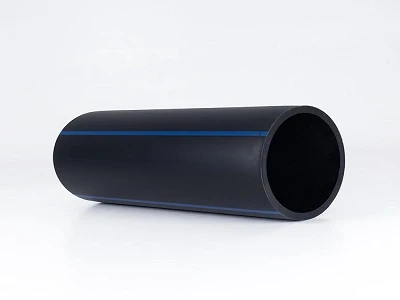
HDPE mining pipe has a smooth polyethylene inner wall that provides favorable conditions for water flow. It also does not rust, which helps avoid the internal corrosion and rust buildup that can affect metallic drainage pipes.
For underground mine water and long-distance dewatering, these details can have a practical effect on pipeline performance.
A Long Pipeline Can Consume Pump Pressure
A drainage pump supplies pressure to move water through the system. Part of that pressure is used to overcome the difference in elevation, while another part is lost through friction inside the pipe and resistance from fittings, valves and changes in direction.
On a short pipe run, these losses may be relatively small.
A long underground drainage line is different. Water may travel through a shaft, along a roadway and then through a buried or surface section before reaching the discharge location. Friction continues along the entire route.
This is one reason pipe selection becomes more important as the drainage distance increases.
A pipeline that looks adequate based only on its pressure rating may still require more pump head than expected if the hydraulic conditions are not considered properly.
What the Water Sees Inside the Pipe
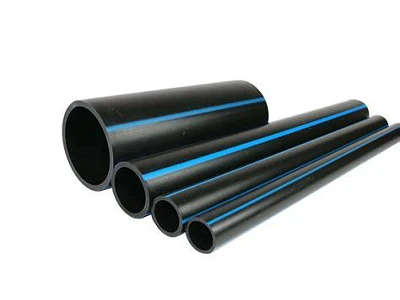
The water is in contact with the internal pipe wall throughout its journey.
A rougher surface creates more resistance to flow. The effect does not come from one section of pipe; it is repeated over the full length of the pipeline.
HDPE has a smooth internal surface because the flow is in contact with polyethylene rather than a rough metallic surface.
That does not mean HDPE eliminates pressure loss. It does mean the pipe provides a favorable internal surface for water transport.
This becomes more relevant when a mine needs to move water over a long distance or maintain a high flow rate without unnecessarily increasing the pumping demand.
Corrosion Can Change the Internal Flow Surface
There is another issue that is easy to overlook during pipe selection.
Mine water is not always chemically neutral. Depending on the mine, it may contain acidic components, dissolved salts, minerals and other substances that can be aggressive toward metallic materials.
A steel pipe can gradually develop corrosion inside the pipe. Rust and deposits can change the internal surface during service.
HDPE has a different failure mechanism because the pipe wall itself is polyethylene. It does not rust.
For mine drainage, this is more than a corrosion-resistance advantage. The internal surface is less affected by the type of rust formation that can occur in conventional steel drainage lines.
That can help keep the hydraulic characteristics of the pipe more stable during service.
Diameter Still Has a Bigger Effect Than Surface Finish Alone
A smooth internal wall is useful, but it cannot make an undersized pipe perform like a larger one.
If a mine needs to move a large volume of water through a long pipeline, pipe diameter has a major influence on flow velocity and friction loss.
For example, increasing the flow rate through the same pipe increases the velocity of the water. The resulting hydraulic resistance also changes.
This is why DN should be considered together with the required drainage flow, pipeline length and available pump pressure.
The point is not to select the largest possible pipe. The objective is to select a diameter that works with the actual drainage requirement.
Long-Distance Drainage Also Means More Joints and Fittings
A long pipeline normally contains more than straight pipe.
There may be bends around underground roadways, valves near pumping stations, branch connections and changes in elevation. Every additional fitting introduces local resistance.
The connection method also matters from a practical installation perspective.
HDPE mining pipe can be connected using butt fusion or electrofusion. A properly made fusion joint creates a continuous polyethylene connection rather than relying on a conventional threaded connection.
For long drainage lines, reliable joints are important because a hydraulic problem is not the only concern. Leakage underground can create additional maintenance work and make an already difficult installation harder to manage.
Where HDPE Mining Pipe Makes Sense
HDPE is particularly relevant when the pipeline is carrying mine water rather than highly abrasive mineral slurry.
Underground drainage, mine dewatering, buried water pipelines and surface drainage lines are typical applications. In these conditions, corrosion resistance, a smooth internal wall and relatively low pipe weight can all be useful.
The situation changes when the medium contains a high concentration of hard mineral particles.
A standard HDPE pipe is not intended to be a universal solution for severe abrasive slurry. Where wear is the dominant problem, UHMWPE or another wear-resistant pipe structure may be a better fit.
Selecting the material according to the medium is more important than simply choosing a pipe because it is commonly used in mining.
HDPE Mining Pipe Parameters
|
Parameter |
Specification |
|
Material |
HDPE |
|
Nominal Diameter |
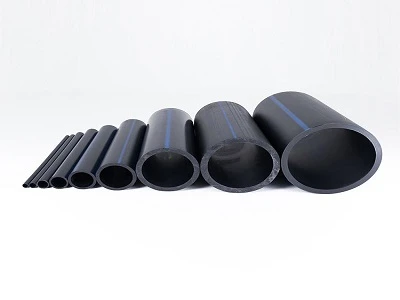
DN50–DN1200 |
|
Pressure Rating |
PN1.0–PN10 |
|
Standard Length |
9 m / 12 m |
|
Connection |
Butt Fusion / Electrofusion |
|
Application |
Mine Drainage, Mine Water, Dewatering |
|
Installation |
Underground, Buried, Surface |
The parameters above relate directly to the conditions discussed in this article.
The DN range allows the pipe to be matched to different drainage flow requirements. The pressure class needs to correspond with the working pressure of the system rather than being selected from diameter alone.
The 9 m and 12 m standard lengths can also be useful when planning a long pipeline because the number of pipe sections and joints affects installation work.
For underground projects, the connection method is another practical consideration. Butt fusion and electrofusion allow HDPE sections to be joined into a continuous drainage line when the installation procedure is properly controlled.
Why the Internal Wall Matters in Mine Drainage
The value of a smooth internal surface is easy to overlook because it is not something a buyer can see once the pipe has been installed.
But the water sees it every second the system is operating.
In a long drainage pipeline, even relatively small resistance along each section is part of the total hydraulic loss. When the pipeline also has bends, valves and elevation changes, the pump has to overcome all of these resistances together.
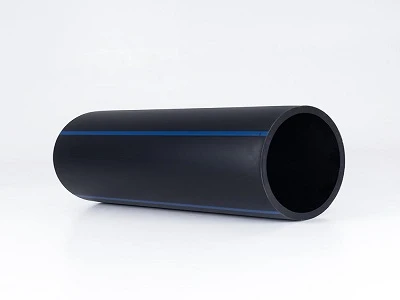
HDPE does not remove those system losses. What it provides is a smooth, non-corroding flow surface that is well suited to water transport.
For mines where drainage lines operate continuously over long distances, that is a practical reason to consider HDPE rather than looking only at nominal pressure and pipe diameter.
FAQ
Does a smooth HDPE inner wall eliminate pressure loss?
No. Pressure loss still occurs in any drainage pipeline. Pipe length, flow rate, diameter, fittings, valves and elevation differences all affect the final hydraulic loss. A smooth inner wall helps reduce resistance along the pipe itself.
Why is corrosion resistance relevant to hydraulic performance?
Corrosion can change the internal condition of a metallic pipe. Rust and deposits may make the flow surface rougher over time. HDPE does not rust, so it avoids this particular type of internal deterioration.
Is HDPE suitable for underground mine drainage?
Yes. HDPE mining pipe can be used for underground mine water, dewatering and drainage pipelines. Its low weight can also make transportation and handling easier compared with heavier metallic pipe.
Is HDPE suitable for mine slurry?
Standard HDPE is mainly suited to water and drainage applications. For highly abrasive slurry containing hard mineral particles, a wear-resistant material such as UHMWPE is generally more appropriate.
What information is needed when selecting HDPE mining pipe?
Conclusion
A long mine drainage pipeline is part of the pumping system. Pressure can be lost through pipe friction as well as through fittings, valves, elevation changes and other components.
HDPE mining pipe provides a smooth polyethylene inner wall and does not develop steel-type internal rust. For mine water and dewatering applications, these characteristics can help maintain favorable flow conditions throughout the service life of the pipeline.
The key is not simply choosing a pipe with a smooth surface. The diameter, pressure rating, connection method and actual mine drainage conditions all need to work together. When those requirements match, HDPE is a practical option for underground and long-distance mine drainage.
Request an HDPE Pipe Quotation
|
Step |
Process |
Details |
|
1 |
Send Requirements |
DN, pressure, medium, working temperature and application |
|
2 |
Specification Confirmation |
Pipe type, material grade, pressure rating, wall thickness/SDR and connection |
|
3 |
Quotation |
Price, lead time, packing and shipping terms |
|
4 |
Order & Production |
Contract, payment and production |
|
5 |
Inspection & Delivery |
Quality inspection and shipment |
For HDPE Mining Pipe, Send Us:
DN + PN/SDR + Medium + Working Temperature + Installation Method + Pipeline Length + Quantity
For mine drainage and dewatering applications, please also provide:
Application + Working Pressure + Installation Environment
For mineral-containing mine water, if available:
Water Chemistry / pH + Temperature + Suspended Solids
Luoyang Zhengju New Materials Technology Co., Ltd.
WhatsApp: +86 19937270645
Email: baibaili456@gmail.com
WeChat: +86 19937270645
Get Best Price for Your HDPE Mining Pipe.