Primary Keyword:
HDPE Steel Wire Mesh Skeleton Pipe
Secondary Keywords:
SRTP Pipe
Steel Wire Mesh Reinforced PE Pipe
High Pressure Mine Drainage Pipe
Underground Mine Drainage Pipe
Introduction
SRTP contains a high-strength steel wire reinforcement layer. That naturally raises a question when the pipe is considered for mine drainage, buried pipelines, industrial water or other corrosive conditions:
If there is steel inside the pipe, how is the steel protected from corrosion?
The answer is in the pipe structure.
The steel wire is not exposed to the transported medium or the surrounding ground. It is embedded between PE layers, with the inner and outer polyethylene layers forming a barrier around the reinforcement.
This is an important difference between SRTP and a conventional steel pipe. In a steel pipe, corrosion protection usually depends on a coating, lining or other external protection system. In SRTP, the steel reinforcement is physically enclosed within the PE structure.
The Steel Wire Is Not Directly Exposed
The steel wire in SRTP is used for structural reinforcement rather than as the exposed pipe wall.
It is positioned inside the pipe wall and surrounded by polyethylene.
On the inside, the PE layer separates the reinforcement from the water or other transported medium.
On the outside, another PE layer separates the steel wire from soil, groundwater and moisture around the pipe.
The basic structure can be understood as:
Transported medium → Inner PE → Steel wire reinforcement → Outer PE → Soil / groundwater
The steel wire provides structural support, while the PE layers take on the isolation and protection functions.
This is the key to understanding why a steel-reinforced PE pipe can still be considered for corrosive service.

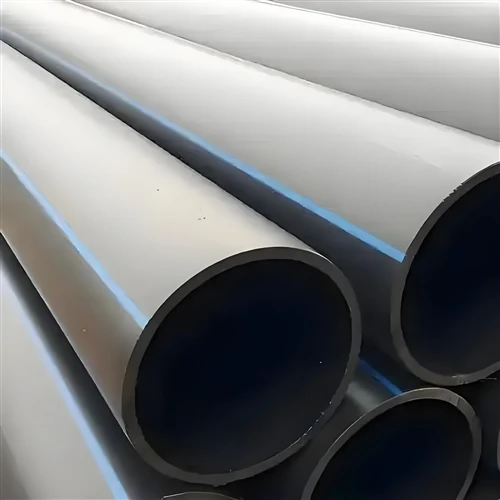
图 1
Inner PE Layer Separates the Steel From the Medium
In a mine drainage system, the transported water may not be chemically neutral.
Mine water can contain dissolved salts and other substances picked up from surrounding rock and underground workings. Depending on the mine and geological conditions, acidic or alkaline water may also occur.
If these fluids were in direct contact with exposed steel, corrosion would become a major concern.
In SRTP, the inner PE layer sits between the transported medium and the steel reinforcement.
The water flows against the PE surface rather than the steel wire.
This means the steel reinforcement is not serving as the wetted surface of the pipe. The PE layer takes the direct contact with the medium.
For mine drainage, this distinction matters. Corrosion resistance does not come from making the steel reinforcement itself corrosion-proof. It comes largely from keeping the steel isolated from the corrosive environment.
The Outer PE Layer Protects the Reinforcement Underground
The inside of the pipe is only half of the problem.
Many SRTP pipes are installed underground, where the external environment can include soil moisture, groundwater and other substances surrounding the pipeline.
A buried steel pipe therefore has two sides that may require corrosion protection: the internal surface exposed to the transported fluid and the external surface exposed to the ground.
SRTP approaches the problem differently.
The steel wire reinforcement is enclosed inside the PE wall. The outer PE layer acts as a protective barrier between the reinforcement and the surrounding environment.
As long as the PE structure remains intact and the pipe is correctly manufactured and installed, the steel wire is not directly exposed to soil or groundwater.
This is particularly relevant for long-term buried pipelines, where constantly maintaining an exposed metal surface can be difficult.
What About Mine Water With Salt or Chemical Content?
Not all mine water has the same chemistry.
One mine may have relatively clean groundwater, while another may contain higher concentrations of dissolved salts or other chemical components.
Industrial water can present similar variations.
For this reason, it is better to look at the actual water chemistry rather than simply classify every mine water source as "corrosive."
PE has good resistance to many common chemical environments, but the exact resistance depends on the chemical, concentration, temperature and exposure conditions.
For an SRTP drainage project, these factors should be checked before the final pipe material and pressure specification are confirmed.
The important point is that the steel reinforcement is not directly exposed to the water in normal pipe operation. The inner PE layer forms the first barrier.
Why PE Protection Is Important for the Steel Reinforcement
The steel wire is there because the pipe needs additional structural strength.
Under internal pressure, a thermoplastic pipe tends to expand in the radial direction. The steel wire reinforcement helps resist this expansion and carries part of the structural load.
That function would be compromised if the reinforcement were left exposed to water and moisture.
The PE structure therefore has two jobs around the steel wire.
It separates the steel from the transported medium and provides protection from the external environment.
This is why the PE layers are not simply an outer coating added for appearance. They are part of the pipe's structural and protective system.
SRTP and Conventional Steel Pipe Have Different Corrosion Risks
The difference becomes easier to see when the two structures are considered separately.
A conventional steel pipe uses steel as the main pressure-bearing wall. If the internal or external steel surface is exposed to a corrosive medium, corrosion protection becomes a major part of the pipeline design.
SRTP uses steel differently.
The steel wire is reinforcement inside a PE structure, while PE forms the surfaces that come into contact with the transported medium and the surrounding environment.
That does not mean SRTP is completely unaffected by corrosion-related issues. Manufacturing quality, PE integrity, connection design, installation damage and operating conditions still matter.
But the steel reinforcement itself is not intentionally exposed to the environment.

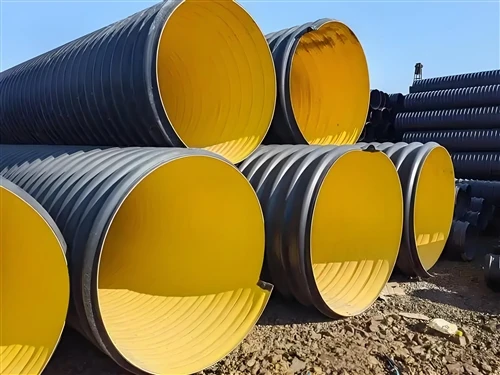
图 2
What Conditions Should Be Checked Before Selecting SRTP?
Corrosion resistance should always be considered together with the actual operating conditions.
For mine drainage, the mine water should be evaluated for pH, dissolved salts and other relevant chemical components.
For industrial water, the chemical composition and operating temperature should be reviewed.
For buried pipelines, groundwater, soil conditions and installation quality also need attention.
Pressure is another separate consideration. A pipe may have good chemical resistance but still require a different pressure rating depending on the pumping system.
In other words, corrosion resistance does not replace pressure design. Both need to be checked.
Typical SRTP Structure for Corrosive Service
|
Parameter |
Typical Specification |
|
Product |
Steel Wire Reinforced PE Pipe |
|
Pipe Structure |
PE / Steel Wire Reinforcement / PE |
|
Reinforcement |
High-strength steel wire |
|
Inner Layer |
PE |
|
Reinforcement Protection |
PE encapsulation |
|
Outer Layer |
PE |
|
Typical Applications |
Mine drainage, industrial water, buried pressure pipelines |
|
Nominal Diameter |
DN50–DN600* |
|
Pressure Rating |
Up to PN2.5 MPa* |
|
Standard Length |
9 m / 12 m |
*Final diameter, pressure rating, PE grade, wall structure and other specifications should be confirmed according to the actual application and product design.
How Does SRTP Protect Its Steel Reinforcement From Corrosion?
The answer is not that the steel wire itself is immune to corrosion.
The important point is that the steel wire is isolated from the environment.
The inner PE layer separates the reinforcement from the transported medium.
The PE structure surrounds the steel wire and prevents direct contact with water under normal operating conditions.
The outer PE layer separates the reinforcement from soil, groundwater and external moisture.
So the pipe uses two materials for different jobs:
Steel wire → structural reinforcement
PE → isolation, protection and fluid-contact surface
For mine drainage, industrial water and buried pressure pipelines, this combination allows SRTP to address pressure requirements without putting the steel reinforcement directly into contact with the corrosive environment.
Request an SRTP Pipe Quotation
|
Step |
Process |
Details |
|
1 |
Send Requirements |
DN, pressure, medium, working temperature and application |
|
2 |
Specification Confirmation |
Pipe structure, pressure rating, specification and connection |
|
3 |
Quotation |
Price, lead time, packing and shipping terms |
|
4 |
Order & Production |
Contract, payment and production |
|
5 |
Inspection & Delivery |
Quality inspection and shipment |
For Steel Wire Mesh Reinforced PE Pipe (SRTP), steel wire reinforced PE pipe and mining pressure pipelines, send us:
DN + PN + Medium + Working Temperature + Installation Method + Pipeline Length + Quantity
For slurry applications:
Slurry Type + Solid Concentration + Particle Size
Luoyang Zhengju New Materials Technology Co., Ltd.
WhatsApp:+86 19937270645
Email: baibaili456@gmail.com
Wechat: +86 19937270645
Get Best Price for Your Mining Pressure Pipeline.