Introduction
In an underground drainage project, installing the pipe sections is only part of the work. Every time a drainage pipe enters or leaves an inspection chamber, the connection needs to be properly designed and installed. If this point is overlooked, leakage, soil infiltration or pipe displacement may occur after the trench has been backfilled.
This is particularly important in stormwater and wastewater networks, where inspection chambers are installed at pipe junctions, changes in direction, changes in pipe diameter and locations where maintenance access is required.
HDPE drainage pipes are widely used in these systems because of their corrosion resistance, flexibility and relatively smooth internal surface. However, connecting an HDPE pipe to an inspection chamber is not simply a matter of cutting a hole in the chamber wall and pushing the pipe through it. The pipe structure, chamber material, connection method and ground conditions all need to be considered together.

The connection is a transition between two different structures
An HDPE drainage pipe and an inspection chamber do not behave in exactly the same way underground.
The pipe is generally flexible and can accommodate a certain amount of ground movement. The chamber, particularly a concrete structure, is usually more rigid. If the surrounding soil settles unevenly, the pipe and chamber may move differently. This can place additional stress on the connection.
A poorly designed joint may gradually loosen. Groundwater can then enter the drainage network through the gap, increasing the amount of water that needs to be handled by downstream treatment facilities or pumping stations. In wastewater systems, leakage in the opposite direction can allow sewage to escape into the surrounding soil.
Fine soil particles may also enter through an unsealed connection. Over time, this can contribute to sediment accumulation, local ground voids or settlement around the chamber.
For this reason, the chamber connection should be treated as an engineered joint, rather than an ordinary opening in the pipe network.
Different HDPE drainage pipes need different connection arrangements
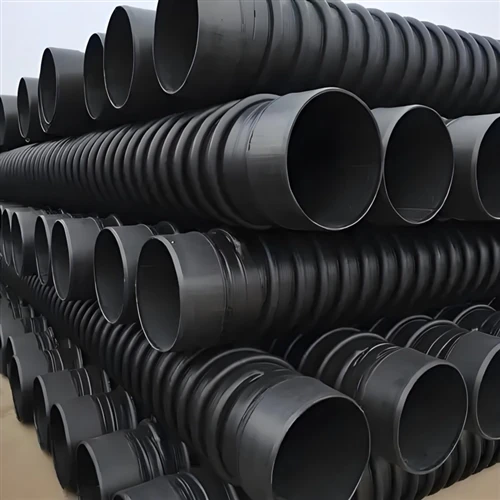
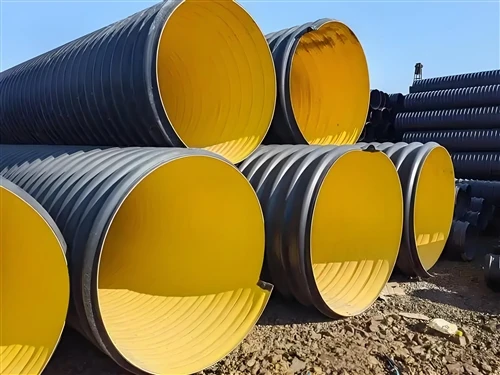
The connection method depends partly on the structure of the drainage pipe. Double-wall corrugated pipes, steel-reinforced corrugated pipes and spiral-wound structured-wall pipes do not have identical external profiles or end configurations.
|
HDPE drainage pipe type |
Points to check at the chamber connection |
|
Double-wall corrugated pipe |
Confirm the pipe end configuration, outside dimensions and compatibility with the chamber socket or sealing connector |
|
Steel-reinforced corrugated pipe |
Check the reinforced wall structure, end treatment and the manufacturer's specified connection system |
|
Krah / spiral-wound structured-wall pipe |
Confirm the structured-wall dimensions, prepared pipe end and the dedicated connector or transition fitting |
A connection designed for one pipe type should not automatically be used for another. Even when two pipes have the same nominal diameter, their actual outside dimensions and surface profiles may be different.
This is why the pipe manufacturer and chamber supplier should confirm the interface before production or installation.

Three common ways to connect the pipe and chamber
1. A chamber socket with a rubber sealing ring
Some inspection chambers are manufactured with dedicated pipe sockets. When the socket is designed for the selected pipe system, a rubber sealing ring can provide a watertight connection.
The pipe end must match the socket dimensions and connection design. Before assembly, the sealing ring should be checked for damage, dirt or twisting. The pipe should be inserted in the correct direction and to the specified depth.
This arrangement is convenient when the chamber and pipe system have been designed to work together. It should not be assumed that every corrugated pipe can fit every chamber socket.
2. A flexible wall connector
Where the chamber has a prepared opening rather than an integral socket, a dedicated wall connector or flexible sealing sleeve may be used.
The connector is fitted into the chamber wall opening, and the pipe is connected through the sealing system. Its purpose is to provide a sealed transition while accommodating limited relative movement between the pipe and chamber.
The opening diameter is important. If it is too large, the connector may not be held securely. If it is too small, installation may damage the connector or the chamber wall. The opening should therefore be made according to the connector manufacturer's requirements, rather than estimated on site.
This method is commonly considered when connecting drainage pipes to concrete or plastic chambers, provided the selected connector is compatible with both materials and the pipe profile.
3. A dedicated transition fitting for structured-wall pipes
Large-diameter structured-wall pipes may have external profiles or end configurations that cannot be connected reliably with a standard rubber sleeve.
In such cases, a dedicated transition fitting or a connection component designed for the pipe system may be required. The solution depends on the pipe's construction, diameter, end preparation and the chamber design.
For Krah or other spiral-wound pipes, the connection should be confirmed with the manufacturer. Depending on the system, specially designed fittings, flange arrangements or other engineered joint details may be specified. A generic instruction to weld the pipe directly to the chamber should not be applied without an approved design and installation procedure.
What needs attention during installation?
The quality of the connection is influenced by several details that may seem minor during construction.
First, the inlet and outlet elevations should be established before the chamber openings are made. The pipe gradient must follow the drainage design, and the chamber base should include a properly formed flow channel. The channel guides wastewater or stormwater through the chamber and helps prevent unnecessary turbulence and sediment accumulation.
The pipe end should not project too far into the chamber. An excessively long insertion may obstruct the flow channel, while an incorrectly positioned pipe can create a step or recess where debris collects. The internal flow path should remain as smooth and unobstructed as the chamber design allows.
Second, the chamber opening must be accurately positioned and prepared. Randomly breaking the chamber wall with a hammer can create cracks or an irregular opening. Use the approved drilling or cutting method and follow the dimensions specified for the selected connector.
Third, the sealing components need to be installed carefully. Dirt, sharp edges or a twisted rubber ring can compromise the seal. If lubricant is required, use only a product recommended by the connector manufacturer and compatible with the sealing material. Ordinary oil or an unsuitable lubricant may damage certain rubber compounds.
Finally, the pipe must be adequately supported outside the chamber. The bedding should provide continuous support, and the backfill on both sides should be placed and compacted evenly. Heavy compaction on only one side can move the chamber or push the pipe out of alignment.
A flexible connector can accommodate limited movement, but it cannot compensate for poor foundation preparation or uncontrolled settlement.
Why do some connections leak after backfilling?
A connection may look satisfactory before backfilling and still develop problems later. One reason is uneven settlement between the chamber and the pipe. Another is that the pipe was inserted at an incorrect angle or the sealing ring was displaced during installation.
An opening that does not match the connector is another common source of trouble. The connector may appear to fit, but it may not maintain sufficient contact pressure around the pipe.
The problem is not always caused by the HDPE pipe itself. The chamber opening, connector selection, installation alignment and surrounding soil conditions all affect the performance of the joint.
After installation and backfilling, the project should be inspected according to its design and applicable requirements. Checks may include the connection position, sealing condition, pipe alignment and drainage flow. Where specified, leakage or watertightness testing should also be carried out.
Design the pipe and chamber as one drainage system
For a reliable underground drainage network, pipe selection and chamber selection should not be handled separately. The design team needs to confirm the pipe type, nominal diameter, actual outside dimensions, chamber material, opening dimensions and connection system before construction begins.
This is especially relevant for large-diameter drainage projects using HDPE double-wall corrugated pipes, steel-reinforced corrugated pipes or Krah structured-wall pipes. A suitable connection detail helps maintain the continuity of the drainage network and reduces the risk of maintenance problems after the road, pavement or landscape has been restored.
Luoyang Zhengju New Materials Technology Co., Ltd. supplies HDPE drainage products, including double-wall corrugated pipes, steel-reinforced corrugated pipes and Krah / structured-wall pipes for municipal, industrial and infrastructure drainage projects.
For product information and project inquiries:
Website: https://www.cnzjpipe.com/
Email: baibaili456@gmail.com
WhatsApp: +86 19937270645