Introduction
Keywords: HDPE electrofusion fittings, PE100 electrofusion fittings, HDPE pipe connection, electrofusion tee, electrofusion elbow, PE pipe fittings
On a PE pipeline project, straight pipe sections are usually easy to specify. The questions often come up when the pipeline needs to branch, change direction or connect to another diameter. These details may look minor on a drawing, but they have to be considered before installation begins.
This is where HDPE electrofusion fittings come into the picture.
They are commonly used in polyethylene water supply and distribution systems. A fitting contains an embedded heating wire, allowing it to be fused directly to a compatible PE pipe. The connection is compact and does not require an open flame. However, the result still depends heavily on how the pipe is prepared and how the welding procedure is carried out.
Which electrofusion fittings are used in a PE pipeline?
There is no need to use a complicated fitting arrangement for every project. In many cases, four basic types cover most of the connection requirements.
An electrofusion tee is used when a branch needs to come off the main pipeline. A 90° electrofusion elbow changes the direction of the pipe, particularly where the installation route has limited space. An electrofusion coupler joins two pipe sections, while an electrofusion reducer provides a transition between different pipe diameters.
These components serve different purposes, so the fitting list should follow the actual pipeline layout. For example, a water distribution project may require several tees and reducers, whereas a straight pipeline extension may mainly need couplers.
The important point is to check the fitting against the pipe specification before placing an order.
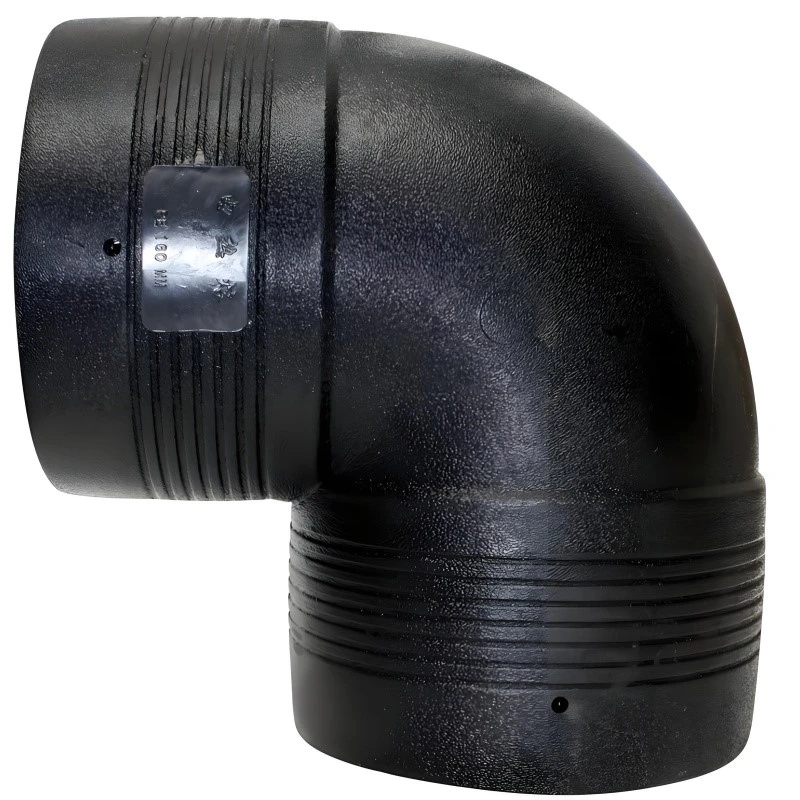
Product specifications worth checking
PE100 is a commonly used material for HDPE electrofusion fittings. Many products are manufactured by injection moulding, with the resistance wire embedded inside the fitting body.
The market offers different diameters and pressure classes. The table below gives a general reference for the types of specifications buyers may encounter. It is not a guaranteed supply range for every manufacturer.
|
Parameter |
Reference Specification |
|
Raw Material |
PE100 |
|
Manufacturing Process |
Injection Moulding |
|
Product Types |
Electrofusion Tee, 90° Elbow, Coupler, Reducer |
|
Common Size Range |
DN20–DN630 mm |
|
Extended Size Range |
Up to DN800 mm, manufacturer-dependent |
|
Standard Pressure Rating |
PN16 |
|
Other Pressure Ratings |
PN10 and PN25, depending on product range |
|
SDR Compatibility |
SDR7–SDR17, depending on fitting pressure class and diameter |
|
Reference Standards |
ISO 4427-3, EN 12201-3, AS/NZS 4129 |
|
Electrofusion Connector Pin |
4.0 mm or 4.7 mm |
|
Typical Colour |
Black |
|
Jointing Method |
Electrical Resistance Fusion |
One thing buyers sometimes overlook is that a fitting's nominal diameter and pressure class do not tell the whole story. The pipe's SDR, material grade and the fitting manufacturer's approved combination also need to be checked.
Why SDR matters when selecting fittings
SDR is the ratio between a pipe's outside diameter and its wall thickness. For a given outside diameter, a lower SDR means a thicker pipe wall.
This affects the pipe specification and the fitting combination that can be used. A fitting should not be selected simply because its diameter matches the pipe. Its approved SDR and pressure rating also need to be suitable.
The following combinations are taken from a manufacturer-specific technical reference. They are useful as examples, but they should not be applied automatically to products from other manufacturers.
|
Fitting Pressure Class |
Reference SDR Range |
|
PN16, DN20–DN75 |
SDR7–SDR11 |
|
PN16, DN90 and above |
SDR7–SDR17 |
|
PN10, DN20–DN50 |
SDR11–SDR17 |
|
PN10, DN63 and above |
SDR11–SDR26 |
|
PN25 |
SDR7–SDR11 |
For an actual order, it is better to send the supplier the pipe diameter, SDR and required pressure class together. This avoids the situation where the fitting looks correct on the quotation but does not match the pipe being installed.
What happens during electrofusion welding?
The principle is relatively straightforward. A resistance wire is built into the fitting. When an electrofusion control unit supplies electricity, the wire heats the surrounding polyethylene.
The contact surfaces of the pipe and fitting soften and melt. Once the welding cycle is completed and the joint cools, the two surfaces form a fused connection.
The machine controls the electrical cycle, but it cannot compensate for a dirty or poorly prepared pipe surface. This is one reason why installation procedures should not be rushed.
Before welding, the pipe surface in the fusion area needs to be scraped mechanically. The purpose is to remove the oxidized outer layer, which may interfere with the fusion process. Wiping the pipe with a cleaning cloth is useful for removing dirt, but it is not a substitute for scraping.
After preparation, the pipe should be inserted to the correct depth. It also needs to be held in position so that it does not move during welding or cooling.
These are ordinary installation steps, but they make a real difference to the finished joint.
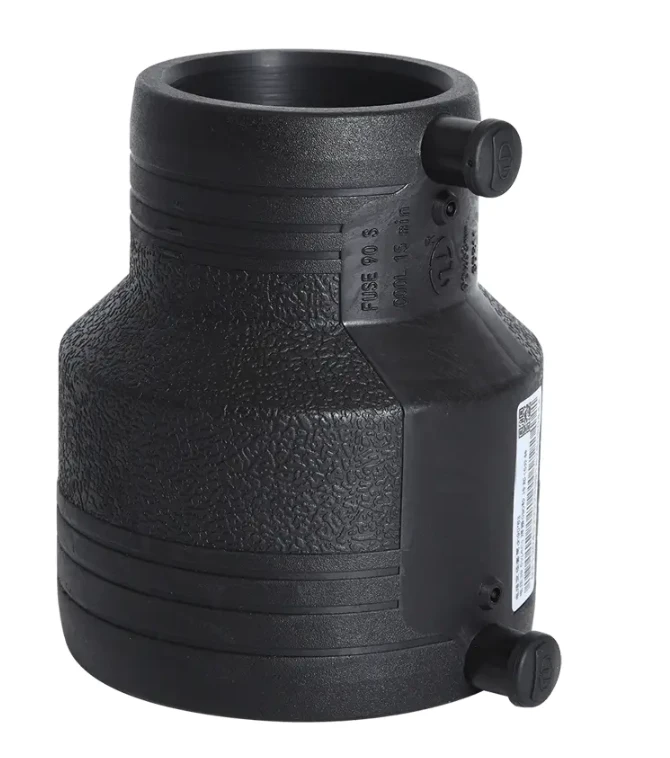
Welding time is not the same for every fitting
Electrofusion welding parameters vary with the product design and dimensions. Voltage, fusion time and cooling time should be taken from the fitting manufacturer's instructions.
For reference, the following data comes from a specific DN630 electrofusion socket specification. It shows the kind of information that should be available for larger fittings.
|
Parameter |
DN630 Electrofusion Socket Example |
|
Material |
PE100-RC |
|
SDR |
SDR17 |
|
Pressure Rating |
PN10 |
|
Welding Voltage |
44 V |
|
Fusion Time |
1,200 seconds |
|
Cooling Time |
50 minutes |
|
Connector Pin Diameter |
4.0 mm |
This is a product-specific example, not a general welding setting for every DN630 fitting. Even when two fittings have the same nominal diameter, their welding instructions may differ.
After the welding cycle, the connection needs to remain undisturbed for the specified cooling period. Moving the pipe or removing the clamp too early can affect the joint while the material is still cooling.
For projects with a large number of connections, recording welding data is also worthwhile. It gives the installation team a way to trace individual joints and review the work if an issue appears later.
Where are these fittings used?
Water supply and distribution projects are among the most common applications. A network may have to connect several branches, pass around buildings and transition between different pipe diameters. Tees, elbows, couplers and reducers are used according to the layout.
Industrial water pipelines can also use electrofusion fittings where polyethylene is suitable for the service conditions. The transported medium, operating temperature and pressure should be reviewed before choosing the material and pressure class.
Irrigation networks have their own layout requirements. Main lines supply smaller distribution lines, and the number of branch connections can be considerable. In this type of installation, the fitting selection should be based on the network design rather than on a standard set of components.
Electrofusion fittings may also be considered for pipeline extension or repair. The condition of the existing pipe needs to be checked first, especially when the connection is being made to an older or previously damaged section.
What information should be included in an inquiry?
A supplier can usually make a more accurate recommendation when the inquiry contains the actual pipe information.
|
Purchasing Item |
Information to Confirm |
|
Material |
PE100 or other specified polyethylene grade |
|
Fitting Type |
Tee, elbow, coupler or reducer |
|
Pipe Diameter |
Required outside diameter |
|
SDR |
Pipe and fitting compatibility |
|
Pressure Class |
Project operating requirements |
|
Applicable Standard |
ISO 4427-3, EN 12201-3 or other project requirement |
|
Welding Information |
Compatible control unit and fusion parameters |
|
Documentation |
Product specifications and inspection records |
For a small order, a fitting list may be enough. For a larger project, sending the pipeline drawing is often more useful because it allows the supplier to understand the complete connection arrangement.
It is also sensible to ask for the relevant technical documents before production or shipment. These may include product specifications, applicable test records and welding instructions.
A final point about joint quality
Electrofusion fittings are often treated as simple accessories, but they deserve the same attention as the pipe itself. A correctly selected fitting still needs a properly prepared pipe, a suitable welding machine and enough cooling time.
For buyers, the first step is to confirm the material, diameter, SDR and pressure requirements. For installation teams, the main concern is to follow the manufacturer's preparation and welding procedure rather than rely on assumptions from a previous project.
A PE pipeline is made up of many individual connections. Paying attention to each one is what helps the whole system perform reliably over time.