Introduction
Cold weather can make pipeline selection more complicated, especially when the pipe is carrying abrasive mineral slurry.
In a cold mining area, the pipeline may be exposed to freezing temperatures while transporting tailings, concentrate or ore slurry. The pipe has to deal with two things at the same time: low temperature outside and continuous particle movement inside.
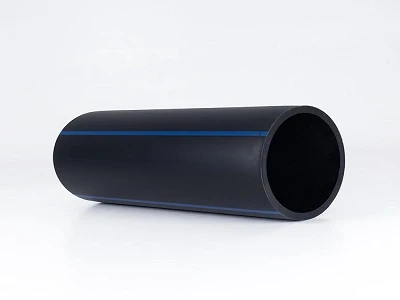
This is where a Low Temperature UHMWPE Pipe can be useful.
UHMWPE, or Ultra High Molecular Weight Polyethylene, has good low-temperature impact resistance, high abrasion resistance and good chemical resistance. Its commonly referenced working temperature range is approximately -269°C to +80°C, although the actual operating range depends on the pipe design and service conditions.
For mines located in cold or high-altitude areas, these characteristics make UHMWPE worth considering for slurry transportation.
1. What Happens to Mining Pipes in Cold Conditions?
Low temperature is not just an issue of freezing.
Some materials become less flexible as temperatures fall. Sudden impact, vibration and mechanical loads can then become more important, especially in pipelines carrying coarse mineral particles.
A mining slurry pipe may also experience large temperature changes between day and night.
For this reason, the minimum operating temperature should be considered when selecting a UHMWPE Pipe for Low Temperature Applications, rather than looking only at pressure and diameter.
Why UHMWPE Works in Cold Environments

图 1
UHMWPE is known for maintaining good impact resistance at low temperatures.
This is important in mining because slurry is rarely made up of liquid alone. It may contain quartz, rock fragments, concentrate, tailings and other abrasive particles.
These particles continuously move through the pipeline and contact the internal wall.
A Low Temperature Resistant UHMWPE Pipe combines low-temperature performance with a highly wear-resistant internal surface, making it suitable for many abrasive slurry applications.
The actual pipe specification still needs to match the minimum temperature, pressure and slurry conditions.
3. Cold Weather Does Not Reduce Slurry Abrasion
A cold pipeline can still experience serious internal wear.
Tailings and mineral slurry continue to move through the pipe regardless of the outside temperature. Hard particles can repeatedly contact the pipe wall, particularly around elbows, reducers and other changes in flow direction.
This is why temperature resistance alone is not enough.
For a UHMWPE Low Temperature Pipe, the advantage is the combination of low-temperature performance and abrasion resistance.
The same pipe material can address two different operating concerns without relying on a separate internal lining.
4. Open-Pit Mines and Outdoor Pipelines
Open-pit mining pipelines are often exposed directly to the weather.
Snow, freezing temperatures, wind and day-night temperature changes can all affect the installation environment.
This is particularly relevant for pipelines installed above ground or across exposed areas of a mine.
A UHMWPE Mining Pipe for Cold Environments can be considered for these applications, provided the pressure rating, pipe structure, support arrangement and connection method are properly selected.
Outdoor installation should also allow for normal thermal movement of the pipeline.
5. High-Altitude Mining Applications
High-altitude mines can have low ambient temperatures for long periods.
At the same time, the pipeline may need to transport slurry between processing areas, pumps, storage facilities and tailings systems.
UHMWPE can be useful here because it combines several properties that are relevant to difficult mining conditions.
It is highly abrasion resistant, relatively lightweight compared with steel, resistant to many chemical media and capable of maintaining useful impact performance at low temperatures.
This does not eliminate the need for proper pipeline design, but it gives UHMWPE a practical place in cold-region mining applications.
6. Particle Impact Still Matters
The size and shape of mineral particles can change the way a pipe wears.
Fine particles mainly create continuous friction, while larger or angular particles can produce stronger local impact.
The effect can become more noticeable around elbows and other areas where the slurry changes direction.
UHMWPE has high impact resistance as well as abrasion resistance. This combination is one reason it is used for demanding slurry applications.
When selecting a pipe for a cold mine, particle size and hardness should be provided along with the minimum operating temperature.
7. The Internal Surface Makes a Difference
The inside of a slurry pipe is constantly in contact with the transported material.
UHMWPE provides a smooth internal surface with a low coefficient of friction. This helps reduce friction between the slurry and pipe wall and gives mineral particles less opportunity to catch on surface irregularities.
The material also has a low tendency for many substances to stick to the internal wall.
For slurry pipelines operating in cold environments, keeping the internal flow stable is just as important as handling the outside temperature.
8. Chemical Exposure in Cold Mining Areas
Low temperature does not mean the slurry is chemically mild.
Depending on the mining process, slurry may contain acidic, alkaline or saline components, flotation reagents or other process chemicals.
UHMWPE has good resistance to many chemical media commonly found in mining and mineral processing.
This makes it suitable for applications where abrasion and chemical exposure occur together.
The actual chemical composition, concentration and temperature should be checked before selecting the final pipe material.
UHMWPE Low Temperature Pipe Product Features

图 2
Low-Temperature Performance
UHMWPE has a wide working temperature range and can be used in many cold-region applications when the pipe is correctly specified.
High Abrasion Resistance
The material is suitable for tailings, concentrate and mineral slurry containing abrasive solid particles.
Good Impact Resistance
UHMWPE maintains good impact resistance at low temperatures, which is useful when the slurry contains coarse or irregular particles.
Smooth Inner Wall
The smooth surface helps reduce friction and limits material buildup inside the pipeline.
Chemical Resistance
UHMWPE can resist many acidic, alkaline and saline media encountered in mining.
Lightweight
Compared with conventional steel pipe, UHMWPE is significantly lighter, which can simplify transportation and handling.
Product Parameters
|
Parameter |
Low Temperature UHMWPE Pipe |
|
Material |
UHMWPE |
|
Molecular Weight |
>1.5 million g/mol |
|
Diameter |
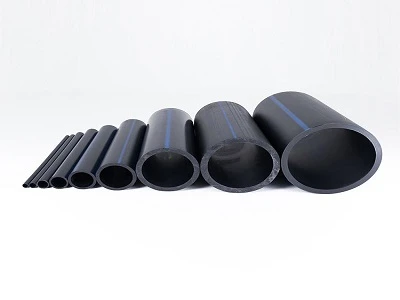
DN50–DN1200 |
|
Pressure Rating |
PN1.0–PN10 |
|
Standard Length |
9 m / 12 m |
|
Working Temperature |
-269°C to +80°C |
|
Applications |
Tailings, concentrate, mineral slurry, ore slurry |
|
Installation |
Open-pit, outdoor and cold-region mining |
|
Connection |
Flange, mechanical or customized connection |
Actual specifications should be confirmed according to operating temperature, pressure, slurry characteristics and installation conditions.
Comparison
Low Temperature UHMWPE Pipe vs Steel Pipe
|
Feature |
Low Temperature UHMWPE Pipe |
Steel Pipe |
|
Low-Temperature Performance |
Good impact performance |
Application dependent |
|
Abrasion Resistance |
High |
Depends on grade or lining |
|
Impact Resistance |
High |
High structural strength |
|
Chemical Resistance |
Good |
Corrosion protection may be required |
|
Weight |
Relatively light |
Heavy |
|
Internal Surface |
Smooth UHMWPE |
Steel |
|
Slurry Application |
Suitable for abrasive slurry |
Widely used, depending on design |
The choice should be based on the complete operating condition, not temperature alone.
FAQ
How cold can UHMWPE pipe operate?
UHMWPE has a commonly referenced working temperature range down to approximately -269°C. The actual minimum temperature should be confirmed for the specific pipe structure and application.
Is UHMWPE suitable for mining in freezing conditions?
Yes. It can be used for many mining slurry applications in cold environments because of its low-temperature impact performance and abrasion resistance.
Can UHMWPE be used for outdoor mining pipelines?
Yes. It can be used in suitable above-ground and outdoor applications. Pipe supports, connections and thermal movement should be considered during installation.
Can low-temperature UHMWPE pipe transport tailings?
Yes. UHMWPE can be used for tailings transportation where the temperature, pressure, slurry concentration and particle characteristics are within the pipe's design conditions.
Request a UHMWPE Pipe Quotation
|
Step |
Process |
|
1 |
Send Requirements - DN, pressure, quantity and application |
|
2 |
Specification Confirmation - Pipe type, size, wall thickness and connection |
|
3 |
Quotation - Price, lead time, packing and shipping terms |
|
4 |
Order & Production - Contract, payment and production |
|
5 |
Inspection & Delivery - Quality inspection and shipment |
For UHMWPE mining pipe, UHMWPE lined steel pipe, UHMWPE elbows and link flanges, send us:
DN + PN + Slurry Type + Solid Concentration + Particle Size + Flow Rate + Pipeline Length + Quantity
Luoyang Zhengju New Materials Technology Co., Ltd.
WhatsApp:+86 19937270645
Email: baibaili456@gmail.com
Wechat: +86 19937270645
Get Best Price for Your Grinding Slurry Pipeline