Introduction
A pipe can look suitable in a product catalogue and still be the wrong choice for a mining project. The difference usually becomes clear after installation, when the line starts carrying water, operating under pressure, passing through uneven ground, or dealing with chemicals used around the mine.
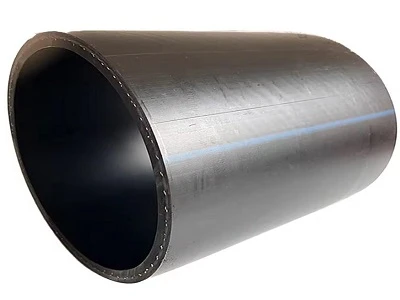
POE, or polyolefin elastomer, is a flexible polymer material. Its flexibility and impact behaviour may make it interesting for certain mining pipeline applications, but the material name alone does not tell a buyer whether a finished pipe can handle a particular duty. Wall thickness, pipe construction, pressure rating, temperature, connection design and test results all matter.
For a mine operator, the first question should not be whether POE is a good material in general. It should be whether a POE pipe has been tested for the conditions in which it will actually operate.
Start with the Job the Pipe Must Do
Two pipelines at the same mine may have completely different requirements. One may carry relatively clean drainage water. Another may be exposed to suspended mineral particles, changing flow rates and repeated pressure fluctuations. A third may be installed underground, where access for inspection and repair is limited.
These lines should not automatically use the same pipe material.
For mine drainage, buyers generally need to check the required operating pressure, water chemistry, installation depth and external loading. A line installed beneath a haul road, for example, faces a different mechanical environment from one placed in an accessible service trench.
A pipeline carrying mineral slurry presents another challenge. Solid particles can wear the internal wall, especially where flow changes direction or where the pipe experiences local turbulence. Flexibility alone does not establish abrasion resistance. Before specifying POE for slurry transport, the buyer should request abrasion-test results or evidence from a comparable application.
This distinction is important because a material that performs well under impact or bending may not necessarily perform well against continuous abrasive wear.
What the POE Material Data Can Tell You
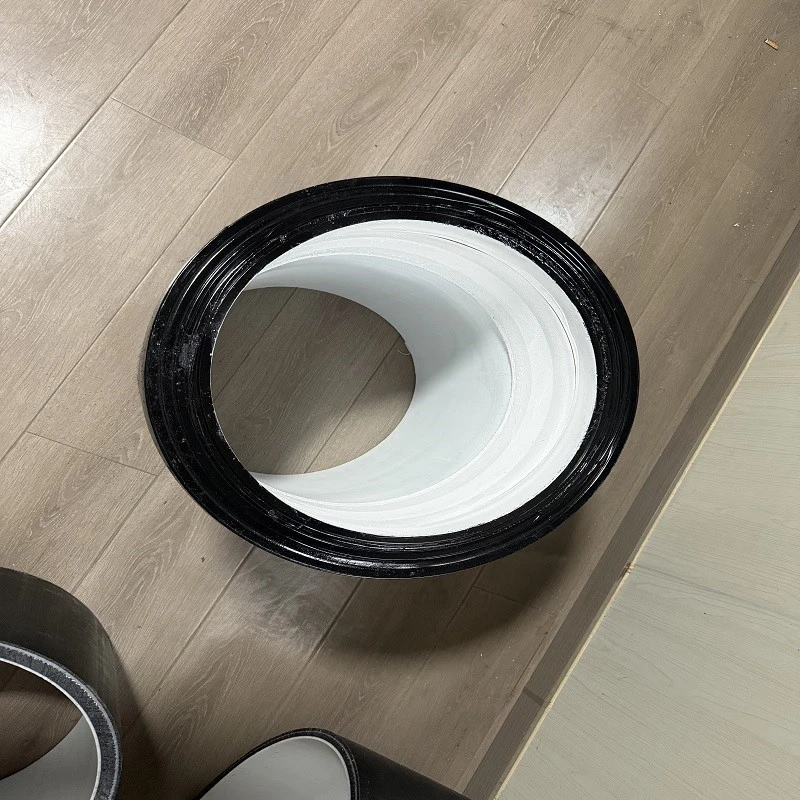
POE is a family of materials rather than a single grade with one fixed set of properties. Different formulations can behave differently, and processing can also affect the finished product.
The following figures are illustrative material-level references only. They are not verified specifications for a finished POE mining pipe and should not be used for procurement or engineering approval.
|
Parameter |
Illustrative reference value |
What must be confirmed |
|
Material density |
0.89 g/cm³ |
Actual grade datasheet |
|
Melt flow rate |
0.6 g/10 min |
Test temperature, load and method |
|
Tensile strength |
22 MPa |
Test method and specimen condition |
|
Elongation at break |
1,000% |
Grade-specific test report |
|
Low-temperature brittleness |
−40°C |
Test method and actual formulation |
These values cannot establish the pressure rating, service life or allowable working temperature of a pipe. For example, a high elongation value for a raw material specimen does not mean that a finished pipe can safely stretch by the same amount in service. Pipe geometry, manufacturing quality, joints and sustained loads all affect performance.
When requesting a quotation, ask the manufacturer for the actual pipe data sheet. It should identify the material grade, nominal outside diameter, wall thickness, pressure rating where applicable, dimensional tolerances and relevant test standards. If the manufacturer cannot provide these details, the material description alone is not enough to make a reliable selection.
Mining Slurry Requires More Than Flexibility
A slurry line may carry a mixture of water and fine or coarse mineral particles. The severity of wear depends on several factors, including particle size, hardness, concentration, velocity and the geometry of the pipeline.
Wear does not always occur evenly. The bottom of a horizontal pipe may experience different conditions from the upper wall. Elbows, tees, reducers and other changes in direction can be especially demanding because particles do not follow the water flow perfectly as it changes direction.
For a proposed POE slurry pipe, ask for test data that reflects the intended service. A general statement such as "wear-resistant" is not sufficient. The test should identify the test conditions and explain how the results relate to the proposed application.
The buyer should also consider the cost of replacing a worn section. A lower initial purchase price may offer little advantage if the line requires frequent shutdowns or if replacement work involves excavation, lifting equipment or lost production.
If the manufacturer has no relevant slurry test data, it is safer to treat the application as unverified rather than assume that POE will perform like UHMWPE or another established material. Different polymers have different wear behaviour, and their performance cannot be ranked reliably from their names alone.
Underground Installation Changes the Requirements
Mining pipelines are not always installed in easy-to-access locations. They may pass beneath roads, through uneven ground or along underground routes where repairs are inconvenient.
In buried applications, the pipe must be considered together with the surrounding soil. Burial depth, soil compaction, groundwater, external loads and the quality of bedding can all affect deformation. A flexible material may accommodate some movement, but that does not remove the need to check ring stiffness, wall structure or allowable deformation for the particular pipe design.
Before ordering, provide the manufacturer with the proposed installation method and site conditions. A pipe intended for an exposed service line should not automatically be approved for direct burial. Likewise, a product designed for buried installation may need additional protection or support in an exposed mining area.
Installation drawings should identify the pipe route, connection locations, support requirements and any areas where inspection or replacement access is needed. The connection system deserves particular attention. A pipe body may meet its dimensional requirements while the assembled line still fails because the joint was not designed for the operating load.
Pressure, Temperature and Chemical Exposure Need Separate Checks
Mining service conditions can change over time. A pump may start or stop, a valve may close, or a section of pipe may experience a temporary pressure rise. The selected line therefore needs an appropriate pressure rating and a clear operating envelope, rather than a rating based only on normal steady-state conditions.
Ask the manufacturer to confirm the allowable working pressure for the proposed diameter, wall thickness and service temperature. Where pressure surges are possible, the design should also consider transient conditions. Do not assume that a material-level tensile strength can be converted directly into a pipe pressure rating.
Temperature also matters. A polymer's properties may change as operating temperature changes, and the finished pipe may have limits that differ from those of the raw material. Confirm the permitted service-temperature range in writing, especially if the line will be installed outdoors or exposed to hot process water.
Chemical compatibility should be checked in the same way. Mine water can contain dissolved salts and other substances, while process areas may involve cleaning chemicals or reagents. Resistance to one chemical does not prove resistance to every mine fluid. Provide the supplier with the fluid composition, concentration and expected temperature whenever possible.
What to Send the Supplier Before Asking for a Quote
A short technical brief can prevent repeated clarification and reduce the risk of quoting a product that does not fit the application.
Include the pipe's intended duty, nominal diameter, required pressure, operating temperature, fluid or slurry composition, installation method and connection requirements. For slurry service, include the solids concentration and particle characteristics if known. For buried lines, include burial depth and external loading information.
The manufacturer should then identify any missing information before confirming suitability. A quotation should distinguish between confirmed product specifications and items that still require engineering review.
For an unfamiliar POE mining pipe, request the relevant test reports and clarify whether the reported results apply to the raw material, a pipe specimen or a complete assembled pipeline. These are different forms of evidence. A material datasheet is useful, but it cannot replace the finished pipe's dimensional, pressure or application-specific testing.
Frequently Asked Questions
1. Can POE pipes be used for mining applications?
Potentially, depending on the duty and the finished pipe design. The buyer must confirm pressure capacity, temperature limits, chemical compatibility and installation requirements. Suitability for abrasive slurry should not be assumed without relevant test evidence.
2. Are POE pipes suitable for transporting mining slurry?
That depends on the grade, pipe construction and slurry conditions. Ask for abrasion-test results or service records from a comparable application. Without this evidence, the wear performance remains unconfirmed.
3. Can POE pipes be installed underground?
Underground use requires checks on external loading, burial depth, soil conditions, pipe deformation and joint performance. Obtain installation guidance for the specific pipe rather than relying only on the flexibility of the material.
4. Does the raw material's elongation determine how much the pipe can stretch?
No. Elongation at break is a material-test result, not an allowable field movement value. The finished pipe's geometry, joints, loading and installation conditions must also be considered.
5. What documents should buyers request before placing an order?
Request the finished pipe datasheet, dimensional information, pressure rating where applicable, service-temperature limits, connection details and relevant test reports. For demanding mining duties, ask for evidence that reflects the actual application.
Choose the Pipe Around the Operating Conditions
A mining pipe should be selected around the work it must perform, not simply around the name of its polymer. POE may be worth evaluating for certain applications, but its suitability depends on the grade, pipe design and supporting test evidence.
Before approving a POE pipe for a mine, establish the operating conditions, identify the main failure risks and obtain the documents needed to verify performance. If the intended service involves abrasive slurry, high pressure or difficult underground access, these checks become especially important because a pipe failure can cost far more than the original material purchase.
Contact Us for Mining Pipe Information
|
Item |
Details |
|
Company |
Luoyang Zhengju New Materials Technology Co., Ltd. |
|
Website |
https://www.cnzjpipe.com/ |
|
|
+86 19937270645 |
|
|
baibaili456@gmail.com |
|
Request |
Share your application, pipe dimensions, pressure requirements and installation conditions for a product review. |
Primary Keyword: POE pipes for mining
Secondary Keywords: POE mining pipe, polyolefin elastomer pipe, mining pipeline selection, underground mining pipes, mining slurry pipeline, POE pipe technical data