1) Structural constraints
Double-wall corrugated pipe has a profiled outer wall (corrugations) + smooth inner wall.
This structure gives high ring stiffness (SN rating) but significantly reduces flexural uniformity.
The corrugations act as stress concentration points during bending
Tight coiling can lead to:
Local buckling of the corrugation crests
Ovalization of the pipe cross-section
Permanent deformation
2) Minimum bending radius limitation
Compared to solid-wall HDPE pipe:
Solid-wall HDPE (PE100/PE80) → can be coiled because it allows large elastic deformation
Double-wall corrugated pipe → has a much larger minimum bending radius, typically:
≥ 20–30 × OD (often even higher depending on SN class)
For DN110:
OD ≈ 110–125 mm
Minimum bending radius ≈ 2.2–3.5 meters or more
This radius is too large for practical coiling (especially for standard transport coils).
3) Manufacturing and supply form
In industry practice:
DN110 double-wall corrugated pipes are usually supplied as:
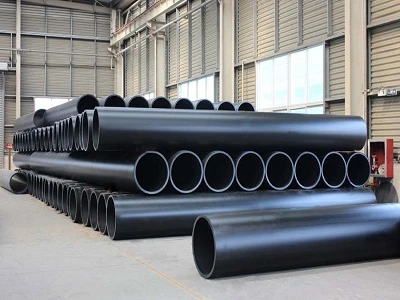
Straight lengths (e.g., 6 m)
Occasionally slightly curved bundles, but not coils
Coiling is typically limited to:
Small diameters (e.g., DN20–DN63 solid-wall PE pipes)
Or special lightweight corrugated ducts (thin-wall telecom ducts, not structural pipes)
4) Possible exceptions (limited cases)
Coiling may be technically possible but not recommended if:
Pipe has low SN rating (e.g., SN4)
Large coiling diameter (very loose coil) is used
Controlled factory conditions with temperature conditioning
Even then:
Risk of installation issues and reduced service life remains
Most standards and manufacturers do not support coiled supply for DN110 DWC pipes
Conclusion
Standard practice: ❌ Not coiled
Engineering feasibility: ⚠️ Only with very large radius and special control
Recommended approach: ✔️ Use straight pipes with socket or coupler joints