Introduction
In mining operations, slurry pipelines are exposed to continuous abrasion from solid particles moving through the pipe. Over time, this wear can lead to wall thinning, leakage, unplanned shutdowns, and repeated replacement costs. These problems are especially important in systems transporting abrasive mineral slurry and mine tailings.
UHMWPE (Ultra-High-Molecular-Weight Polyethylene) pipe is widely considered for demanding slurry applications because of its excellent abrasion resistance, low friction, and impact resistance. However, choosing the right pipe involves more than comparing material properties. Slurry concentration, particle size, flow velocity, operating pressure, pipe dimensions, and connection design all affect service performance.
This article examines how UHMWPE pipe can be used in mining slurry transportation, which operating conditions buyers should evaluate, and what technical details should be confirmed before placing an order.
A Worn Elbow Can Tell You More Than a Failed Pipe
A mining slurry pipeline does not usually wear at the same rate from one end to the other. After several months of operation, a straight section may still look serviceable while an elbow has developed a deep groove on one side. In another installation, the first serious damage may appear near a reducer or immediately downstream of a pump.
Replacing the damaged fitting is often the fastest way to get production running again. It does not necessarily solve the problem.
If the same elbow fails repeatedly, the mine needs to look beyond the material. The slurry may be carrying hard, angular particles at a velocity that creates concentrated impact. The bend radius may be unsuitable for the particle size, or the operating conditions may have changed since the line was commissioned.
This is one reason UHMWPE, or ultra-high-molecular-weight polyethylene, deserves consideration in abrasive mining applications. Its resistance to sliding wear and repeated impact can make it useful for transporting mineral slurry. However, the performance of an individual fitting still depends on its design, dimensions, material grade, and operating conditions.
The important question is not simply whether UHMWPE is wear-resistant. It is whether the selected pipe and fittings can withstand the particular wear mechanism occurring in the mine.
What Happens When Slurry Changes Direction?
Inside a straight pipe, particles move with the slurry, although their paths are not identical to the movement of the liquid. Particle size, density, shape, flow velocity, and solids concentration all influence how individual particles travel.
At an elbow, the direction of the flow changes. The liquid can turn with the pipe, but heavier particles may not follow exactly the same path. Depending on the flow conditions and bend geometry, some particles move toward the outside of the bend and strike the wall.
Repeated contact gradually removes material. If the same area receives most of the particle impact, wear becomes concentrated instead of spreading evenly around the circumference.
This explains why measuring wear at only one point can give a misleading picture of the entire fitting. A pipe section may retain considerable wall thickness over most of its circumference while one small area has become dangerously thin.
The wear pattern also depends on the slurry. Fine particles in a relatively uniform suspension may produce a different pattern from coarse, angular mineral fragments. A quartz-rich slurry, for example, can be particularly abrasive because the particles are hard. The actual damage rate still depends on particle size, concentration, velocity, and the geometry of the pipe.
There is no single wear rate that applies to every mining elbow, even when the same nominal pipe diameter is used.
Why a Straight Section May Last Longer
Straight sections are not immune to abrasion. In a long slurry line, the internal wall can gradually lose material as solids move through the pipe. The difference is that wear may be distributed over a larger area, whereas a fitting can experience concentrated particle impact.
The distinction matters when planning inspections. If maintenance crews inspect only accessible straight sections, they may miss the locations most likely to develop localized damage.
Elbows should be inspected at positions selected according to the actual flow path and expected particle movement. Reducers, pump discharge transitions, valve outlets, and changes in pipe alignment may also deserve closer attention.
The direction of the slurry flow should be marked on inspection drawings. When a fitting is removed, record where the deepest wear occurred in relation to the inlet, outlet, and bend orientation. Over several inspection cycles, the records may reveal a consistent pattern.
A repeated wear location is useful evidence. It can help engineers determine whether the next action should involve a different fitting design, a change in operating conditions, or a different material.
What UHMWPE Changes-and What It Does Not
UHMWPE is a high-molecular-weight polyethylene material. Its molecular structure contributes to its resistance to abrasive wear and impact, making it a candidate for slurry transport where internal surface damage is a major maintenance concern.
The material also has a relatively low coefficient of friction under suitable test conditions. That property can be helpful, but it should not be confused with a guarantee against particle settling or a fixed reduction in pumping energy.
A slurry line is a hydraulic system. Flow rate, internal diameter, solids concentration, particle distribution, elevation, fittings, and pump characteristics determine how it operates. Changing the pipe material alone does not correct an unsuitable flow velocity or a poorly designed bend.
The same distinction applies to pressure. A material's wear resistance does not establish the allowable pressure of a finished pipe. The outside diameter, wall thickness, manufacturing process, connection details, temperature, and documented product rating must all be considered.
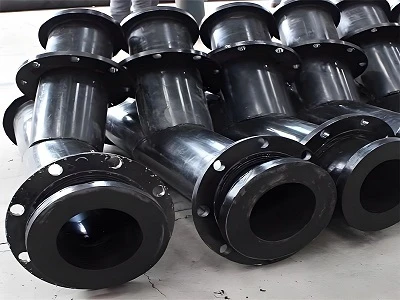
For a mine considering UHMWPE elbows or a complete UHMWPE pipeline, the fitting should be evaluated as part of the system rather than as an isolated wear component.
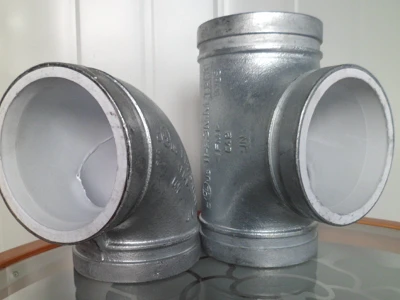
Five Checks Before Ordering a Replacement Elbow
1. Identify the actual wear location
Do not record a removed elbow simply as "worn out." Photograph it before cleaning, mark the flow direction, and identify the deepest groove or thinnest area. If possible, record the remaining wall thickness at repeatable locations.
This information helps distinguish concentrated impact from more evenly distributed abrasion.
2. Check the slurry characteristics
Confirm the mineral type, solids concentration, particle-size distribution, and whether the slurry composition has changed. If a mine begins processing a different ore body, the wear behavior may change even though the pipeline itself remains unchanged.
A supplier cannot reliably recommend a fitting based only on a statement such as "the pipe carries mining slurry."
3. Review the bend geometry
Record the elbow diameter, bend radius, connection arrangement, and available installation space. A replacement fitting must fit the existing system, but copying the original geometry without reviewing its wear history may repeat the same problem.
Any proposed change to the bend radius or layout should be checked against the hydraulic design, installation constraints, and manufacturer's recommendations.
4. Confirm the pressure and temperature requirements
Provide both normal operating pressure and the relevant design conditions. The review should include pump startup, shutdown, valve operation, and other events that could produce pressure transients.
The product's documented pressure rating must cover the intended service conditions. Do not infer that rating from a general material description or from the nominal diameter.
5. Examine the connection and support arrangement
A fitting can fail because of mechanical loading even when abrasion is not the main cause. Misaligned flanges, inadequate support, external impact, or movement at a connected pump may introduce additional stress.
Before fitting a replacement, check alignment, support positions, gasket compatibility, and the manufacturer's assembly instructions.
How to Build a More Useful Wear Record
Mining maintenance teams often have more information available than they realize. The problem is that the records may be stored separately in maintenance reports, pump logs, purchasing documents, and photographs.
A simple component history can bring those records together. For each elbow, record the installation date, operating hours if available, slurry type, nominal diameter, pressure conditions, and date of removal.
Add the observed wear location, wall-thickness readings, and the reason for replacement. If the line has experienced a flow or pressure change, include that information as well.
After several replacement cycles, the mine can compare the service history of different locations. If one elbow consistently wears much faster than another, the difference may point to local hydraulic conditions or geometry rather than a general problem with the pipe material.
This information also makes supplier discussions more productive. Instead of asking which pipe is the most wear-resistant, the mine can explain where the damage occurs and what the replacement needs to withstand.
UHMWPE Pipe Selection: Numerical References
The following values provide material context and engineering unit conversions. They are not a pressure-rating schedule for finished UHMWPE mining pipes.
|
Parameter |
Numerical reference |
Engineering note |
|
Molecular-weight classification |
UHMWPE is commonly classified above 1,000,000 g/mol |
The exact grade and test method should be confirmed |
|
Typical UHMWPE density range |
Approximately 0.93–0.94 g/cm³ for many unfilled grades |
Verify the actual material specification |
|
Density unit conversion |
1 g/cm³ = 1,000 kg/m³ |
Useful for comparing material data sheets |
|
Pressure conversion |
1 MPa = 10 bar |
Convert pressure values in supplier documents |
|
Pressure conversion |
1 bar = 100 kPa |
Convert operating and design pressure |
|
Length conversion |
1 m = 1,000 mm |
Compare pipe and fitting dimensions |
|
Temperature conversion |
20°C = 68°F |
Reference for ambient conditions |
|
Pipe outside diameter |
Project-specific |
Confirm from the product drawing |
|
Pipe wall thickness |
Product-specific |
Required for pressure and dimensional verification |
|
Elbow bend radius |
Design-specific |
Must be confirmed against the fitting drawing |
|
Allowable operating pressure |
Product- and temperature-specific |
Obtain the manufacturer's documented rating |
|
Wear life |
Application-specific |
Requires relevant test results or operating history |
A useful quotation request should include the pipe diameter, wall thickness or required pressure class, elbow geometry, slurry composition, operating temperature, design pressure, and connection details. Where a previous fitting has failed, include photographs and available wear measurements.
Why the Cheapest Replacement May Not Be the Lowest-Cost Choice
The purchase price of an elbow is only one part of its cost to the mine. Replacement also requires labor, isolation, equipment access, installation, and a return to normal operation. If the same fitting fails repeatedly, those costs accumulate.
That does not mean the most expensive material is automatically the best choice. A higher-cost fitting may provide little benefit if the actual cause of failure is an unsuitable flow condition or mechanical misalignment.
A more useful comparison considers the expected service conditions, the evidence supporting the wear-performance claim, installation compatibility, and the consequences of another shutdown.
Where UHMWPE is being compared with steel or another pipe material, request comparable test information. Wear-resistance figures obtained using different abrasive media, loads, test methods, or reference materials should not be treated as directly interchangeable.
The final decision should be based on the complete application, not a single promotional number.
Conclusion
When an elbow wears out before the straight sections around it, the failure pattern deserves attention. Particle impact, slurry properties, bend geometry, operating conditions, and connection loads can all influence the result.
UHMWPE may be a suitable choice for abrasive mining slurry service, particularly where wear resistance is a major requirement. Its suitability still needs to be confirmed against the pipe dimensions, pressure conditions, temperature, and fitting design.
Before ordering another elbow, document the damaged area, review the slurry and hydraulic conditions, and check whether the original geometry contributed to the problem. That investigation gives the mine a better basis for choosing a replacement that addresses the actual failure mechanism.
FAQ
1. Why do mining slurry elbows often wear faster than straight pipes?
Particles may change direction at the bend and repeatedly strike a concentrated area of the wall. The severity depends on slurry composition, particle size, flow conditions, and bend geometry.
2. Can UHMWPE elbows eliminate abrasive wear?
No. UHMWPE can offer good resistance to abrasion, but wear can still occur. Actual performance depends on the material grade, fitting design, slurry properties, and operating conditions.
3. Is UHMWPE suitable for every mining slurry pipeline?
No. The material must be assessed for pressure, temperature, chemical exposure, dimensions, and connection requirements. Other materials may be more appropriate for some duties.
4. What information helps a supplier recommend a replacement elbow?
Provide the pipe diameter, wall thickness or pressure requirement, bend geometry, slurry characteristics, operating conditions, connection details, and photographs or measurements of the failed fitting.
5. How can a mine determine whether a new elbow design performs better?
Record the operating hours, wear location, wall-thickness measurements, and slurry conditions for the original and replacement fittings. Comparisons are more meaningful when operating conditions are documented.
Request a UHMWPE Pipe Quotation
|
Step |
Process |
|
1 |
Send Requirements - DN, pressure, quantity and application |
|
2 |
Specification Confirmation - Pipe type, size, wall thickness and connection |
|
3 |
Quotation - Price, lead time, packing and shipping terms |
|
4 |
Order & Production - Contract, payment and production |
|
5 |
Inspection & Delivery - Quality inspection and shipment |
For UHMWPE mining pipe, UHMWPE lined steel pipe, UHMWPE elbows and link flanges, send us:
DN + PN + Slurry Type + Solid Concentration + Particle Size + Flow Rate + Pipeline Length + Quantity
Luoyang Zhengju New Materials Technology Co., Ltd.
WhatsApp:+86 19937270645
Email: baibaili456@gmail.com
Wechat: +86 19937270645
Get Best Price for Your Grinding Slurry Pipeline.