Introduction
A mining pipeline may operate at its normal working pressure for most of the day, but the pressure inside the pipe is rarely completely constant. Pump start-up, shutdown, changes in production rate and adjustments to the conveying system can cause the pressure to rise and fall repeatedly.
This is different from asking whether a pipe can withstand one high-pressure event.
For a pipeline expected to operate continuously for years, the number of pressure cycles and the range of pressure changes can also become part of the service condition. This is particularly relevant for composite pressure pipes such as SRTP, where PE layers and steel-wire reinforcement work together as the finished pipe structure.
Understanding pressure cycling helps buyers look beyond a single pressure number when evaluating SRTP mining pipe.
Pressure Cycling Is Not the Same as Pressure Surge
These two conditions are often discussed together, but they are not identical.
A pressure surge is normally associated with a rapid change in flow or pressure. It can occur when a pump starts or stops suddenly, or when a valve changes position rapidly.
Pressure cycling is broader. It refers to repeated changes between different pressure conditions during operation.
For example, a mine may operate a pumping system during production hours and reduce or stop pumping at other times. The pipeline can therefore experience repeated transitions between lower and higher internal pressure.
The pipe does not simply experience the maximum pressure once. It is subjected to a repeated loading history.
How Does Internal Pressure Load an SRTP Pipe?
Internal pressure creates circumferential stress in the pipe wall.
In SRTP, the high-strength steel-wire reinforcement is incorporated into the PE structure to provide additional structural support. The PE layers form the main polymer structure, protect the reinforcement and provide the surface in contact with the transported medium.
As internal pressure increases, the composite structure carries the resulting load.
When pressure decreases, the load is reduced.
Repeated changes therefore produce repeated mechanical loading of the finished pipe. The actual response depends on factors such as pressure range, cycle frequency, temperature, reinforcement design, PE material and manufacturing quality.
This is one reason why the operating history of a mining pipeline can be relevant when specifying a pressure pipe.
Why Is the Pressure Range Important?
Consider two pipelines with the same maximum working pressure.
The first operates close to that pressure with relatively stable conditions.
The second repeatedly moves from low pressure to high pressure and back again because of frequent pump cycling.
Although the maximum pressure may be identical, the mechanical loading history is different.
For the second system, the supplier may need to understand the frequency of pressure changes and the duration of operation at different pressure levels.
This does not mean that every variable-pressure system requires a different pipe. It means that the actual operating pattern should be included when evaluating the suitability of the product.
What Role Does the Steel-Wire Reinforcement Play?
The reinforcement layer is one of the defining features of SRTP.
A conventional solid-wall PE pipe depends primarily on its polymer wall to resist internal pressure. SRTP introduces a high-strength steel-wire reinforcement layer within the composite structure.
The reinforcement contributes to pressure-bearing capability while the surrounding PE layers provide the polymer matrix and protective barrier.
The performance of the finished pipe therefore depends on the cooperation of these layers.
The steel wire should not be viewed as an independent structural component simply placed inside a plastic pipe. Its arrangement, embedding and interaction with the surrounding PE structure are part of the composite design.
What About Long-Term Operation?
Repeated pressure loading is only one factor affecting service life.
Operating temperature, transported medium, installation conditions, manufacturing quality and connection design also influence the long-term behavior of a mining pipeline.
For this reason, pressure cycling should not be treated as an isolated laboratory concept.
If a mine operates pumps frequently, changes production rates throughout the day or repeatedly restarts sections of a pipeline, these conditions should be communicated during procurement.
The supplier can then evaluate the pipe specification against the actual operating environment rather than considering only the nominal pressure rating.
Product Features
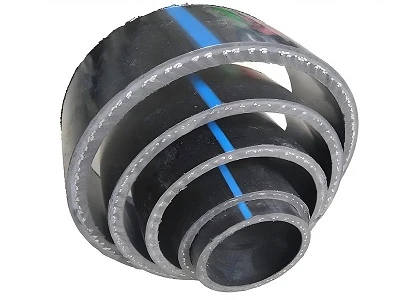
SRTP mining pipe combines a PE pipe structure with a high-strength steel-wire reinforcement layer. The composite construction is intended for pressure applications where a reinforced structure is required while maintaining the corrosion resistance and relatively low weight associated with polyethylene-based pipe.
The inner PE layer provides a smooth surface for fluid transport. The steel-wire reinforcement contributes to pressure-bearing performance. The outer PE layer protects the reinforced structure from the surrounding environment.
The actual pressure performance depends on the specified pipe design, pressure class, dimensions, materials and manufacturing process.
Product Parameters
|
Parameter |
Typical SRTP Mining Pipe Range / Specification |
|
Product Type |
Steel Wire Reinforced PE Pipe / SRTP |
|
Nominal Diameter |
DN50–DN1000, with larger sizes available according to specification |
|
Pressure Rating |
PN1.0–PN10 |
|
Standard Length |
9 m / 12 m |
|
Reinforcement |
High-strength steel wire mesh / steel-wire reinforcement |
|
Pipe Structure |
PE inner layer + steel reinforcement + PE outer layer |
|
Conveying Media |
Mining water, slurry and other specified fluids |
|
Operating Temperature |
According to PE material grade and project requirements |
|
Connection |
According to diameter, pressure class and project requirements |
|
Inspection |
Dimensional, material and pressure-related inspection according to agreed specification |
Conclusion
Repeated pressure changes are different from a single maximum-pressure condition. For mining pipelines with frequent pump cycling or variable operating conditions, the pressure history can become an important part of the pipe's service environment.
SRTP uses a composite PE and steel-wire structure to provide pressure-bearing performance, but the final selection should still be based on the actual pressure range, operating temperature, cycle pattern and project requirements.
For procurement, providing the supplier with the real operating conditions gives a much more useful basis for selecting SRTP mining pipe than specifying only the maximum pressure.
Primary Keyword
SRTP Mining Pipe
Secondary Keywords
SRTP Pressure Cycling
SRTP Pressure Performance
Steel Wire Reinforced PE Pipe
Request an SRTP Pipe Quotation
|
Step |
Process |
Details |
|
1 |
Send Requirements |
DN, pressure, medium, working temperature and application |
|
2 |
Specification Confirmation |
Pipe structure, pressure rating, specification and connection |
|
3 |
Quotation |
Price, lead time, packing and shipping terms |
|
4 |
Order & Production |
Contract, payment and production |
|
5 |
Inspection & Delivery |
Quality inspection and shipment |
For Steel Wire Mesh Reinforced PE Pipe (SRTP), steel wire reinforced PE pipe and mining pressure pipelines, send us:
DN + PN + Medium + Working Temperature + Installation Method + Pipeline Length + Quantity
For slurry applications:
Slurry Type + Solid Concentration + Particle Size
Luoyang Zhengju New Materials Technology Co., Ltd.
WhatsApp:+86 19937270645
Email: baibaili456@gmail.com
Wechat: +86 19937270645
Get Best Price for Your Mining Pressure Pipeline