Introduction
Trenchless installation can help mining projects cross roads, railways, developed areas and other locations where open excavation is difficult. However, rocky ground creates specific challenges for horizontal directional drilling (HDD), including bore instability, hard inclusions, high pulling forces and potential damage to the installed pipe.
Choosing a pipe based only on operating pressure or material strength is not enough. The project team must establish whether the ground can be drilled reliably and whether the complete pipe system can withstand the installation loads.
Why Rocky Ground Complicates HDD
Rock formations vary considerably. Competent, relatively uniform rock may be drillable with suitable equipment, while fractured rock, mixed soil and rock, cobbles or boulders can make the bore more difficult to control.
A bore that is unstable or inadequately cleaned can increase friction during pullback. Hard fragments may score the pipe exterior, while excessive pulling force can exceed the allowable installation load. Drilling fluid can also escape through fractures or weak ground, depending on geology and drilling conditions.
PE100+ HDD guidance identifies gravel and cobbles as challenging ground conditions and emphasizes calculating allowable pullback loads, selecting appropriate drilling equipment and reducing surface-damage risk. These principles help frame the feasibility study, but they do not establish HDD suitability for UHMWPE or SRTP products without product-specific evidence. <Cite refs={["turn699034search2","turn699034search11"]}/>
Which Pipe Material Should Be Considered?
HDPE is commonly used in suitable HDD systems because compatible polyethylene pipe strings can be assembled using approved fusion procedures. The selected SDR must be checked against installation tension as well as operating pressure. A pipe that meets the service-pressure requirement may still be unsuitable for the calculated pullback load.
UHMWPE may be considered where the conveyed medium is abrasive slurry, but its wear resistance does not automatically establish its suitability for HDD. The manufacturer must confirm allowable axial load, bending radius, joint capacity and installation procedures for the specific system.
SRTP requires particular attention to its composite structure and connection method. The presence of steel-wire reinforcement should not be treated as proof that the pipe can withstand HDD pullback. Written confirmation of installation limits is necessary before selecting it for this method.
Illustrative HDD Pipe Parameters
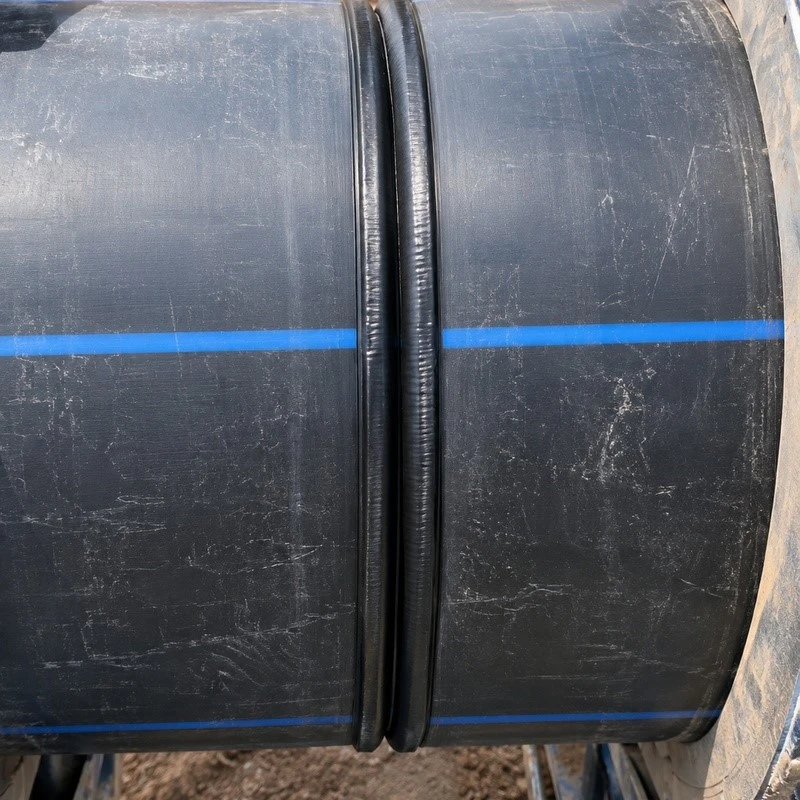
This table shows example PE100 pipe dimensions and planning variables. It is a preliminary reference, not a final HDD design or a recommendation for all three pipe materials.
|
Parameter |
Example A |
Example B |
Example C |
|
Nominal outside diameter |
110 mm |
225 mm |
315 mm |
|
Example SDR |
SDR11 |
SDR17 |
SDR11 |
|
Approximate wall thickness |
10.0 mm |
13.2 mm |
28.6 mm |
|
Illustrative route length |
50 m |
150 m |
300 m |
|
Main installation check |
Bore and pulling head |
Pullback load and joint capacity |
Pullback load, bending and bore condition |
|
Required field control |
Inspect pipe surface |
Monitor and record pulling force |
Monitor pulling force and inspect pipe string |
The route lengths are illustrative planning scenarios, not guaranteed HDD installation limits. Wall thickness is calculated approximately from outside diameter divided by SDR. Actual pipe selection requires the geological investigation, bore geometry, calculated pulling force, manufacturer's allowable load and final operating conditions.
The PN rating should be specified separately according to the pipe material, applicable standard, medium and service conditions. It cannot replace an HDD pullback calculation.
What to Check Before Approving HDD
The feasibility study should begin with a geological investigation that identifies rock type, fractured zones, groundwater, cobbles and possible bore instability. The drilling contractor should then select appropriate tooling and a bore profile based on the site findings.
The engineering team must calculate installation tension and verify the capacity of the pipe, joints and pulling assembly. Minimum bending radius, pipe-string handling, surface protection and the space required for assembly should also be checked.
A suitable pulling-force monitoring arrangement can help identify unexpected increases in load during installation. The project should also establish stop-work criteria and contingency measures for bore collapse, drilling-fluid loss or excessive pulling resistance.
If the calculated loads or ground risks cannot be managed within the approved limits, the route or installation method should be reconsidered. Open-trench installation, a casing-based crossing or another engineered solution may be more appropriate.
FAQ
Can HDD be used in solid rock?
It can be feasible with suitable equipment and an appropriate geological assessment. Rock type, fractures, alignment, bore stability and contractor experience all affect feasibility.
Which pipe is best for HDD in rocky ground?
There is no universal answer. Suitable HDPE systems are commonly used, while UHMWPE and SRTP require confirmation of the specific product's pullback capacity, joints and installation requirements.
Does a higher pressure rating mean the pipe can withstand more pulling force?
Not necessarily. Operating pressure and installation tension are different design conditions. Both must be checked independently.
Can pipe damage occur even if the pulling load stays within limits?
Yes. Abrasion, scoring, localized damage and excessive bending may occur independently of the maximum axial load. Bore preparation, handling and surface inspection are also important.
What information should a buyer provide for an HDD pipe quotation?
Provide the pipe material, outside diameter, wall thickness or SDR, conveyed medium, operating pressure, route length, geological information, bore profile and jointing method. The manufacturer and contractor can then assess whether the proposed pipe system is suitable for the installation.
Conclusion
HDD feasibility in rocky mining terrain depends on both ground conditions and pipe-system performance. Bore stability, drilling-fluid control, pulling force, bending radius, joint capacity and surface damage must all be considered before construction.
HDPE, UHMWPE and SRTP serve different operating requirements, but none should be approved for a trenchless method based on material properties alone. The final decision should be supported by geological data, installation calculations and the manufacturer's documented requirements.
Primary Keyword
trenchless pipeline installation in rocky ground
Secondary Keywords
HDD pipe selection, horizontal directional drilling in rock, HDPE pipe HDD installation, UHMWPE mining pipe, SRTP pipe installation, mining pipeline construction, HDD pulling force