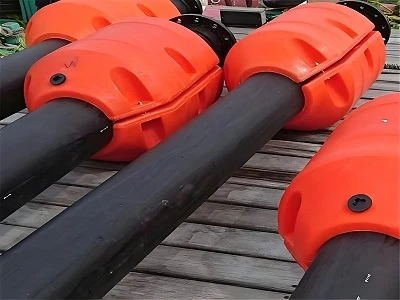
In mining, slurry transportation is never just about moving liquid.
It is a long-term endurance test for your entire pipeline system.
High pressure. Long distance. High solids concentration. Abrasive particles. Frequent bends. Pump start-stop cycles. Water hammer.
Individually, none of these conditions are unusual.

But when they exist together in a high-pressure mining slurry pipeline, they push conventional piping systems to their limits.
And once failure occurs, it rarely means "a small leak repair."

It means production shutdown, emergency maintenance, slurry spill risk, pump reconfiguration, environmental compliance pressure, and escalating lifecycle costs.
That's why more engineers are asking:
Why is the steel wire mesh reinforced polyethylene composite pipe increasingly used in high-pressure slurry pipe systems?
The answer is not about trend-it's about structural balance between strength, corrosion resistance, abrasion performance, installation efficiency, and lifecycle cost.
What Is a Steel Wire Mesh Reinforced PE Composite Pipe?
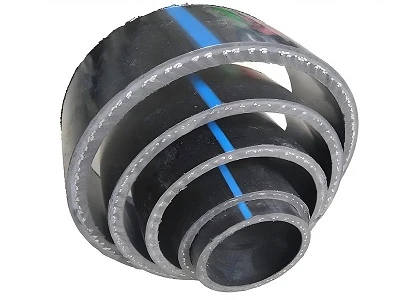
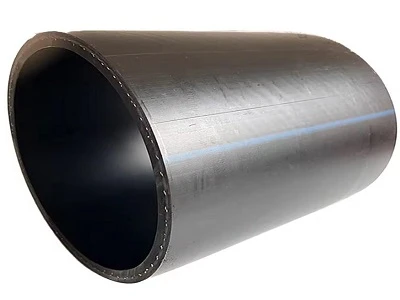
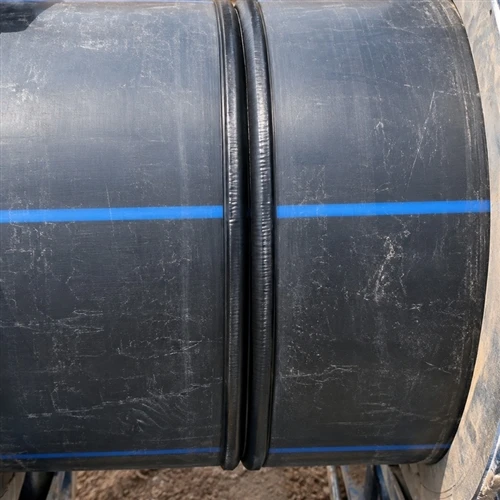
A steel wire mesh reinforced PE composite pipe (often classified under advanced HDPE composite pipe systems) combines:
Embedded steel wire mesh skeleton – carries internal pressure and structural load
Inner and outer polyethylene (PE) layers – provide corrosion resistance, abrasion adaptability, smooth flow surface, and chemical stability
This dual-structure design allows the pipe to behave like:
Steel when handling pressure
Polyethylene when resisting corrosion and scaling
For mining slurry transport, this hybrid performance is particularly valuable.
Why Mining Slurry Is So Demanding
Mining slurry is not simply "water with sand."
Its operational complexity typically includes:
High operating pressure with fluctuation (pump cycling, valve switching, water hammer)
High solids content with hard, angular particles
Long-distance transport with elevation changes
Multiple elbows, reducers, and tees causing turbulence
Chemically unstable water quality (pH variation, dissolved ions, reagents)
Limited maintenance windows and high shutdown costs
In such environments, static specifications like "pressure rating" or "wear resistance" are not enough.
What matters is long-term system stability under dynamic conditions.
Why It Performs Better in High-Pressure Mining Slurry Pipelines
1. Structural Stability Under Pressure Fluctuation
In many tailings slurry pipe systems, the real challenge is not average pressure, but sudden pressure spikes.
Water hammer and pump start-stop cycles can cause:
Radial expansion
Fatigue stress
Joint loosening
Premature failure
The embedded steel wire mesh distributes hoop stress effectively, improving dimensional stability and enhancing resistance to pressure impact.
For mining operations, stability equals fewer shutdowns.
2. Superior Corrosion Resistance for Complex Water Chemistry
Mining water often contains:
Acidic or alkaline components
Chlorides and dissolved salts
Residual flotation chemicals
Unlike traditional steel pipelines, the polyethylene lining resists chemical attack, reducing internal corrosion and unexpected wall thinning.
For long-distance mining pipeline systems, predictable service life significantly lowers lifecycle cost (LCC).
3. Lower Friction, More Stable Pumping Efficiency
Energy consumption is a major cost in slurry transport.
The smooth PE inner surface:
Reduces friction coefficient
Slows scale buildup
Maintains hydraulic efficiency over time
Compared with roughened steel pipelines, a mining slurry pipeline using composite PE structure can maintain closer-to-design flow conditions for longer periods.
Lower friction = reduced pump load = more stable energy cost.
4. Improved Abrasion Adaptability in Critical Sections
In slurry transport, the highest wear rarely occurs in straight sections.
Critical wear points include:
Elbows
Tees
Reducers
Directional transition zones
These locations experience particle impact and turbulence.
The composite structure provides better impact tolerance compared with brittle materials and reduces the risk of sudden penetration in high-wear areas.
5. Faster Installation and Easier Maintenance
In mining projects, material cost is often not the largest expense. Downtime is.
Steel wire mesh reinforced PE composite pipe offers:
Modular connection systems (electrofusion, flange transitions)
Reduced on-site welding complexity
Faster installation
More convenient sectional replacement
For projects with limited construction windows, installation efficiency directly impacts project ROI.
When Should You Consider This Type of Slurry Pipe?
This solution is particularly suitable when:
Operating pressure is high and fluctuating
Solids content is high with abrasive particles
Pipeline distance is long and elevation difference is significant
Corrosion has historically caused failures
Shutdown cost is high
Maintenance resources are limited
In short, the more critical your mining slurry pipeline system is, the more valuable structural reliability becomes.
Key Selection Considerations
When selecting a high-pressure slurry pipe, focus on:
1. Design Pressure & Surge Conditions
Determine pressure class (PN rating) based on operating pressure plus surge allowance.
2. Flow Rate & Velocity Control
Excessive velocity accelerates wear; too low velocity causes sedimentation.
3. Particle Size & Hardness
Critical for evaluating abrasion resistance strategy and reinforced sections.
Typical Specification Range (Reference Only)
|
Item |
Typical Range / Options |
|---|---|
|
Nominal Diameter (DN) |
DN50–DN600 (common range in mining applications; determined by flow rate and velocity) |
|
Pressure Rating |
PN1.0–PN2.5 and above (selected based on system pressure and surge allowance) |
|
Length Form |
Standard straight lengths or on-site assembly (depending on transportation and installation conditions) |
|
Connection Method |
Electrofusion / butt fusion fittings, flange adapters, etc. (based on operating conditions and maintenance requirements) |
|
Applicable Media |
Slurry, tailings slurry, return water and other solids-containing media (temperature and chemical environment must be verified) |
Frequently Asked Questions
Can It Replace Steel Pipe Completely?
In many high-pressure mining slurry pipeline applications, yes-especially where corrosion and maintenance frequency are major concerns.
However, extremely high temperatures or severe mechanical impact exposure require additional engineering evaluation.
Will Abrasive Slurry Quickly Wear Through the Pipe?
Wear rate depends on velocity, particle characteristics, turbulence, and system design-not only material type.
Proper hydraulic design, controlled start-stop procedures, and reinforced fittings are equally important.
Why Does Sedimentation Still Occur in Some Systems?
Sedimentation is usually related to:
Insufficient velocity
Oversized diameter
Long pump downtime
Improper slope design
Material upgrade alone cannot solve hydraulic design issues.
A Balanced Engineering Solution for Real Mining Conditions
Steel wire mesh reinforced PE pipes are widely adopted in high-pressure mine slurry systems to resolve pressure fluctuation, abrasion, corrosion, high power consumption and expensive downtime, not for marketing hype.
Combining steel strength and HDPE corrosion resistance, they deliver balanced durability, safety and cost efficiency. Share your pipeline's pressure, flow, slurry and terrain data; we'll customize optimal pipe solutions.