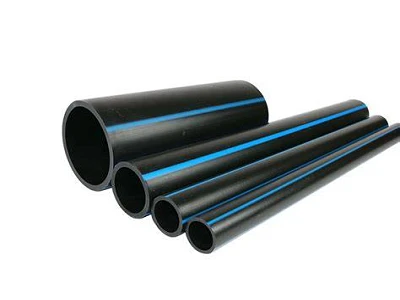
Introduction
A mine drainage pipeline can be exposed to more than internal water pressure.
Once the pipe is buried underground, the surrounding soil becomes part of the operating environment. Backfilling, uneven settlement, ground movement, and local changes in soil pressure can place additional loads on the pipeline.
A rigid pipe may have limited ability to accommodate these changes without transferring high stress to the pipe wall or joints. HDPE mining pipe takes a different approach. Its combination of strength and flexibility allows the pipe to tolerate a certain degree of deformation while remaining in service.
For underground mine drainage, this characteristic can be important when the pipeline passes through areas where ground conditions are not completely stable.
What Happens When the Ground Moves?
Buried pipelines do not always remain in perfectly uniform soil conditions.
One section may settle more than another. Backfill may compact unevenly. Excavation around the pipeline can change the surrounding support conditions. In underground workings, local ground movement can also change the loads acting on the buried pipe.
If the pipe is very rigid, ground movement can create concentrated stresses. These stresses may appear at pipe joints, connections, or sections where the surrounding soil provides uneven support.
The issue is not simply whether the pipe can withstand its rated internal pressure. The pipeline also needs enough structural tolerance for the conditions surrounding it.

HDPE Mining Pipe Can Accommodate Controlled Deformation
HDPE is a thermoplastic material with significantly greater flexibility than many traditional rigid pipe materials.
When external soil movement occurs, an HDPE pipe can deform to a certain extent rather than behaving as a completely rigid structure. This can help distribute local deformation along the pipe instead of concentrating all of the movement at one point.
This behavior is particularly relevant for buried mine drainage lines, where the pipe may experience changes in soil support during the operating life of the system.
Flexibility does not mean the pipe should be allowed to deform without limits. Pipe diameter, wall thickness, pressure rating, burial depth, soil conditions, installation quality, and support conditions still determine whether the pipe is suitable for a particular application.
Why Joints Matter in a Moving Ground Environment
Ground movement does not affect only the pipe wall.
Connections can become critical points when different sections of a pipeline move relative to each other. A pipeline with many rigid connections may have less tolerance for differential movement between sections.
HDPE mining pipe can be joined by thermal fusion methods such as butt fusion or electrofusion, depending on the pipe system and project requirements. A properly made fusion joint creates a continuous polyethylene connection rather than relying on a separate mechanical sealing surface at every joint.
For buried drainage pipelines, joint performance matters because a pipe can have sufficient material strength but still suffer leakage if the connection system is poorly selected or improperly installed.

Flexibility Is More Useful During Installation Than It First Appears
The advantage of HDPE flexibility is not limited to long-term ground movement.
Mining drainage pipelines often need to follow practical underground routes rather than perfectly straight alignments. The pipeline may need to pass around existing structures, follow changes in elevation, or adapt to the available installation corridor.
A flexible pipe can accommodate gradual changes in alignment more easily than a highly rigid pipe.
However, flexibility should not be confused with uncontrolled bending. Minimum bending radius and installation requirements should be considered according to the pipe diameter, pressure class, temperature, and manufacturer specifications.
What About External Loads?
A flexible pipe does not simply "ignore" external loads.
For a buried HDPE mining pipe, soil and traffic or equipment loads are transferred through the surrounding soil-pipe system. Proper trench preparation, bedding, backfilling, and compaction therefore have a direct influence on long-term performance.
This is why pipe selection cannot be separated from installation conditions.
A pipe with good material flexibility can perform well in a properly designed buried system, but poor bedding or inadequate backfill can create local deformation and excessive stress regardless of the material.
Where Does This Matter in Mine Drainage?
The flexibility of HDPE mining pipe is particularly relevant where drainage lines are buried over long distances or pass through areas with changing ground conditions.
Typical applications include underground mine water drainage, buried mine water pipelines, surface drainage systems, and pipelines installed through areas where settlement or local ground movement is possible.
For relatively stable ground, flexibility may simply make installation easier. In less uniform ground conditions, it can become part of the pipeline's ability to accommodate movement over its service life.
What Should Be Specified When Buying HDPE Mining Pipe?
For procurement, the specification should provide more than the nominal diameter.
The buyer should identify the required DN, pressure rating, wall thickness, installation method, operating temperature, pipe length, and connection method. For buried applications, burial depth and general soil conditions should also be considered when evaluating the pipe system.
HDPE Mining Pipe Parameters
|
Parameter |
Typical Specification |
|
Material |
HDPE |
|
Nominal Diameter |
DN50–DN1200 |
|
Pressure Rating |
PN1.0–PN10 |
|
Standard Length |
9 m / 12 m |
|
Application |
Mine drainage, mine water, dewatering |
|
Connection |
Butt fusion / Electrofusion |
|
Installation |
Underground, buried, surface |
FAQ
Is HDPE mining pipe suitable for buried mine drainage?
Yes. HDPE is widely used for buried drainage because its flexibility and toughness allow it to accommodate certain levels of deformation and ground movement when the pipe system is properly designed and installed.
Does flexible mean HDPE can withstand unlimited ground movement?
No. HDPE has good flexibility, but there are still limits. Diameter, wall thickness, pressure, burial depth, soil conditions, installation quality, and deformation requirements all need to be considered.
Can HDPE pipe be used where soil settlement occurs?
It can be considered for applications involving differential settlement because its flexibility allows controlled deformation. The actual suitability depends on the expected settlement and the complete buried-pipe design.
How is HDPE mining pipe connected?
Butt fusion and electrofusion are commonly used for HDPE pipe systems. The appropriate method depends on pipe dimensions, pressure requirements, equipment, and project conditions.
Conclusion
Ground movement is an external condition that a mine drainage pipeline cannot control.
The practical question is how the pipe responds when the surrounding soil does not remain perfectly stable. HDPE mining pipe combines pressure-bearing capability with material flexibility, allowing it to accommodate controlled deformation rather than behaving as a completely rigid pipeline.
For buried mine drainage, this flexibility can simplify routing and provide additional tolerance to settlement and changing ground conditions. Proper installation and system design remain essential, but the material itself gives HDPE an important advantage where the ground cannot be assumed to stay perfectly still.
Request an HDPE Pipe Quotation
|
Step |
Process |
Details |
|
1 |
Send Requirements |
DN, pressure, medium, working temperature and application |
|
2 |
Specification Confirmation |
Pipe type, material grade, pressure rating, wall thickness/SDR and connection |
|
3 |
Quotation |
Price, lead time, packing and shipping terms |
|
4 |
Order & Production |
Contract, payment and production |
|
5 |
Inspection & Delivery |
Quality inspection and shipment |
For HDPE Mining Pipe, Send Us:
DN + PN/SDR + Medium + Working Temperature + Installation Method + Pipeline Length + Quantity
For mine drainage and dewatering applications, please also provide:
Application + Working Pressure + Installation Environment
For mineral-containing mine water, if available:
Water Chemistry / pH + Temperature + Suspended Solids
Luoyang Zhengju New Materials Technology Co., Ltd.
WhatsApp: +86 19937270645
Email: baibaili456@gmail.com
WeChat: +86 19937270645
Get Best Price for Your HDPE Mining Pipe.