Introduction
UHMWPE powder does not behave like ordinary polyethylene during processing.
Its extremely high molecular weight gives it very high melt viscosity, which is one of the main reasons conventional melt extrusion cannot simply be applied to UHMWPE.
For traditional ram extrusion, the material starts as powder. The powder is progressively compacted, heated and consolidated, then pushed through a heated forming die.
The important part is what happens between the loose powder and the formed pipe.
The Powder Is First Compacted
UHMWPE powder entering the equipment is not yet a dense pipe material.
There are spaces between the individual particles, and the powder must first be brought together.
In a ram extrusion system, the ram applies mechanical pressure to the powder charge.
The pressure reduces the loose structure and increases contact between particles.
This is not a small detail. The forming process depends on converting the loose powder into a sufficiently consolidated material before it reaches the final forming section.
Heating Does Not Mean Ordinary Melt Flow
This is where UHMWPE processing differs from conventional polyethylene extrusion.
With ordinary thermoplastics, it is common to think of pellets being heated until they form a flowing melt and are then pushed through a screw and die.
UHMWPE is different.
Because of its extremely high molecular weight and very high melt viscosity, traditional UHMWPE ram extrusion relies on compression and sintering/consolidation rather than treating the material as a freely flowing low-viscosity melt.
The powder is heated while it is under pressure.
As the temperature rises, the particles become capable of consolidating into a continuous material structure.
That is the important change taking place during plasticization.
What the Ram Actually Does
The ram has two important jobs in this process.
First, it compacts the powder.
Second, it advances the consolidated material toward and through the forming die.
The movement is not equivalent to a conventional screw continuously conveying a molten polymer.
Published descriptions of UHMWPE ram extrusion specifically describe the powder being packed in successive increments and pushed through a heated die.
The process is therefore often described as a continuous compression and sintering process, although the powder feeding and ram movement themselves can be intermittent.
Powder Consolidation Happens Under Heat and Pressure
The two conditions cannot be separated easily.
Pressure brings the particles into close contact.
Heat allows the polymer particles to consolidate.
As the material moves through the heated section, the individual powder particles progressively lose their original loose-powder structure and become part of a continuous UHMWPE body.
The material coming out of the die is therefore very different from the powder that entered the machine.
This is why UHMWPE powder processing is often described using terms such as consolidation and sintering rather than simply "melting."
Why the Process Is Sensitive to Stability
The ram extrusion process is repeated continuously.
A new quantity of powder enters.
The powder is compacted.
The material is heated and consolidated.
The consolidated material is advanced through the forming section.
This cycle has to remain stable.
If the amount of powder being introduced changes, the amount of material available for forming changes.
If the ram movement changes, the way material is compacted and advanced can change.
If the thermal condition changes, the consolidation behavior can also change.
These are process-control issues rather than a simple question of whether the UHMWPE has "melted."
The Forming Die Gives the Material Its Shape
After the powder has been sufficiently consolidated, it reaches the heated forming die.
The internal geometry of the die determines the cross-sectional shape of the extrudate.
For pipe production, this means the consolidated UHMWPE is formed around the required pipe geometry.
The die is therefore not just an opening at the end of the equipment.
It is the part of the process where the consolidated material is forced to take the required profile.
The die and the upstream consolidation process have to work together. A well-designed forming section cannot compensate for severely inconsistent material preparation.
Cooling Comes After Forming
The material leaving the heated forming section still has to be cooled.
Cooling allows the formed UHMWPE profile to stabilize.
The sequence is therefore not simply:
powder → die → finished pipe.
There is a process between these stages:
powder → compaction → heating → consolidation → forming → cooling.
The cooling stage is important because the pipe must reach a stable condition before final dimensional inspection and downstream processing.
Why This Matters for UHMWPE Mining Pipe
The purpose of this process is not just to make a plastic tube.
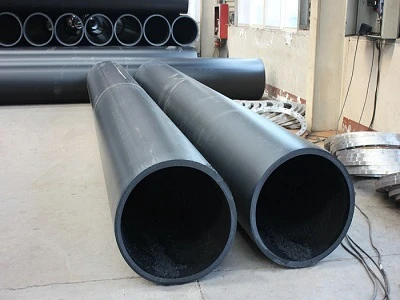
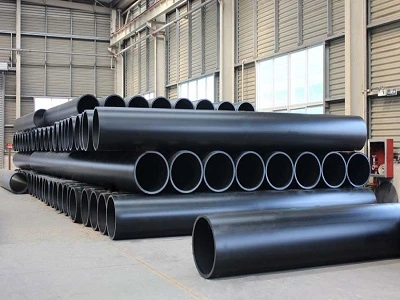
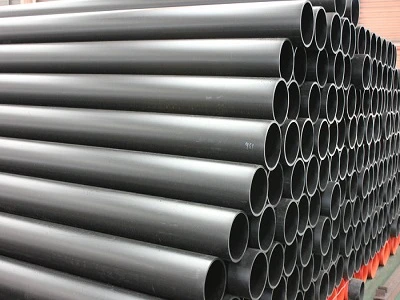
UHMWPE mining pipe is commonly selected for demanding service involving abrasive slurry, where wear resistance and the condition of the internal surface are important.
The manufacturing process has to produce a continuous material structure capable of providing those properties throughout the pipe wall.
That starts with the powder.
If the powder is not properly consolidated during forming, the problem is not limited to appearance. The material structure itself is part of the final product quality.
A Useful Way to Understand the Process
The simplest way to understand UHMWPE powder plasticization is to stop thinking about it as conventional pellet extrusion.
The starting material is powder.
Mechanical pressure brings the powder together.
Heat allows the particles to consolidate.
The ram advances the consolidated material.
The heated die gives it the required shape.
Cooling stabilizes the formed pipe.
That is the basic process logic behind UHMWPE ram extrusion.
FAQ
Is UHMWPE processed in the same way as HDPE?
No. Conventional HDPE can be processed through standard melt extrusion equipment, while UHMWPE's extremely high molecular weight and melt viscosity make conventional melt processing much more difficult. Ram extrusion is one established processing method for UHMWPE.
Is UHMWPE powder completely turned into a low-viscosity liquid?
No. That description is misleading. UHMWPE processing commonly relies on pressure-assisted consolidation and sintering because of the material's extremely high melt viscosity.
Why is the powder compacted before forming?
Compaction brings the powder particles into closer contact and reduces the loose powder structure before and during thermal consolidation.
What happens after the material leaves the forming die?
The formed material is cooled so that the pipe geometry can stabilize before subsequent inspection and processing.
Conclusion
UHMWPE powder plasticization is better understood as a pressure-assisted consolidation process than as ordinary polymer melting.
The powder is compacted by mechanical force, heated, consolidated and advanced through a heated forming die. The material then cools and stabilizes into the required profile.
This processing route is closely related to the unusual rheological behavior of UHMWPE. Its extremely high molecular weight is exactly why the material cannot simply be treated like conventional polyethylene during extrusion.
Primary Keyword :UHMWPE Powder Plasticization
Secondary Keywords:UHMWPE powder processing, UHMWPE plasticization, UHMWPE powder consolidation, UHMWPE sintering, UHMWPE pipe forming, UHMWPE ram extrusion
Request a UHMWPE Pipe Quotation
|
Step |
Process |
|
1 |
Send Requirements - DN, pressure, quantity and application |
|
2 |
Specification Confirmation - Pipe type, size, wall thickness and connection |
|
3 |
Quotation - Price, lead time, packing and shipping terms |
|
4 |
Order & Production - Contract, payment and production |
|
5 |
Inspection & Delivery - Quality inspection and shipment |
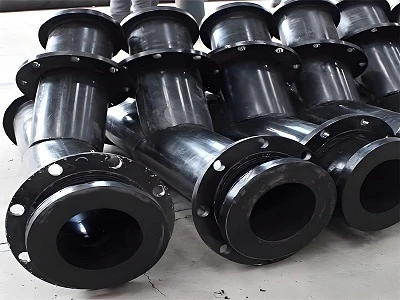
For UHMWPE mining pipe, UHMWPE lined steel pipe, UHMWPE elbows and link flanges, send us:
DN + PN + Slurry Type + Solid Concentration + Particle Size + Flow Rate + Pipeline Length + Quantity
Luoyang Zhengju New Materials Technology Co., Ltd.
WhatsApp:+86 19937270645
Email: baibaili456@gmail.com
Wechat: +86 19937270645
Get Best Price for Your Grinding Slurry Pipeline.