Introduction
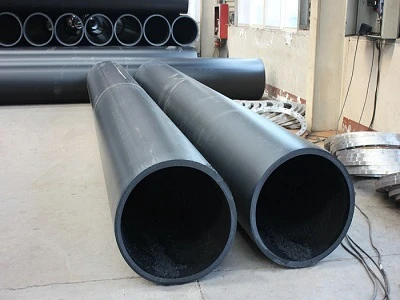
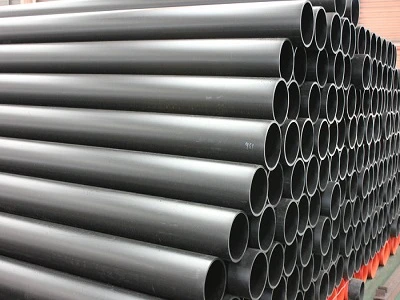
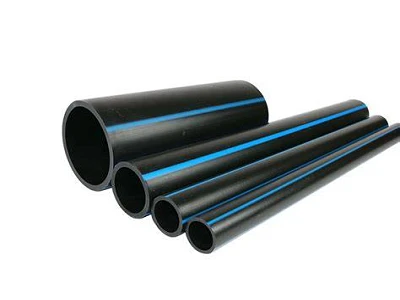
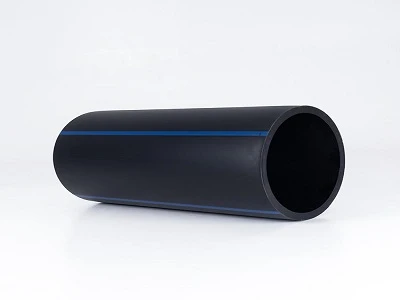
UHMWPE pipe looks simple after production. It is a polymer tube with a smooth surface, a defined diameter and a specified wall thickness.
But the manufacturing process behind that tube is not as simple as producing ordinary polyethylene pipe.
UHMWPE has an extremely high molecular weight and a highly entangled molecular structure. Its melt viscosity is much higher than that of conventional polyethylene, which makes ordinary melt extrusion difficult. The manufacturer therefore has to control material preparation, heating, pressure, forming and cooling as one continuous process.
For mining applications, this matters because the quality of the finished UHMWPE pipe depends not only on the raw material but also on how that material is transformed into a continuous pipe structure.
What Is UHMWPE Pipe Extrusion Molding?
UHMWPE pipe extrusion molding is a continuous manufacturing process in which UHMWPE material is processed and formed into a tubular profile with a specified diameter and wall thickness.
The basic production route can be understood as:
Raw material → feeding → heating and plasticization → consolidation → extrusion/forming → sizing → cooling → cutting → inspection
Each stage affects the next one.
If the raw material is inconsistent, processing can become unstable.
If plasticization is insufficient, consolidation can be affected.
If forming is unstable, wall thickness and diameter can fluctuate.
If cooling is uneven, the final dimensions may change.
Therefore, UHMWPE pipe extrusion molding is better understood as a chain of controlled operations rather than a single extrusion step.
Why UHMWPE Cannot Simply Be Processed Like Ordinary HDPE?
The difference starts with molecular weight.
UHMWPE contains exceptionally long polymer chains. These chains become heavily entangled, producing very high melt viscosity and extremely poor melt flow compared with conventional polyethylene.
That creates a problem for conventional extrusion.
In ordinary extrusion, polymer melt is transported through the barrel and pushed through a die. The material needs to flow sufficiently under heat and shear.
UHMWPE does not behave in the same way.
Its molecular chains strongly resist movement. Therefore, simply increasing the extrusion temperature or screw speed is not an effective universal solution.
The processing system has to create suitable conditions for consolidation and forming while avoiding unnecessary thermal degradation.
This is one reason UHMWPE pipe production requires specialized processing technology.
Feeding the UHMWPE Material
The first practical stage is material feeding.
For UHMWPE pipe production, the raw material is commonly handled in powder form rather than as the conventional pellets used in many polyethylene extrusion processes.
Stable feeding is important because the amount of material entering the forming system affects the amount of material available to create the pipe wall.
If feeding fluctuates, the forming conditions can also fluctuate.
For this reason, raw material preparation and feeding are closely connected with dimensional control.
The objective is not simply to feed material as quickly as possible.
The objective is to maintain a stable and predictable material supply throughout production.
Heating and Plasticization
After feeding, the UHMWPE material enters the heating and plasticization stage.
This stage is more complicated than simply raising the temperature above the polymer's melting point.
The material must become sufficiently workable for consolidation and forming, while the processing system must maintain a controlled thermal history.
UHMWPE has a high melting temperature compared with many common thermoplastics, and its extremely high molecular weight makes its processing behavior different from ordinary PE.
Temperature therefore needs to be controlled according to the actual material and equipment.
Too little thermal input can result in incomplete consolidation.
Excessive thermal exposure can increase the risk of polymer degradation.
The manufacturing target is a stable processing window rather than the highest possible temperature.
Consolidation Before Final Forming
The material entering the forming system may still contain individual powder particles.
The manufacturing process needs to turn these particles into a continuous polymer structure.
This is an important stage because the final pipe should not behave like a collection of particles that have merely been pressed together.
Pressure, temperature and residence time work together during consolidation.
The material gradually develops into a dense and continuous structure that can then be formed into the pipe geometry.
This is where the difference between raw UHMWPE powder and finished UHMWPE pipe becomes particularly clear.
The material may have excellent inherent properties, but those properties must be preserved through the manufacturing process.
Forming the Pipe Geometry
Once the material has reached the required processing condition, it is formed into a tubular profile.
The forming system determines the basic geometry of the pipe.
The important dimensions include outside diameter, inside diameter and wall thickness.
The material needs to be distributed consistently around the pipe cross-section.
If material distribution changes during production, the finished pipe can show dimensional variation.
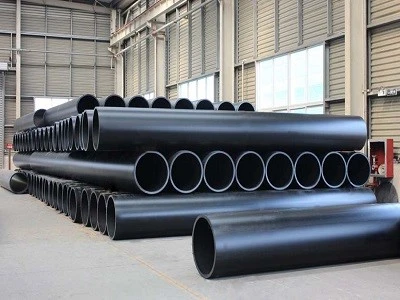
For large-diameter UHMWPE pipes, maintaining stable forming conditions becomes even more important because the amount of material being processed is significantly greater.
Cooling Is Part of the Forming Process
The pipe is not dimensionally stable immediately after forming.
As the polymer cools, its temperature decreases and its physical structure continues to develop.
The pipe therefore needs controlled cooling and sizing before it reaches its final condition.
This is especially important for maintaining roundness and dimensional consistency.
Cooling too aggressively or unevenly can create unnecessary dimensional variation.
Cooling too slowly can reduce production efficiency and change the thermal history of the material.
The cooling stage must therefore match the forming speed and pipe dimensions.
Cutting and Final Inspection
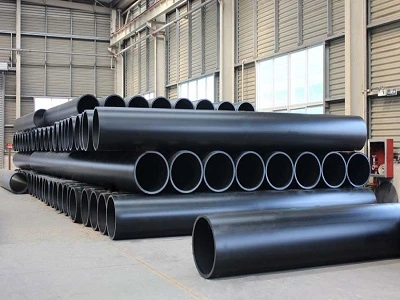
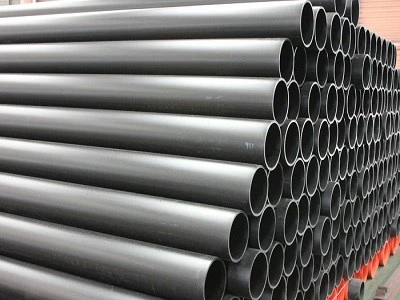
After cooling and stabilization, the continuous pipe is cut into specified lengths.
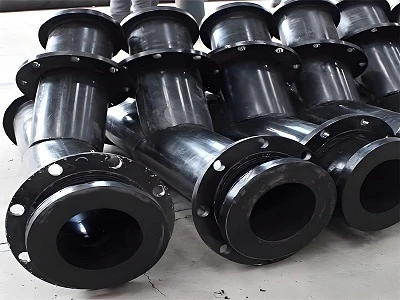
The pipe ends can then be processed according to the required connection system.
Finished pipes are inspected for dimensions and appearance.
Typical inspection includes outside diameter, inside diameter, wall thickness, length, straightness and surface condition.
For mining applications, additional performance tests may be included depending on the specification.
Why Does the Manufacturing Process Matter to Buyers?
A buyer may only see the final pipe.
The manufacturer sees the entire process that created it.
Two pipes can have the same nominal diameter and wall thickness but come from different manufacturing processes.
That is why a procurement evaluation should not focus entirely on the product datasheet.
Questions about raw material, forming technology, dimensional control and factory inspection can reveal much more about manufacturing capability.
FAQ
Is UHMWPE pipe manufactured in the same way as HDPE pipe?
Not exactly. UHMWPE has much higher molecular weight and much poorer melt flow, so its processing and forming requirements are different.
What is the most important part of UHMWPE pipe extrusion molding?
There is no single isolated step. Stable material preparation, plasticization, consolidation, forming and cooling all contribute to the final pipe quality.
Why is cooling included in the extrusion process?
Because the pipe continues to change dimensionally after forming. Controlled cooling helps stabilize its final geometry.
Conclusion
UHMWPE pipe extrusion molding is a controlled manufacturing sequence rather than a simple "melt and extrude" operation.
The manufacturer has to manage the unusual flow behavior of UHMWPE, establish sufficient consolidation, form the pipe geometry and then stabilize that geometry through controlled cooling.
For mining pipe buyers, understanding this process provides a more useful way to evaluate UHMWPE suppliers: the final pipe quality starts with the control of every stage that comes before it.
Primary Keyword: UHMWPE pipe extrusion molding
Secondary Keywords :UHMWPE pipe extrusion, UHMWPE pipe manufacturing process, UHMWPE pipe forming, UHMWPE extrusion molding, UHMWPE pipe production
Request a UHMWPE Pipe Quotation
|
Step |
Process |
|
1 |
Send Requirements - DN, pressure, quantity and application |
|
2 |
Specification Confirmation - Pipe type, size, wall thickness and connection |
|
3 |
Quotation - Price, lead time, packing and shipping terms |
|
4 |
Order & Production - Contract, payment and production |
|
5 |
Inspection & Delivery - Quality inspection and shipment |
For UHMWPE mining pipe, UHMWPE lined steel pipe, UHMWPE elbows and link flanges, send us:
DN + PN + Slurry Type + Solid Concentration + Particle Size + Flow Rate + Pipeline Length + Quantity
Luoyang Zhengju New Materials Technology Co., Ltd.
WhatsApp:+86 19937270645
Email: baibaili456@gmail.com
Wechat: +86 19937270645
Get Best Price for Your Grinding Slurry Pipeline.