Introduction
A mine water pipeline is not always operating at a steady pressure.
A pump starts. A valve closes. A section of the line is isolated for maintenance. The pressure inside the pipeline can change quickly, even when the normal operating pressure appears to be well within the pipe's rating.
These changes are important when selecting HDPE pipe. A pipeline designed only around its normal working pressure may not have enough allowance for pressure surges.
In mining operations, water supply systems can serve several areas at once. They may feed processing equipment, washing points, dust-suppression systems or other industrial facilities. If one part of the system changes its operating condition, the pressure elsewhere may also be affected.
Understanding these changes before ordering pipe can help avoid problems during commissioning and operation.
Normal working pressure is only part of the picture
When a buyer requests HDPE pipe, the first specification is often the nominal diameter and pressure rating. For example, the inquiry may specify DN200 PN16 or DN315 PN10.
That information is useful, but it does not describe the complete operating condition.
A pump may generate a pressure higher than the steady-state value during startup or shutdown. A valve that closes too quickly can also cause a sudden pressure change. This phenomenon is commonly known as water hammer.
The pressure surge travels through the pipeline as a wave. Depending on the system layout and operating conditions, the resulting pressure may be significantly different from the normal pressure shown on the pump operating record.
For this reason, the design pressure should account for both steady operation and foreseeable transient conditions.
Where pressure surges can occur in a mine
A mining water network may contain long pipe sections, elevation changes, pumps, valves, tanks and branches. Each of these can influence pressure behaviour.
A sudden pump shutdown is one possible cause. If the flow changes rapidly, the pressure in the line may fall and then rise again as the system responds. Depending on the arrangement, negative pressure may also become a concern.
Fast valve operation is another common source of pressure transients. If a valve closes while water is moving, the flow cannot stop everywhere at the same instant. The resulting pressure wave can travel along the pipeline and reflect at changes in the system.
Long pipelines and significant elevation differences need particular attention. A water supply line running from a storage tank to a lower working area may have a different pressure profile from a short line supplying equipment inside a plant.
The engineering team should identify these operating conditions before confirming the pipe specification.
Why SDR matters when selecting HDPE pipe
SDR is the ratio between the nominal outside diameter and the nominal wall thickness:
SDR = Outside diameter ÷ Wall thickness
For a given outside diameter, a lower SDR means a thicker wall. A thicker wall generally corresponds to a higher pressure capacity when the material grade and design conditions are the same.
However, SDR should not be selected by habit. The required pressure rating depends on the pipe material, design coefficient, operating temperature and applicable standard.
For example, PE100 pipe and PE80 pipe with the same SDR do not necessarily have the same pressure rating. The project specification should identify the material grade and the required design pressure rather than simply asking for a particular wall thickness.
The table below shows commonly encountered SDR options. It is a reference for specification discussions, not a substitute for a pressure-rating calculation.
|
SDR |
Relative wall thickness |
General selection consideration |
|
SDR11 |
Thicker wall |
Often selected for higher-pressure duties |
|
SDR13.6 |
Intermediate wall |
Used where the calculated pressure requirement permits |
|
SDR17 |
Thinner wall than SDR11 |
May suit lower-pressure water systems |
|
Other SDR values |
Depends on the selected series |
Confirm against the project standard and design conditions |
The actual allowable pressure must be confirmed from the relevant standard and manufacturer's technical data. Temperature derating and surge pressure also need to be considered.
What can happen if surge pressure is ignored?
A pipe system may pass its initial inspection and still experience problems after repeated operating cycles.
Repeated pressure changes can place additional stress on the pipe and its connections. The weakest point may not be the straight pipe itself. Valves, flanged adaptors, tees, reducers and other components should also be checked against the expected pressure conditions.
A system with unsuitable valve operation may experience frequent pressure fluctuations. If the design team responds only by selecting a thicker pipe, the original cause may remain.
In some cases, the better solution involves reviewing the pump control sequence, valve closing time, air management or other system components. The appropriate measures depend on the hydraulic analysis and the actual layout.
The pipe, fittings and operating controls should be considered as one system.
Installation and commissioning checks
Pressure-related problems are not always caused by incorrect pipe selection. Installation and commissioning can also influence the result.
Before commissioning, the team should confirm that the pipe grade, SDR, fittings and valves match the approved drawings. Any changes made during construction should be recorded and checked.
The line should be filled and tested according to the approved procedure. Air removal is particularly important because trapped air can affect pressure behaviour and test results. Temporary closures and restraints must also be suitable for the test conditions.
Pump startup and shutdown should follow the commissioning plan. Opening and closing valves too quickly during initial operation can create unnecessary pressure changes.
It is useful to record pressure at important points in the system, especially near pumps, major valves and changes in elevation. If operating pressure differs significantly from the design assumptions, the engineering team should investigate before the pipeline is placed into full service.
Selecting HDPE pipe for different mining water duties
Not every mine water line needs the same pressure class.
A short dust-suppression branch may have different requirements from a long-distance water transmission line. A drainage line operating under gravity has different design conditions from a pumped water supply system.
The selection should consider the following information:
Required flow rate and normal operating pressure.
Maximum expected pressure, including transient conditions.
Pump startup and shutdown characteristics.
Valve type and closing time.
Pipeline length and elevation profile.
Water temperature and quality.
Pipe material grade, SDR and applicable standard.
Connection method and pressure rating of fittings.
This information gives the manufacturer a clearer basis for recommending a pipe specification. It also reduces the risk of receiving a quotation based on incomplete or conflicting requirements.
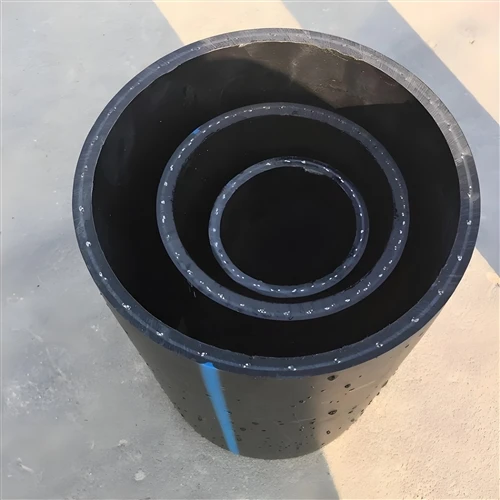
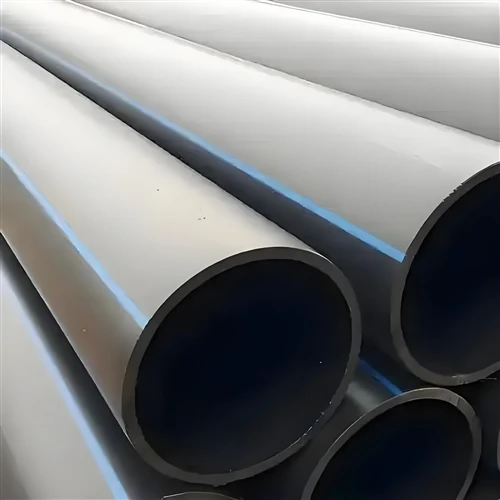
HDPE pipe: reference product parameters
The following table summarizes common product options for mining water supply and industrial water systems. Final specifications depend on the project.
|
Item |
Reference specification |
|
Material |
High-density polyethylene |
|
Common grades |
PE80 / PE100 |
|
Outside diameter |
DN20–DN630 and other sizes subject to production requirements |
|
Common SDR options |
SDR11, SDR13.6, SDR17 and project-specific options |
|
Pressure rating |
Determined by material grade, SDR, temperature and design conditions |
|
Connection methods |
Butt fusion, electrofusion or specified mechanical connections |
|
Main characteristics |
Corrosion resistance, flexibility, impact resistance and low weight |
|
Mining applications |
Water supply, industrial water, dust suppression and suitable drainage systems |
|
Applicable standard |
ISO 4427 where specified by the project |
The pressure rating should be confirmed using the relevant standard and product datasheet. The table does not assign a universal PN value to each SDR because the allowable pressure depends on the material grade and design conditions.
Questions to settle before placing an order
For a mining water pipeline, a useful inquiry should include more than diameter and quantity.
The buyer should provide the required material grade, SDR or pressure class, operating pressure, maximum expected pressure and water temperature. If the system uses pumps or automatic valves, the operating sequence may also be relevant.
For a long-distance line, the route profile and elevation changes are useful information. For a system with multiple branches, the position of major valves and connections should be shown on the drawings.
The manufacturer can then check whether the requested pipe specification is consistent with the intended application. Fittings and connection components should be reviewed at the same time, rather than treated as separate purchasing items.
A correctly selected HDPE pipe is important, but pressure management is a system issue. Looking at normal operating pressure alone does not give the full picture.
FAQ
Q: What does SDR mean in HDPE pipe?
A: SDR is the ratio of the pipe's nominal outside diameter to its nominal wall thickness. For the same material grade and diameter, a lower SDR generally means a thicker wall and a higher pressure capacity.
Q: Can HDPE pipe be affected by water hammer?
A: Yes. HDPE has different pressure-wave behaviour from rigid metal pipes, but it is not immune to water hammer. The system should be checked for pressure surges caused by pump and valve operation.
Q: Is PN16 always suitable for a mining water supply line?
A: Not necessarily. The required pressure class depends on normal operating pressure, surge pressure, temperature, material grade and the design standard. The full operating condition should be reviewed before selection.
Q: Should fittings have the same pressure rating as the pipe?
A: The fittings and connections must be suitable for the system's design conditions. Their pressure ratings and compatibility should be checked together with the pipe specification.
Q: What information should be provided when requesting an HDPE pipe quotation?
A: Provide the outside diameter, material grade, SDR or pressure requirement, quantity, operating conditions, applicable standard and connection requirements. For pumped systems, information about pressure surges is also useful.