Introduction
An underground cable protection pipe is easy to overlook when a power project is being designed. Most of the attention goes to the cable, transformer capacity and electrical equipment. However, once the cable is buried, the conduit becomes part of the protection system. Replacing a damaged section can mean excavation, traffic disruption and additional project costs.
MPP (Modified Polypropylene) pipes are used in underground power cable protection, particularly where trenchless installation is required. Their suitability depends on more than the material name. Outside diameter, wall thickness, impact resistance, pulling forces, joint quality and installation conditions all affect the result.
For buyers and contractors, one question often comes up: which standard should an MPP cable protection pipe meet? China has a specific industry standard covering several types of trenchless plastic cable conduits, while European and German standards include polypropylene within their scope. Some widely referenced American standards, however, are written specifically for HDPE and should not be presented as MPP standards.
This article looks at the pipe specifications, installation details and standards that matter when selecting MPP conduits for underground power projects.

What Makes MPP Suitable for Cable Protection?
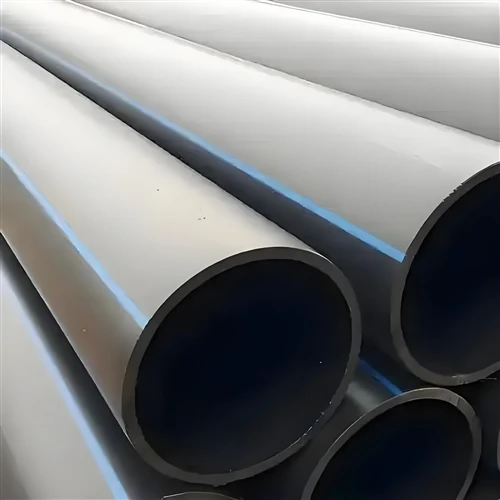
MPP is a modified polypropylene material. It is used to manufacture non-metallic conduits for protecting underground power cables. Compared with ordinary construction drainage pipes, a cable conduit has a different job: it must maintain its shape during installation and provide a reliable passage for the cable over its intended service life.
One reason MPP is selected for trenchless work is its mechanical performance. During horizontal directional drilling (HDD), the conduit is exposed to pulling forces, contact with surrounding soil and possible local impacts. The pipe must be selected for the actual installation conditions rather than simply choosing a diameter that accommodates the cable.
MPP also provides electrical insulation and resistance to corrosion in buried environments. Unlike a metal conduit, it does not rust. This can be useful in underground installations where moisture and soil conditions may affect metallic materials.
That does not mean every MPP pipe is suitable for every project. A product intended for direct burial may not automatically be suitable for a long HDD pull. The installation method, route length, soil conditions and cable requirements should be reviewed together.
MPP Pipe Specifications: A DN225 SDR11 Example
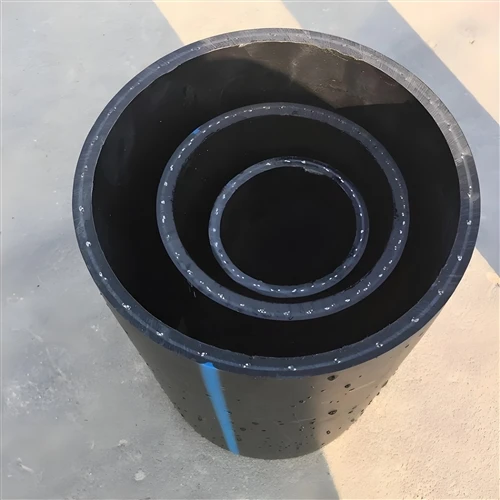
MPP cable conduits are available in different diameters and wall thicknesses. The dimensions should be selected according to cable size, cable installation method, required clearance and project drawings.
The following table uses DN225 SDR11 as a dimensional example. The wall thickness is calculated from the outside diameter divided by the SDR value. Actual manufactured dimensions and tolerances must be confirmed against the applicable product specification.
|
Parameter |
Example specification |
|
Material |
Modified polypropylene (MPP) |
|
Nominal outside diameter |
225 mm |
|
SDR |
11 |
|
Calculated nominal wall thickness |
20.45 mm |
|
Approximate calculated inside diameter |
184.1 mm |
|
Application |
Underground power cable protection |
|
Installation methods |
Open trench or trenchless installation, subject to project approval |
|
Jointing |
Compatible MPP pipe joining system |
|
Product length |
Confirm according to project requirements |
|
Colour |
Confirm with the project specification |
Dimension calculation
Wall thickness = 225 ÷ 11 = 20.45 mm
Approximate inside diameter = 225 − (2 × 20.45) = 184.1 mm
These are calculated reference dimensions, not a substitute for the manufacturer's dimensional inspection report. The actual inside diameter can also be affected by dimensional tolerances and the pipe's internal surface.
A further point is worth mentioning: MPP cable conduits are not water-pressure pipes. An SDR value describes the relationship between outside diameter and wall thickness. It should not be used on its own to claim a pressure rating for an electrical conduit.

MPP, HDPE and PVC Cable Conduits: Where Do They Differ?
MPP, HDPE and PVC are all used in underground cable protection systems, but they are not interchangeable in every project. The right choice depends on the installation method, mechanical requirements, local standards and the product's tested performance.
|
Comparison |
MPP |
HDPE |
PVC |
|
Main material |
Modified polypropylene |
High-density polyethylene |
Polyvinyl chloride |
|
Typical cable protection use |
Underground power cable protection, including trenchless projects |
Underground cable and communication duct systems |
Underground electrical conduit systems |
|
Trenchless installation |
Used in suitable MPP systems |
Commonly used in HDD and other trenchless work |
Depends on product design and system approval |
|
Jointing options |
Compatible MPP joining methods |
Butt fusion or compatible mechanical systems, depending on design |
Solvent-cement or mechanical joints, depending on product |
|
Corrosion resistance |
Non-metallic and corrosion-resistant |
Non-metallic and corrosion-resistant |
Non-metallic and corrosion-resistant |
|
Main selection considerations |
Pulling load, impact performance, temperature and joint quality |
Material grade, deformation, pulling load and fusion quality |
Impact classification, joint integrity and installation conditions |
The table gives a general material comparison. It does not establish that one material is always stronger or better than another. A meaningful comparison requires test results for the actual pipe dimensions and product design.
For example, an HDD project should not select a conduit based only on its material. The contractor needs to check the pipe's allowable pulling load, bending requirements, connection strength and the expected forces along the drilling route.
International Standards and National Standards for MPP Cable Conduits
Standards are often a difficult part of overseas purchasing. A customer may request IEC, EN, DIN, ASTM or UL compliance, but these documents do not all cover the same materials or applications.
The following table separates standards that explicitly include MPP or polypropylene from standards that are written for other materials.
|
Region |
Standard |
Scope and material |
Relevance to MPP |
|
China |
DL/T 802.7-2023 |
Trenchless plastic cable conduits made from PVC, HDPE and MPP |
Directly includes MPP |
|
China |
T/CMEPCA 220-2026 |
MPP high-voltage cable conduits for trenchless installation, covering AC cable projects up to 110 kV |
Directly covers MPP; a group standard |
|
International |
IEC 61386-24:2004 |
Underground conduit systems and fittings for electrical and communication cable protection |
General underground conduit reference; verify product-specific requirements |
|
Europe |
EN 50626-1:2023 |
General requirements for underground cable conduit systems |
General system requirements |
|
Europe |
EN 50626-2:2023 |
PE, PP and PVC-U conduit systems for underground cable protection, including special applications |
Includes PP material systems; relevant to MPP subject to product scope |
|
Germany |
DIN EN 50626-1:2024-05 |
German adoption of EN 50626-1:2023 |
General underground conduit requirements |
|
Germany |
DIN EN 50626-2:2024-05 / VDE 0605-626-2:2024-05 |
German adoption of EN 50626-2:2023, including PP conduit systems |
Includes PP; check the product and system requirements |
|
United States |
ASTM F2160-22a |
HDPE conduit for non-pressure cable protection applications |
HDPE-specific; not an MPP compliance standard |
|
United States |
UL 651A |
High-density polyethylene electrical conduit |
HDPE-specific; not an MPP compliance standard |
What Buyers Should Understand About These Standards
In China, DL/T 802.7-2023 is an important reference for trenchless plastic cable conduits. Its scope expressly includes PVC, HDPE and MPP. It covers product classification, marking, connection methods, technical requirements, testing and inspection.
T/CMEPCA 220-2026 is more specific to MPP. It covers modified polypropylene high-voltage cable conduits used for trenchless installation of AC power cables rated up to 110 kV. It is a group standard, not a national GB standard. Buyers should identify the standard category correctly when preparing technical documents.
For European projects, EN 50626-1:2023 provides general requirements for underground cable conduit systems. EN 50626-2:2023 addresses PE, PP and PVC-U conduit systems and includes requirements for special applications. Since PP means polypropylene, this part is relevant to MPP material systems. However, a product should only be claimed as compliant after its design, tests and complete conduit system have been assessed against the applicable requirements.
Germany adopts these European documents as DIN EN standards. DIN EN 50626-2:2024-05 specifically identifies PE, PP and PVC-U systems. Its scope includes buried conduit systems at depths of up to 6 m and certain trenchless applications. This depth is part of the standard's stated scope; it does not mean every MPP product can automatically be installed at 6 m.
The American standards require particular care. ASTM F2160-22a and UL 651A specify HDPE electrical conduit. They should not be listed as MPP standards simply because both materials are used for cable protection. If an American customer requests ASTM or UL compliance for an MPP product, the exact requirement should be clarified before making a compliance statement.
Installation: The Details That Can Cause Problems Later
The pipe itself is only one part of an underground conduit system. A good product can still be damaged during installation if the route, pulling force or jointing procedure is not properly controlled.
For HDD installation, the contractor should review the drilling route before selecting the pipe. Bends, changes in elevation and the length of the pull all affect installation forces. The minimum bending radius should come from the manufacturer's technical data and the project design. A single bending-radius figure should not be applied to every diameter and wall thickness.
The pulling head and connection must also be suitable for the conduit. If the connection is weaker than the pipe body, the joint may become the failure point during installation. Before pulling, the contractor should check that the connection is complete and that the pipe ends are properly aligned.
For open-trench installation, the trench bottom should be prepared to avoid concentrated loads from sharp stones or hard objects. Backfilling should follow the project's requirements, with suitable surrounding material and compaction. Heavy equipment should not impose excessive loads on an inadequately supported conduit.
Cable installation comes after the conduit has been installed and inspected. The inside of the pipe should be checked for obstruction, deformation and debris. Cable pulling tension and the cable manufacturer's minimum bending radius must also be considered. The conduit should not be treated as a way to compensate for an unsuitable cable installation plan.
What Should Be Included in an MPP Pipe Inspection Report?
A product catalogue gives buyers an overview, but it is not enough for technical approval. For a power cable project, the purchaser may need dimensional records, material information and test reports.
|
Inspection item |
What should be checked |
|
Appearance |
Cracks, visible damage, surface defects and consistency |
|
Outside diameter |
Measured values and permitted dimensional tolerance |
|
Wall thickness |
Measurements at specified positions |
|
Length |
Actual pipe length and length tolerance |
|
Impact performance |
Test method, test temperature and recorded result |
|
Tensile or pulling performance |
Test method, specimen details and result |
|
Bending performance |
Test conditions and applicable product requirements |
|
Joint performance |
Compatibility and strength of the selected connection |
|
Material identification |
Confirmation of the MPP material used |
|
Marking |
Manufacturer, size, batch and applicable standard |
A test result should always be read together with its test method and units. For example, a tensile force reported in newtons is not the same as tensile strength reported in megapascals. A figure such as 750 N should not be presented as a universal MPP pipe property unless the relevant test report identifies what was tested and how.
Temperature claims need the same care. If a manufacturer's report indicates continuous operating performance above 70°C, the report should be checked for the test method, duration and product configuration before that value is used in a project specification.
Selecting an MPP Supplier
When comparing suppliers, buyers should look beyond the quoted price per metre. A lower price may not represent the same wall thickness, dimensional tolerance, material formulation or inspection standard.
Ask the manufacturer to provide a dimensional specification for the required diameter and SDR. Request the relevant test reports and confirm whether they apply to the same product structure and production batch. For trenchless projects, discuss the installation method and pulling requirements before production begins.
It is also useful to confirm the connection method, pipe length, marking, packaging and delivery requirements in the purchase order. These details can affect installation and acceptance on site.
As a China-based pipe manufacturer, Luoyang Zhengju New Materials Technology Co., Ltd. supplies MPP cable protection pipes and related pipe products for different project requirements. Pipe dimensions, wall thickness, length and other production details can be discussed against the customer's drawings and technical specification.
Frequently Asked Questions
Q: Is MPP pipe suitable for 110 kV cable projects?
A: MPP conduits are used in underground power cable protection projects. China's T/CMEPCA 220-2026 group standard covers MPP high-voltage cable conduits for trenchless installation of AC power cables rated up to 110 kV. The selected product must still meet the project's technical requirements and applicable inspection criteria.
Q: Does SDR11 mean the MPP pipe can withstand a specific water pressure?
A: No. SDR is the ratio between outside diameter and wall thickness. MPP cable conduits are not automatically pressure-rated water pipes. Their suitability should be assessed using the applicable conduit standard and mechanical test requirements.
Q: Can MPP pipes be used for HDD installation?
A: Yes, suitable MPP conduit systems are used in trenchless cable installation. The pipe dimensions, pulling load, bending conditions and joint strength should be checked against the drilling plan before installation.
Q: Is EN 50626-2 applicable to MPP pipes?
A: EN 50626-2:2023 covers conduit systems made from PE, PP and PVC-U. Since MPP is modified polypropylene, the standard is relevant to products within its scope. Compliance must be demonstrated through the applicable product and system tests; the material name alone is not proof of conformity.
Q: Can an MPP pipe be certified to ASTM F2160?
A: ASTM F2160-22a is written for HDPE conduit. It should not be presented as an MPP standard. If a project specification mentions ASTM F2160, the buyer and supplier should clarify whether an HDPE product is required or whether another evaluation route is acceptable.
Q: What information is needed to quote MPP cable protection pipes?
A: The main information includes outside diameter, wall thickness or SDR, required length, quantity, connection type, applicable standard and installation method. Project drawings and cable information are also useful when confirming the suitable conduit dimensions.
Keywords
MPP cable protection pipe, MPP power cable conduit, modified polypropylene pipe, MPP conduit manufacturer, underground cable protection pipe, MPP pipe for HDD, trenchless cable conduit, 110kV cable protection conduit, DL/T 802.7-2023, T/CMEPCA 220-2026, EN 50626-2, DIN EN 50626-2
Request a Quotation for MPP Cable Protection Pipes
|
Step |
Process |
|
1 |
Send Requirements - Outside diameter, wall thickness, quantity and project application |
|
2 |
Specification Confirmation - Pipe dimensions, material, performance requirements and connection method |
|
3 |
Quotation - Unit price, lead time, packing and shipping terms |
|
4 |
Order & Production - Contract confirmation, payment and production |
|
5 |
Inspection & Delivery - Quality inspection, packing and shipment |
For MPP power cable protection pipes and MPP cable conduits, send us:
Outside Diameter + Wall Thickness / SDR + Cable Voltage Level + Installation Method (Open Trench / HDD) + Required Length + Quantity + Applicable Standard
Luoyang Zhengju New Materials Technology Co., Ltd.
WhatsApp: +86 19937270645
Email: baibaili456@gmail.com
WeChat: +86 19937270645
Get the Best Price for Your MPP Cable Protection Project