Introduction
Tailings pipelines are often treated as simple transport lines.
They are not.
After mineral processing, the remaining material can contain a mixture of fine particles, mineral solids, water and process chemicals. Depending on the operation, the tailings can create continuous hydraulic pressure while also exposing the internal pipe wall to abrasion.
The pipeline may also cross uneven terrain or be installed underground.
This makes pipe selection a combination of pressure, medium compatibility, wear and installation conditions.
A Steel Wire Mesh Skeleton Pipe provides one approach by combining a PE pipe structure with embedded steel wire reinforcement.
Why Is Tailings Transportation Difficult?
Tailings characteristics can change from one mine to another.
The solids concentration may change.
Particle size can vary.
Some tailings contain relatively fine particles, while others contain coarser mineral fragments.
Chemical conditions can also vary according to the processing process.
The pipeline therefore needs to handle more than hydraulic flow.
Pressure is one consideration.
Wear is another.
Chemical exposure and installation conditions also need to be considered.
A reinforced PE structure addresses some of these requirements, but the actual tailings condition remains the starting point.

图 1
What Is a Steel Wire Mesh Skeleton Pipe?
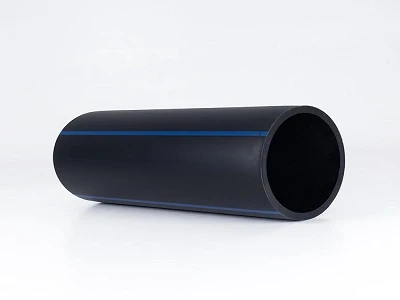
A Steel Wire Mesh Skeleton Pipe is a composite pipe incorporating a steel wire mesh reinforcement structure within PE layers.
The inner PE layer contacts the tailings.
The steel wire mesh provides reinforcement inside the pipe wall.
The outer PE layer protects the pipe from the external environment.
This construction is also described as a Steel Wire Mesh Reinforced PE Pipe or Steel Wire Reinforced PE Pipe.
The terminology may vary between manufacturers and markets, so buyers should pay attention to the actual pipe structure and specification rather than the name alone.
Why Add Steel Wire Reinforcement?
Tailings pipelines can operate under pressure, particularly where pumps are used to transport material over long distances or elevation changes.
Internal pressure attempts to expand the pipe wall.
The embedded steel wire reinforcement helps resist this deformation and improves the pressure-bearing structure of the composite pipe.
This is different from using a simple PE pipe wall.
The reinforcement becomes particularly relevant when the pipeline specification requires pressure performance beyond what is practical for an equivalent conventional PE structure.
Is Reinforced PE Automatically a Wear-Resistant Tailings Pipe?
No.
This is an important distinction.
The steel wire reinforcement improves mechanical performance. It does not turn the pipe into a dedicated abrasion-resistant pipe.
Tailings containing hard mineral particles can still wear the inner PE surface.
The actual wear rate depends on particle hardness, particle size, concentration, velocity and pipeline geometry.
If the tailings are highly abrasive, buyers should compare the reinforced PE structure with a dedicated wear-resistant pipe such as UHMWPE.
For lower or moderate wear conditions where pressure reinforcement is also important, a Steel Wire Mesh Skeleton Pipe may be a suitable structure to evaluate.

图 2
The Importance of Tailings Concentration
Solid concentration affects the hydraulic and mechanical behavior of the transported medium.
As the amount of solid material increases, the slurry can become more difficult to transport.
Higher concentration can also increase interaction between particles and the internal pipe wall.
For this reason, "tailings" is not enough information for pipe selection.
The buyer should provide the approximate solids concentration and particle size.
If the mineral composition is known, that information can also help evaluate the expected abrasion and chemical environment.
What Happens in Long-Distance Tailings Pipelines?
Long pipelines introduce additional pressure considerations.
The system may contain multiple pumping sections.
Elevation changes can create different pressure conditions.
Buried sections may experience external loads.
Ground movement can also become a concern in mining areas.
A reinforced PE structure can therefore be considered where the pipeline needs a combination of internal pressure performance and PE environmental protection.
But the final pipe specification must be matched to the actual system pressure and installation conditions.
Typical Product Parameters
|
Parameter |
Typical Specification |
|
Product |
Steel Wire Mesh Skeleton Pipe |
|
Structure |
PE + Steel Wire Mesh + PE |
|
Nominal Diameter |
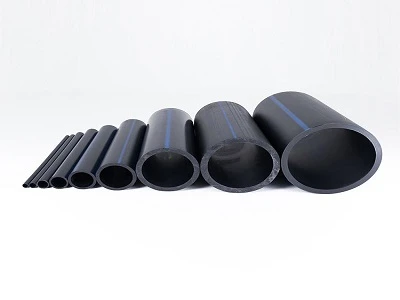
DN50–DN600 |
|
Pressure Rating |
Up to PN2.5 MPa, depending on specification |
|
Working Temperature |
According to actual PE material and product specification |
|
Medium |
Tailings, slurry and compatible media |
|
Reinforcement |
High-strength steel wire mesh |
|
Installation |
Above ground, trench or buried |
What Should a Tailings Pipe Buyer Provide?
The most useful information is the actual operating condition.
|
Required Information |
Why It Matters |
|
DN |
Determines pipe size |
|
Operating Pressure |
Determines pressure requirement |
|
Working Temperature |
Affects PE material performance |
|
Tailings Type |
Helps evaluate medium compatibility |
|
Solid Concentration |
Important for slurry behavior |
|
Particle Size |
Relevant to abrasion |
|
Pipeline Length |
Helps understand overall system conditions |
|
Installation Method |
Determines external loading considerations |
This information is much more useful than simply asking for "a mining pipe."
FAQ
Can Steel Wire Mesh Skeleton Pipe transport tailings?
It can be considered for suitable tailings applications. The actual selection depends on pressure, tailings characteristics, temperature and installation conditions.
Does the steel wire reinforcement contact the tailings?
No. The reinforcement is embedded within the PE structure, with the inner PE layer separating it from the transported medium.
Is it suitable for highly abrasive tailings?
Suitability depends on the actual abrasion conditions. Where tailings contain highly abrasive hard particles, a dedicated wear-resistant pipe should also be evaluated.
Can it be installed underground?
Yes, it can be considered for buried applications when the pipe specification and installation conditions are appropriate.
Request a SRTP Pipe Quotation
|
Step |
Process |
Details |
|
1 |
Send Requirements |
DN, pressure, medium, working temperature and application |
|
2 |
Specification Confirmation |
Pipe structure, pressure rating, specification and connection |
|
3 |
Quotation |
Price, lead time, packing and shipping terms |
|
4 |
Order & Production |
Contract, payment and production |
|
5 |
Inspection & Delivery |
Quality inspection and shipment |
For Steel Wire Mesh Reinforced PE Pipe (SRTP), steel wire reinforced PE pipe and mining pressure pipelines, send us:
DN + PN + Medium + Working Temperature + Installation Method + Pipeline Length + Quantity
For slurry applications:
Slurry Type + Solid Concentration + Particle Size
Luoyang Zhengju New Materials Technology Co., Ltd.
WhatsApp:+86 19937270645
Email: baibaili456@gmail.com
Wechat: +86 19937270645
Get Best Price for Your Mining Pressure Pipeline