Introduction
A sand suction pipeline has two jobs at the same time: it must draw sand and water into the system, and it must survive continuous contact with abrasive solids.
That creates a combination of problems that a normal slurry pipe may not face.
The internal wall is exposed to sand and sediment, while the pressure inside the pipe can fall below atmospheric pressure during suction. If the pipeline is too weak for the vacuum condition, deformation can become a more serious problem than ordinary wear.
For buyers selecting a UHMWPE sand suction pipe, abrasion resistance is important, but it is only one part of the selection process. Vacuum resistance, pipe structure, diameter, particle size and actual suction conditions all need to be considered.
The First Question: What Is the Suction Condition?
Before choosing a sand suction pipe, one question should come first:
What vacuum will the pipe actually experience?
This matters because suction service is different from positive-pressure discharge.
When the pump or dredging equipment draws material through the pipeline, the pressure inside the pipe can become lower than the surrounding atmospheric pressure. The outside pressure then acts on the pipe wall.
A pipe that performs well under positive internal pressure is not automatically suitable for vacuum service.
For this reason, buyers should not select a suction pipe only according to a PN number. The pipe structure must be evaluated for the expected external pressure and installation condition.
The Second Problem: Sand Does Not Wear the Pipe Evenly
The next issue is internal wear.
Sand, sediment and gravel continuously move through the pipeline. The amount of wear depends on several operating conditions.
Particle size and hardness affect the intensity of contact with the internal wall.
Solids concentration determines how many abrasive particles pass through the pipe.
Flow velocity affects particle movement and impact.
Pipeline geometry determines where particles are likely to hit the wall.
The last point is particularly important.
A straight pipe may experience relatively consistent wear, while bends can develop much heavier localized wear because particles change direction and repeatedly contact the outer side of the bend.
Why UHMWPE Can Be Considered for Sand Suction

UHMWPE addresses several of these problems through its material properties.
Abrasion resistance
Sand suction involves continuous particle contact. UHMWPE provides a wear-resistant internal surface for abrasive sand and sediment transportation.
Smooth internal surface
The smooth bore reduces surface roughness inside the flow passage and helps maintain a relatively unobstructed path for sand-water slurry.
Toughness and impact resistance
If coarse sand, gravel or irregular particles enter the pipeline, the pipe may experience impact as well as sliding abrasion. UHMWPE has good toughness and impact resistance.
Lightweight construction
Long dredging pipelines can be difficult to handle and reposition. UHMWPE is considerably lighter than steel, which can simplify handling in suitable applications.

Where Does Sand Suction Pipe Usually Work?
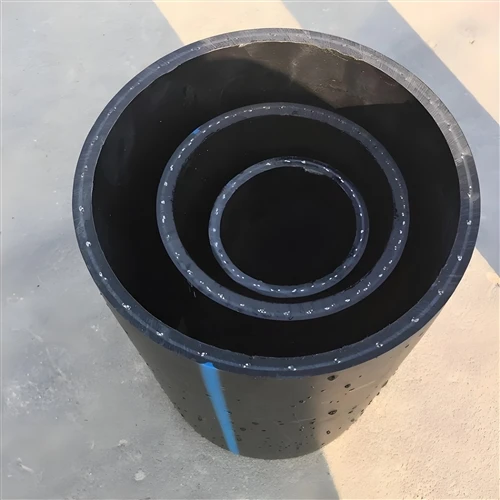
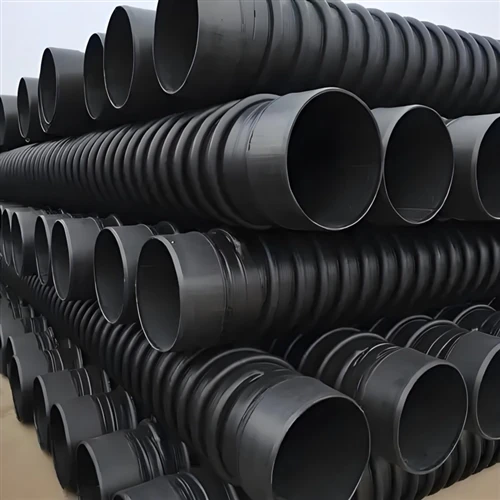
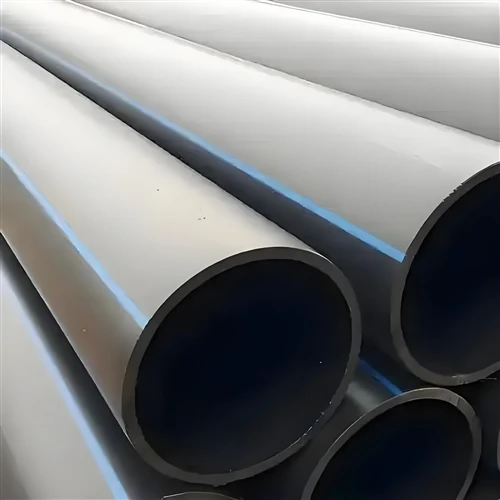
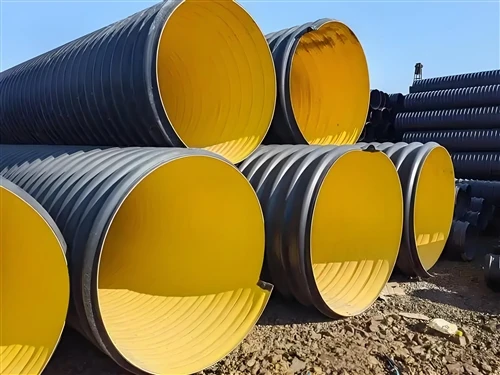
UHMWPE sand suction pipe can be considered for sand dredging, sediment removal, river and harbor dredging, sand recovery and other systems where sand or sediment is drawn into a pipeline.
However, the pipe structure should be matched with the installation.
A short suction connection close to dredging equipment is not necessarily subjected to the same conditions as a long submerged or floating suction line.
The unsupported pipe length, bending condition, connection method and vacuum level can all affect the required structure.
UHMWPE Sand Suction Pipe Parameters
|
Parameter |
Typical Specification |
|
Material |
UHMWPE |
|
Nominal Diameter |
DN50–DN1200 |
|
Standard Length |
9 m / 12 m |
|
Pressure Rating |
PN1.0–PN10* |
|
Working Temperature |
Approx. -269°C to +80°C |
|
Medium |
Sand, sediment, slurry |
|
Application |
Sand suction, dredging |
*Important: PN rating refers to positive-pressure performance. Vacuum resistance and external-pressure stability must be separately confirmed for suction applications.
What Should a Buyer Check Before Ordering?
1. Suction pressure or vacuum
This is one of the most important parameters. Without it, vacuum suitability cannot be properly evaluated.
2. Sand particle size
Fine sand and coarse sand create different wear and impact conditions.
3. Solids concentration
Higher concentration means a greater abrasive load inside the pipe.
4. Flow velocity
Excessive velocity may increase particle impact and localized wear.
5. Pipe diameter
DN should match the dredging equipment and required flow capacity.
6. Pipeline length
Long suction lines may create additional pressure-loss and structural considerations.
7. Installation method
Floating, submerged and supported installations have different mechanical requirements.
8. Bends and fittings
The number and location of bends matter because these areas can experience concentrated wear.
FAQ
Is UHMWPE sand suction pipe suitable for vacuum service?
It can be, but vacuum suitability depends on the actual pipe structure and operating conditions. It should not be assumed from the positive-pressure rating alone.
Why can a suction pipe collapse?
If external atmospheric pressure exceeds the pressure inside the pipe and the pipe structure does not have sufficient external-pressure resistance, deformation or collapse can occur.
Does a larger diameter make vacuum resistance better?
Not automatically. Diameter, wall structure, material properties, unsupported length and operating conditions all affect external-pressure stability.
Where does sand suction pipe wear most?
Bends and flow-direction changes can experience more localized wear because particles change direction and repeatedly contact the pipe wall.
Can UHMWPE handle coarse sand?
UHMWPE has good abrasion resistance and toughness and can be considered for coarse sand applications, provided the pipe structure and operating conditions are appropriate.
Request a UHMWPE Pipe Quotation
|
Step |
Process |
|
1 |
Send Requirements - DN, pressure, quantity and application |
|
2 |
Specification Confirmation - Pipe type, size, wall thickness and connection |
|
3 |
Quotation - Price, lead time, packing and shipping terms |
|
4 |
Order & Production - Contract, payment and production |
|
5 |
Inspection & Delivery - Quality inspection and shipment |
For UHMWPE mining pipe, UHMWPE lined steel pipe, UHMWPE elbows and link flanges, send us:
DN + PN + Slurry Type + Solid Concentration + Particle Size + Flow Rate + Pipeline Length + Quantity
Luoyang Zhengju New Materials Technology Co., Ltd.
WhatsApp:+86 19937270645
Email: baibaili456@gmail.com
Wechat: +86 19937270645
Get Best Price for Your Grinding Slurry Pipeline.