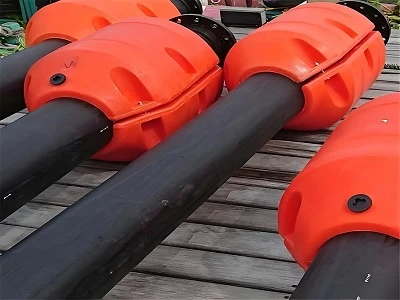
In mining operations, the most expensive part of the system is often not the large, visible equipment - but the pipeline you use every single day and rarely think about: the slurry transport line.
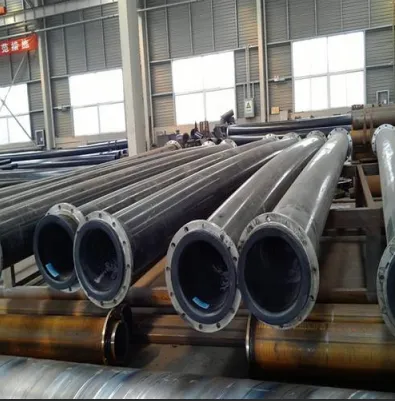
What is slurry? A high-concentration solid–liquid mixture carrying sand, ore fines, and abrasive particles. It behaves like "liquid sandpaper," constantly scouring, wearing, scaling, and corroding the inner wall of pipelines. Once a pipe wears through, leaks, or becomes blocked, production stops. Emergency repairs, pipe replacement, cleaning, and downtime costs don't rise linearly - they multiply.
That's why in recent years, there's been a clear trend in mining projects: traditional steel pipes, rubber-lined pipes, and standard PE pipes are increasingly being replaced with UHMWPE mining pipes for slurry transport.

Why? Because the real question is not "Is it easy to use?" - it's "Can it reduce system downtime risk?"
Let's Be Direct: The Three Biggest Fears in Slurry Pipelines

In real mining conditions, pipeline pain points are highly concentrated:
Rapid wear – Especially at elbows, reducers, pump outlets, and high-velocity sections
Severe blockage – Scaling, wall build-up, and sedimentation gradually reduce flow area
Difficult maintenance – Heavy disassembly, slow welding, long shutdown windows
Choosing a pipe material is essentially system optimization around these three issues. UHMWPE mining pipes are becoming more common because they directly address these pain points - in ways that are noticeable in real operations.
What Is a UHMWPE Mining Pipe?
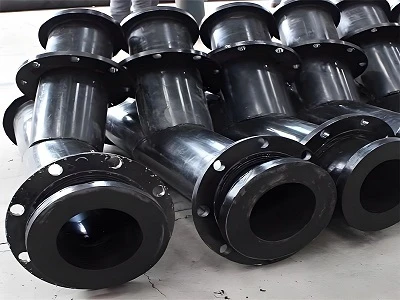
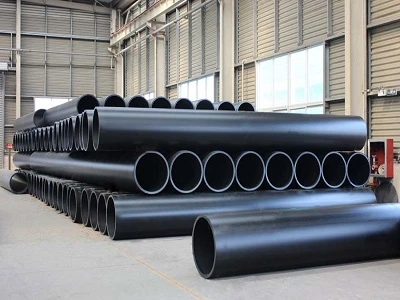
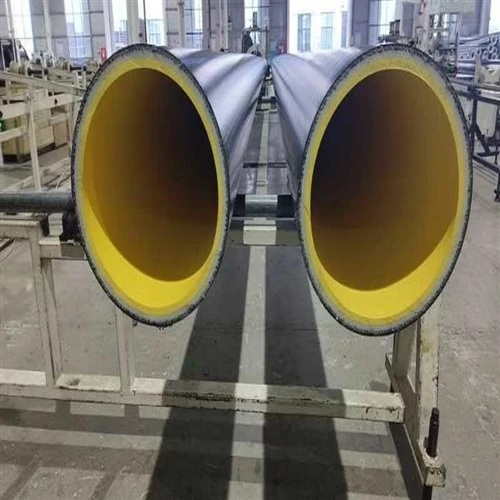
UHMWPE (Ultra-High Molecular Weight Polyethylene) mining pipe is specifically designed for transporting highly abrasive media such as:
Mineral slurry
Tailings
Fly ash
Sand slurry
Think of it as a more wear-resistant, less scale-prone, lighter, and easier-to-maintain solution for abrasive transport systems.
It's not meant to replace every type of pipe - it's particularly valuable in high-abrasion and high-maintenance-frequency scenarios, where reducing total cost and downtime risk matters most.
Why More Mining Projects Are Choosing It
1) Wear Resistance: The Primary Requirement in Slurry Transport
Hard particles constantly impact and scrape the pipe wall. Frequent pipe replacement in mines isn't always due to insufficient hardness - it's often because overall wear life is simply too short.
UHMWPE pipes are widely selected because their wear performance better matches long-term abrasive conditions, especially in:
High flow velocity systems
High sand content
Sharp-edged particle environments
In these conditions, service life advantages become more evident.
2) Reduced Scaling and Wall Build-Up = Lower Blockage Risk
Many shutdowns are caused by blockage rather than wear-through.
When internal build-up reduces pipe diameter:
Flow velocity changes
Pressure fluctuates
Pump operation becomes unstable
This often creates a vicious cycle.
One of the commonly cited advantages of UHMWPE pipes in mining applications is their reduced tendency for stubborn internal adhesion, helping lower the probability of scaling and sediment accumulation.
For operators, this means:
Less frequent cleaning
More stable flow conditions
Better pump load control
3) Lighter Weight = Faster Installation and Maintenance
In mining, time is critical. Traditional heavy pipelines require complex lifting and long maintenance windows. A delay can shut down an entire production line.
UHMWPE pipes are significantly lighter, making transportation, handling, installation, and emergency repairs faster.
The real benefit isn't just "lighter weight" - it's shorter downtime. And downtime is where the real cost lies.
4) Stronger Corrosion Resistance in Complex Media
Slurry systems often involve chemical exposure - acids, alkalis, salts, and residual reagents.
When abrasion and corrosion act together, materials like steel degrade even faster.
In combined wear + corrosion environments, many projects prefer materials with more stable chemical resistance to reduce unpredictable failure modes.
5) Life-Cycle Cost Makes More Sense
Initial price per meter is only part of the story.
Mining operations ultimately care about:
How long it lasts
How many shutdowns occur
How long replacement takes
How much labor is required
Whether leaks create environmental or safety liabilities
When these factors are evaluated together, it becomes clear why UHMWPE pipes are increasingly selected:
they shift the cost focus from procurement to operational optimization - and most mining losses occur during operation, not purchase.
Common Specification Reference
Below is a general reference for commonly used UHMWPE mining pipe sizes (final selection must be verified against flow rate, pressure, pump parameters, and installation method):
|
Nominal OD (mm) |
Typical Pressure Rating (MPa) |
Common Length (m) |
Typical Application |
|
63 / 75 / 90 |
0.6–1.6 |
6 / 9 / 12 |
Branch lines, dosing/return water, small slurry flow |
|
110 / 125 / 140 |
0.6–2.0 |
6 / 9 / 12 |
Medium-small slurry branches, pump room sections |
|
160 / 180 / 200 |
0.6–2.5 |
6 / 9 / 12 |
Main slurry lines, tailings return, high-abrasion areas |
|
225 / 250 / 280 |
0.6–2.5 |
6 / 9 / 12 |
Trunk lines, long-distance transport |
|
315 / 355 / 400 |
0.6–2.5 (design-based) |
6 / 9 / 12 |
Large-flow slurry/tailings main lines |
Selection reminder:
Don't focus only on diameter. Always evaluate together:
Working pressure
Flow velocity
Particle size
Solid concentration
Number of elbows
Pipeline length
Temperature range
Installation method (buried or above-ground)
Three Common On-Site Questions
Q1: Can UHMWPE pipes fully replace steel pipes?
They can replace certain sections, but not necessarily entire systems.
Priority replacement areas often include:
Severe abrasion zones
Frequently maintained sections
High-downtime-cost segments (elbows, pump outlets, long-distance mains)
In high-temperature or high-impact structural areas, proper support and protective design are essential to avoid turning material advantages into installation risks.
Q2: What are the three most critical parameters in slurry pipe selection?
If only three:
Abrasiveness, working pressure, flow velocity.
Abrasion determines service life
Pressure defines safety margin
Velocity affects sedimentation and system stability
Get these right, and your selection won't be far off.
Q3: How can you maximize service life?
Operational details often matter more than material specs:
Optimize elbow and reducer layouts to improve flow patterns
Ensure solid support and fixation to reduce vibration stress
Leave sufficient maintenance access space
Monitor pressure differential and flow changes - early signs of wear or blockage often appear in system behavior first
Final Thought
Mines are increasingly choosing UHMWPE slurry pipes not because they are "more advanced," but because they better match the reality of slurry transport:
Wear a little slower
Block a little less
Repair a little faster
And that means a little less downtime risk.
In mining, the most valuable asset is never just a pipe -
it's a day without shutdown.
If you'd like, share your operating conditions (medium type, solid concentration/particle size, flow rate, pressure, pipeline length, installation method, current material, and pain points), and I can help you outline a selection strategy based on safety first, stability second, and cost optimization third.