With the same acre of land, the same pump, and the same canal, why do some farms seem to require more and more water each year - while others deliver water farther, more evenly, and more efficiently?
Many blame:
"Insufficient water sources"
"Extreme heat"
"Outdated equipment"
But what's often overlooked is the most basic - and most critical - component:
The Pipeline.

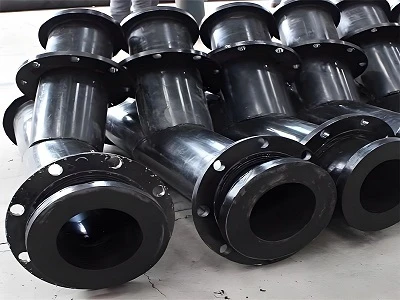
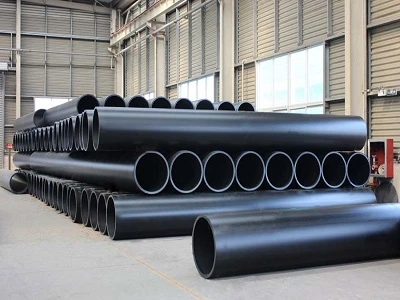
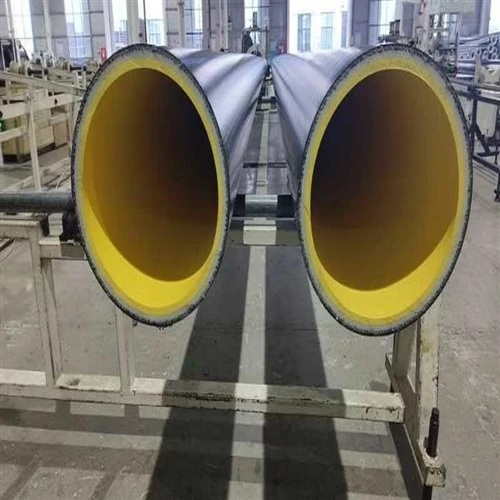
Why HDPE Is Replacing PVC and Metal Pipes
Not More Expensive - Just More Cost-Effective
The real cost of an irrigation system isn't just the pipe price.
It's a long-term equation:
How easy is installation?
Does it leak?
How often does it require repairs?
Can it withstand extreme weather?
What happens at the end of its service life?
HDPE (High-Density Polyethylene) stands out because it integrates:
✅ Environmental adaptability
✅ Mechanical strength
✅ Connection reliability
Not just one advantage - but system-level performance.

1️⃣ Built for Underground Conditions
Irrigation pipes buried underground face constant pressure and environmental stress.
Why HDPE Performs Better:
Chemical Resistance
Resistant to corrosive substances in soil.
Temperature Resistance
Performs reliably in both extreme heat and cold.
UV Resistance
Long service life even when partially exposed.
Choosing HDPE means you're not just buying pipes -
you're investing in long-term operational stability.
2️⃣ Flexibility Determines Efficiency and Risk
The Problem with PVC & Metal
PVC:
Becomes brittle in cold weather
Cracks under impact or uneven stress
Metal pipes:
Heavy and rigid
Require multiple fittings for bends
Prone to stress concentration damage
Why HDPE Is Different
High Flexibility
Adapts to hills and terraces
Reduces need for elbows and fittings
Strong Impact Resistance
Maintains toughness even in low temperatures
Resistance to Stress Cracking
Prevents small scratches from becoming system failures
In irrigation, the worst-case scenario isn't a minor crack -
it's a sudden large-scale system breakdown.
HDPE excels in preventing that.
3️⃣ Leakage: The Hidden Drain on Water Efficiency
On many farms, water flows - but much less reaches the roots.
The issue often isn't the pump.
It's pipeline leakage and loose joints.
The HDPE Advantage: Electrofusion Welding
Electrofusion:
Fuses pipe and fittings into one integrated structure
Creates joints stronger than the pipe itself
Forms seamless, leak-resistant connections
By contrast:
PVC uses adhesive or socket joints
Metal uses threaded or flanged joints
Over time, seals loosen and leak
Even small leaks cause:
Wet surface soil
Dry root zones
Higher water usage
Unstable yields
HDPE eliminates these hidden losses.
4️⃣ Smoother Flow = Lower Energy Consumption
HDPE pipes have:
Smooth inner walls
Low friction coefficients
This means:
Lower flow resistance
More stable pressure
Reduced pump workload
Lower long-term energy consumption
Many farmers choose HDPE not because it sounds advanced-
but because the system simply feels:
Quieter.
More stable.
More reliable.
Key Differences at a Glance
|
Feature |
✅ HDPE |
⚠️ PVC |
❌ Metal |
|---|---|---|---|
|
Flexibility |
High – adapts to terrain |
Low – rigid & brittle |
Very low – requires bending tools |
|
Corrosion Resistance |
Excellent |
Good |
Poor (rust risk) |
|
Connection Method |
Heat/electrofusion (integrated) |
Adhesive/socket |
Threaded/flanged |
|
Lifespan |
50+ years |
15–25 years |
10–20 years |
|
Weight |
Light |
Light |
Heavy |
|
Freeze Resistance |
Excellent |
Poor |
Poor |
|
Long-Term Cost |
Best overall |
Medium |
High maintenance |
Sustainability: The Recycling Loop
HDPE isn't disposable. It's recyclable.
End-of-Life Recycling Process:
Collection of discarded pipes
Mechanical shredding
Cleaning and sorting
Re-pelletizing via melt extrusion
Reuse in new HDPE products
This aligns with circular economy principles -
increasingly important for modern agriculture.
What Farms Are Really Choosing: Certainty
One large-scale farm owner summarized it best:
"The biggest change after switching to HDPE wasn't 'more advanced' - it was peace of mind."
He reported:
Fewer joint failures on settling ground
Safer winter installation
No recurring leakage inspections
No peak-season irrigation interruptions
Agriculture fears uncertainty:
Delayed irrigation
Emergency repairs
Hidden water loss
HDPE minimizes these risks.
The Foundation of Smart Agriculture
We often talk about:
Smart valves
Sensors
Automation systems
But if underground pipelines fail,
everything above ground becomes meaningless.
Leaking.
Cracking.
Rusting.
Clogging.
Even the most advanced irrigation system collapses on a weak foundation.
Why HDPE Has Become the Modern Standard
Not because it "sounds advanced."
But because it delivers something overlooked:
It Makes Time Your Ally.
✔ Corrosion resistant
✔ Weather resistant
✔ Impact resistant
✔ Leak-free connections
✔ Lower energy costs
✔ Reduced maintenance year after year
This is not a one-time purchase.
It's long-term compound value.
The Decision Is Simple
If you want a durable, reliable, low-maintenance underground irrigation network
→ HDPE is the rational choice.
If you are planning drip or sprinkler irrigation and don't want to dig up the ground every three years
→ Upgrade to HDPE now.
👉 Contact Our Engineers Today
Get:
A customized HDPE pipe quotation
A free irrigation system design consultation
Install once. Benefit for decades.