In mineral slurry transport, chemical acid/alkali medium transfer, and power plant fly ash handling, engineers know one thing too well:
The enemy of metal pipes is never just abrasion, nor just corrosion - but the long-term combination of both.
After just 1–2 years, metal pipes fail.
Shutdowns. Replacements. Rising costs. Production continuity and safety are repeatedly compromised.
That's why more and more projects are turning to one material:
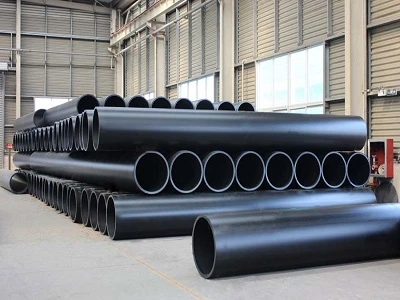
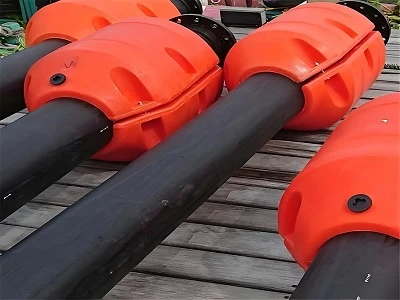
UHMWPE Pipe (Ultra-High Molecular Weight Polyethylene Pipe).
It doesn't rely on "hard resistance." Instead, it closes the critical gaps in the high-wear performance chain - with a complete set of data-verified engineering logics.

1. What Makes High-Wear Conditions Truly Difficult?
In these industrial applications, the medium is rarely "clean liquid." More often:
Slurries, ash slag, powders containing solid particles
Mixed media with both abrasives and acid/alkali corrosion
The demands on pipes are clear:
| Requirement | Explanation |
|---|---|
| Abrasion resistance | Particle erosion, cutting, rolling friction |
| Corrosion resistance | Long-term exposure to acids, alkalis, salts |
| Low resistance & low scaling | Otherwise flow drops and energy rises |
| Impact & fatigue resistance | Frequent vibration, settlement, pressure fluctuations |
UHMWPE pipe stands out not because it excels in one area - but because it addresses all the weaknesses in this chain at once.
2. Core Performance of UHMWPE Pipe (Data-Driven)
2.1 Abrasion Resistance: Not Harder, but Better at Absorbing Wear
Under identical conditions in the Plastic Pipe Wear Test Report:
| Pipe Material | Annual Wear Thickness (mm) | Wear Resistance (vs Steel) |
|---|---|---|
| Ordinary Steel Pipe | 36.24 | 1× |
| Engineering Polypropylene Pipe | 13.58 | ≈2.7× |
| UHMWPE Pipe | 5.01 | ≈7× |
Broader material comparisons:
≈6.6× that of general alloy steel
≈27.3× that of stainless steel
≈6× that of Nylon 6
≈4× that of ordinary PE
For slurry, tailings, and ash transport where abrasion is the primary challenge, this means pipe life is no longer sustained by frequent shutdowns.
2.2 Chemical Corrosion Resistance: From "Usable" to "Long-Term Stable"
| Medium | Tolerable Concentration |
|---|---|
| Hydrochloric Acid | < 80% |
| Sulfuric Acid | < 75% |
| Nitric Acid | < 20% |
| pH Range | 2 – 13 (long-term service) |
Key point:
In "abrasion-corrosion" (both wear and corrosion simultaneously) conditions - e.g., acidic/alkaline media containing solid particles - the service life of UHMWPE can reach several to dozens of times that of steel pipes.
2.3 Ultra-Low Friction + Self-Lubrication: Less Scaling, Lower Resistance, Reduced Energy
| Parameter | UHMWPE Pipe |
|---|---|
| Friction Coefficient (196N, 2h) | 0.219 MN/m |
| Relative Friction Resistance | 1/6 of new steel pipe |
| Self-Lubrication | Waxy component, outperforms oil-lubricated steel/brass |
Engineering outcomes:
Slurry or crystallizing media → almost no scaling
Even if scale forms → easy to remove
Flow resistance remains low → stable energy consumption
In power plant fly ash hydraulic conveying, "no scaling" itself is a form of long-term reliability.
2.4 Impact Resistance, Fatigue Resistance & Wide Temperature Range
| Parameter | UHMWPE Pipe Data |
|---|---|
| Impact Strength | >10× that of Nylon 66 |
| Fatigue Strength | > 500,000 cycles |
| Environmental Stress Cracking Resistance | > 4,000 hours |
| Operating Temperature | -269℃ to +80℃ |
On sites with vibration, settlement, or significant temperature changes, UHMWPE is far less likely to fail due to unexpected conditions.

3. Typical Industry Applications & Results
✅ Mining – Tailings & Slurry Transport
One mining company: successfully met long-distance tailings transport requirements for a water-isolated slurry pump.
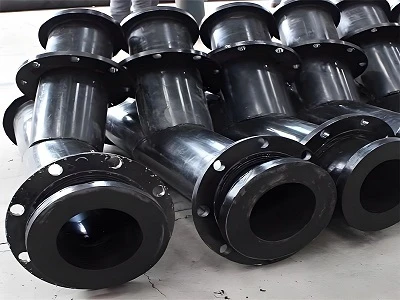
A gold mine backfill system: replaced ceramic composite pipes with flanged UHMWPE pipes → lighter weight, easier connection, significantly lower maintenance costs.
✅ Chemical Industry – Acid/Alkali Media Transport
Long-term replacement for traditional rubber-lined pipes, conveying concentrated sulfuric acid, caustic soda, etc.
Qinghai Salt Lake Industry: widely adopted in brine transport and extraction processes.
✅ Power Industry – Fly Ash Hydraulic Conveying
Alkaline ash-water mixture (pH ≥ 9): no scaling
Large flow rate remains stable over time → predictable energy consumption and maintenance windows
4. UHMWPE Pipe vs Traditional Pipe: Lifecycle Comparison
| Comparison Item | Ordinary Steel Pipe | UHMWPE Pipe |
|---|---|---|
| Abrasion Resistance | Baseline | ~7× of steel |
| Corrosion Resistance | Poor | pH 2–13, wide acid/alkali tolerance |
| Scaling Tendency | Severe | Almost none |
| Friction Resistance | High | 1/6 of steel |
| Weight | Heavy | ~1/8 of steel |
| Typical Service Life | 1–2 years | 6–8× of steel |
| Maintenance Cost | High | ~70% reduction |
5. Field Installation Key Points
✅ Density only ~1/8 of steel → easier handling and installation
✅ Connection method: primarily flanged connection, also thermally weldable
✅ Flanged connections require electrostatic bridging devices (transition resistance ≤ 0.03Ω)
✅ Bending radius generally ≥ 25× pipe diameter
✅ Support spacing recommended ≤ 80% of standard values
✅ Excellent resistance to vibration, settlement, and seismic activity → suitable for geologically unstable areas
6. Pure UHMWPE Pipe vs Steel-Lined UHMWPE Composite Pipe: How to Choose?
| Type | Structure | Typical Application |
|---|---|---|
| Pure UHMWPE Pipe | Single polymer material | Construction convenience, abrasion/corrosion focus |
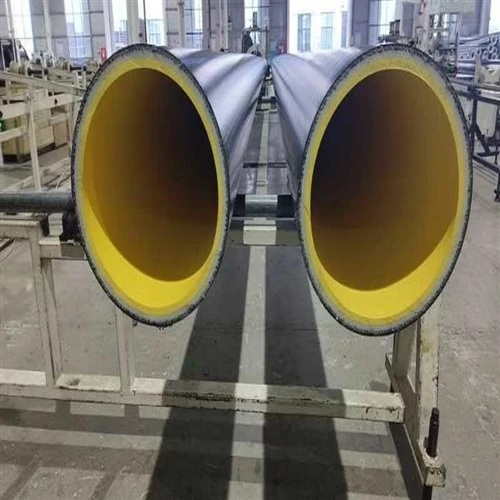
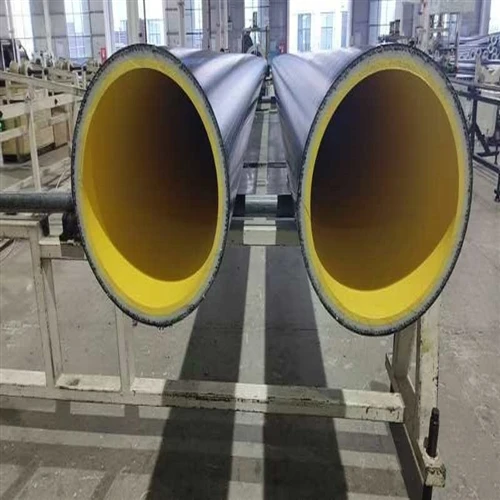
| Steel-Lined UHMWPE Composite Pipe | Outer steel pipe + inner UHMWPE liner | Higher pressure, more severe conditions |
7. Conclusion: It's Not More Expensive - It Solves the Problem Once and for All
The worst cycle in industrial material selection is:
You solve abrasion, but corrosion remains
You solve corrosion, but scaling increases resistance
You reduce resistance, but impact/fatigue causes failure
In the end, all "seemingly cheap choices" become expensive through shutdowns, repairs, spare parts, and risks.
The value of UHMWPE pipe is this:
With abrasion resistance, corrosion resistance, low friction/self-lubrication, and impact/fatigue resistance, it closes the loop on the key contradictions in high-wear conditions.
Even if the initial investment is higher than ordinary carbon steel pipe:
Service life: 6–8× longer | Maintenance cost: ~70% lower
When you put total lifecycle cost on the same balance sheet, you realize -
it's not selling material. It's selling the certainty of stable production.