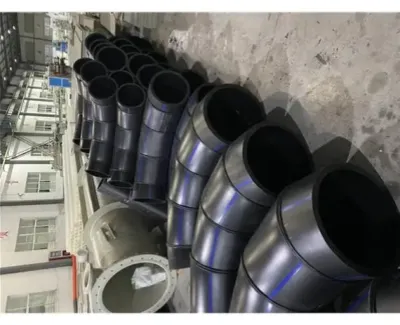
When a slurry pipeline fails, the first thing to suffer is often not the equipment itself, but the production rhythm: fluctuating pressure, sudden flow decline, increased pump room noise, or even a dull bang during a night shift-followed by slurry splashing and a full-line shutdown.
Many people assume such failures can be solved by experience alone: patch where it leaks, replace where it's worn thin. But the real challenge is this-slurry pipeline failures are rarely caused by a single weak point. More often, they are the result of multiple factors accumulating to a critical threshold. If you only fix the symptom, the problem will resurface elsewhere.

I. Don't Rush to Conclusions: Slurry Pipeline Failures Create Many "Illusions"
The same "slurry leakage" may stem from completely different causes:
Leakage at weld seams: could be manufacturing defects, or stress concentration and vibration fatigue
Elbow outer wall worn through: could be excessive velocity, changes in particle grading, or improper elbow radius/layout causing secondary erosion
Local pitting in straight pipes: could be chemical corrosion, cavitation, or micro-cutting by hard particles
Frequent pipeline blockage: could be oversized particles, high concentration, or formation of a deposition dead zone
So the first step is not judging the cause, but treating the failure as a traceable event-analyzing based on evidence.
Remember a practical principle:
The location where the failure occurs is often not where the root cause originates. The root cause may lie upstream-in operating conditions, pump duty point, throttling methods, or even changes in ore properties.

II. A Complete 6-Step Process for Slurry Pipeline Failure Analysis
This workflow applies to both rapid on-site troubleshooting and formal technical reports. The key is that every step must produce verifiable evidence.
1) Define the Failure Clearly
Don't simply say "the pipe wore through." At minimum, answer four questions:
What is the failure mode? (erosion perforation, corrosion leakage, fracture, burst, lining detachment, flange leakage, etc.)
Where did it occur? (elbow outer arc, tee branch, downstream of valve, pump outlet, incline section, low point, reducer, etc.)
When and how often did it occur? (service life, recurring pattern, correlation with shift/ore source/concentration changes?)
What were the consequences? (downtime duration, leakage volume, personnel risk, environmental risk)
Create a "failure card" summarizing this information, including photos, sketches, and timeline. All subsequent conclusions must trace back to it.
2) Rapid On-Site Screening: Eliminate Major Pitfalls First
A common mistake: immediately dismantling and replacing components, destroying evidence.
Instead, quickly screen three high-probability categories:
Operating conditions: Flow/pressure fluctuations? Frequent start-stop? Dry running? Air entrainment? Cavitation noise?
Structural layout: Small-radius elbows? Sharp turns? Sudden expansions/contractions? Valves used improperly for throttling?
Material matching: Insufficient wall thickness? Inadequate wear resistance? Lining incompatible with particle hardness, size, or concentration?
The goal is not to draw conclusions but to build a hypothesis list-identify 3–5 possible root-cause paths and define evidence collection points for each.
3) Data Collection: The Key to Root Cause Closure
Slurry systems involve many coupled variables. Without data, analysis becomes speculation.
Collect as much as possible:
Operating parameters: Flow rate, pressure, temperature, pump speed, motor current, start-stop records
Medium parameters: Slurry concentration, particle size distribution, hardness (or mineral composition changes), pH/chloride and other corrosive indicators
Pipeline information: Diameter, wall/lining thickness, elbow radius, valve type and opening, support arrangement
Failed component evidence: Macroscopic morphology, thickness measurements, wear direction, crack propagation marks
Maintenance history: Repeated failures at similar locations? Previous materials and structures used?
Practical tip:
If conditions permit, establish ultrasonic thickness monitoring points. Many slurry pipelines do not fail suddenly-they enter an accelerated wear phase long before rupture.
4) Identify the Failure Mode: Qualitative First, Then Quantitative
Correct identification prevents misdirected analysis.
Common modes include:
Erosive wear: Local thinning with directional wear marks; common at elbow outer arcs, tees, and downstream of valves
Corrosion–erosion coupling: Darkened surface, pitting, accelerated material loss; chemical properties often critical
Fatigue cracking: Often initiates at weld toes or stress concentration areas; associated with vibration or water hammer
Cavitation damage: Honeycomb-like pitting; typically found in low-pressure zones or under poor pump inlet conditions
If you can only do one thing:
Place the failure photos, flow direction sketch, and operating curves on the same page. The relationship among them often reveals the root cause.
5) Root Cause Analysis: Identify the Chain, Not Just a Point
An effective failure analysis does not simply state "severe wear caused perforation." It clarifies the chain:
Why did this location wear faster? (Flow field change, impact angle, secondary flow, deposition and re-entrainment)
Why did operating conditions shift? (Ore variability, concentration control failure, off-duty pump operation, improper throttling)
Why couldn't the material withstand it? (Insufficient selection margin, unsuitable lining structure, manufacturing or installation quality issues)
Why wasn't it detected earlier? (No thickness inspection, no trend data, arbitrary replacement cycle)
When the chain is clear, corrective action upgrades from "replace with thicker material" to systematic optimization.
6) Close the Loop: Turn Analysis into an Actionable Upgrade Package
Structure recommendations into three levels:
Immediate measures
Replace failed section
Add protective isolation
Standardize startup/shutdown
Temporarily reduce velocity or concentration fluctuation
Operating optimization
Optimize pump duty point
Reduce valve throttling
Improve suction conditions
Prevent water hammer and cavitation
Structural optimization
Increase elbow radius
Reinforce high-wear areas with wear-resistant linings
Adjust tee angles
Optimize supports to reduce vibration
Material upgrades
Use more suitable wear-resistant pipeline structures in high-erosion zones, such as ceramic composite pipes or higher-grade wear layers
Maintenance system
Thickness monitoring + trend recording + warning thresholds
Establish a reproducible replacement cycle model

III. Three Common Field Failure Scenarios
Scenario 1: Elbows Frequently Worn Through
Often not simply "poor elbow quality." It is typically the combined effect of velocity, particles, and flow field:
Check if the elbow radius is too small or located near valves/reducers causing turbulence
Check for peak flow or concentration fluctuations
Verify whether lining/material matches particle hardness
Upgrading critical elbows with stronger anti-erosion structures and optimizing layout often dramatically extends service life.
Scenario 2: No Leakage, but Flow Drops and Pump Power Increases
Don't focus only on the pump. Often internal deposition or blockage is the cause:
Check low points, incline sections, and diameter transition areas for sedimentation
Check if long-term small valve openings cause buildup
Verify whether slurry particle size and concentration deviate from design conditions
A single process review and layout adjustment can sometimes save more cost than replacing a pump.
Scenario 3: Repeated Weld or Flange Leakage
Usually a combination of structural stress, vibration, and assembly quality:
Check support layout and forced alignment
Check whether pump outlet vibration is transmitted to the pipeline
Verify flange surface condition, gasket selection, and bolt preload
Repeated tightening often makes the problem worse.
IV. What a Proper Failure Analysis Report Should Include
Instead of a two-line report ("Failed-Replaced-Resolved"), structure it as:
System overview (medium, flow, concentration, pressure, temperature, service duration)
Failure phenomenon and impact (location, mode, photos, downtime estimation)
Data and evidence (trend curves, thickness points, operating records, morphology)
Failure mode identification
Root cause chain (direct cause + contributing factors + management factors)
Corrective plan (short/mid/long term, expected effect, verification method)
Selection and procurement recommendations (key parameters, acceptance criteria, spare strategy)
When sections 6 and 7 are well developed, procurement shifts from price comparison to lifecycle responsibility.
V. Procurement Advice: Ask These Five Questions
Has the supplier identified high-wear zones and verified operating conditions with you?
Are there mature structural recommendations for elbows, tees, and valve downstream sections?
How is wear layer or lining quality controlled and inspected?
Are installation and maintenance recommendations provided (supports, vibration control, thickness monitoring)?
If failure occurs, will they provide failure analysis and corrective closure-not just repair service?
Reliable suppliers are not afraid of detailed technical questions.
VI. Why Many Sites Focus on Luoyang Zhengju: Engineering-Oriented Delivery
Slurry conveying is not just about a single product-it is a system involving operating conditions, structure, materials, installation, and maintenance. Companies choose manufacturers like Luoyang Zhengju not merely for supplying pipes, but for engineering coordination capability, reflected in:
Clear communication on high-wear zones and reinforcement strategies
Structural and lifecycle emphasis on key fittings (especially elbows and tees)
Project-aligned delivery rhythm and on-site support
Material selection focused on matching particles, velocity, and impact angle-not simply maximizing hardness
What you truly need is a partner who can explain and implement how to make wear-resistant pipelines last longer-not just provide a quotation.
VII. Final Thoughts
Slurry pipeline failure analysis is not about writing reports-it's about preventing repeated downtime. It is the evolution from "fixing where it broke" to understanding why it broke, how to prevent recurrence, and how to detect early warning signs.