Introduction
Coal mine drainage is easy to underestimate. Water enters a pit after heavy rainfall, collects in low-lying areas, seeps into underground workings or flows through disturbed ground. The immediate task is to remove it. The harder task is maintaining a drainage network while the mine environment continues to change.
For Australian coal operations, drainage infrastructure may face a combination of rainfall, variable soil conditions, excavation-related ground movement, corrosive surroundings and heavy vehicle loads. A pipe that performs well in a shallow trench may face very different stresses when buried beneath a haul road or installed through ground affected by mining activities.
This is where HDPE double-wall corrugated pipe deserves consideration-not as a universal solution for every mine drainage system, but as a practical option for suitable gravity-flow drainage applications.
The Real Problem Is Often Below the Surface
A drainage pipe rarely fails because of one isolated factor. The surrounding ground, installation quality and water conditions can all contribute to the problem.
Consider a drainage line installed beside a coal stockyard or beneath a mine access road. Trucks repeatedly load the ground above it. Rainwater saturates the surrounding soil. Over time, local settlement or uneven support may change how loads are transferred to the buried pipe.
A rigid pipe and a flexible pipe respond differently to these conditions. A rigid pipe may be vulnerable to cracking if differential settlement creates concentrated stress. A flexible pipe can deform to some extent under external loading, but that does not make it immune to damage. Excessive deformation, poor bedding, inadequate side support or unsuitable backfill can still compromise the pipeline.
Research published in Soil Dynamics and Earthquake Engineering in 2025 examined buried HDPE double-wall corrugated pipes subjected to lateral relative movement between the pipe and surrounding sand. The research highlights an important engineering point: a buried pipe's response depends on its geometry, stiffness and interaction with the surrounding soil-not simply on the polymer material itself.
For mine drainage, that means the performance of a buried pipe should be considered together with the trench, bedding and backfill design. The pipe is one part of a system.
Why HDPE Double-Wall Corrugated Pipe Has a Different Design
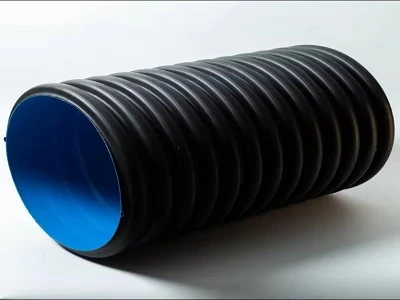
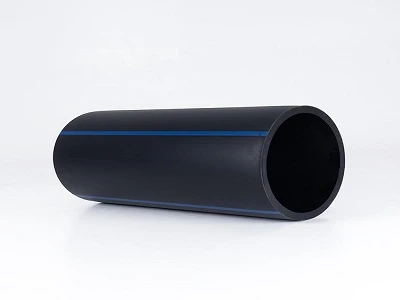
The defining feature of HDPE double-wall corrugated pipe is its two-wall construction.
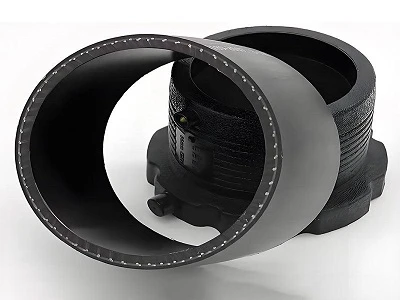
The inner wall is smooth, providing a continuous passage for water. The outer wall has a corrugated profile that increases ring stiffness without requiring the entire pipe wall to be solid and thick.
These two features address different requirements.
The smooth inner surface supports gravity-flow drainage by limiting internal surface irregularities. It can also make routine inspection easier than a heavily textured internal surface. Actual hydraulic capacity, however, still depends on the internal diameter, gradient, flow depth, inlet conditions and the presence of sediment or debris.
The corrugated exterior provides structural stiffness against external loads. This is particularly relevant for buried drainage lines where soil pressure and traffic loading may be more important than internal pressure.
The distinction matters because HDPE double-wall corrugated pipe is generally intended for non-pressure drainage, not pressurized mine-water transmission. Where pumps create sustained internal pressure, a suitable pressure-rated pipe system is required instead.
Four Conditions That Deserve Attention at a Coal Mine
1. Heavy Vehicle Loading
Mine access roads and coal-handling areas can subject buried infrastructure to repeated external loads. The relevant question is not simply whether a pipe is made from HDPE, but whether its ring stiffness and installed configuration are appropriate for the actual burial depth and loading conditions.
A pipe beneath a lightly trafficked verge does not necessarily require the same structural specification as one beneath a heavily used haul road.
For this reason, the selection process should account for surface traffic, cover depth, soil properties and installation quality. A higher ring-stiffness class may be needed in some conditions, but it should be selected from the engineering requirements rather than chosen arbitrarily.
2. Uneven Settlement
Excavation, changes in groundwater conditions and variable ground composition can create differential movement. A flexible pipe may accommodate limited deformation, but its joints and surrounding soil must also remain functional.
A well-designed installation therefore needs suitable bedding, consistent side support and properly compacted backfill. Increasing pipe stiffness alone cannot correct a poorly prepared trench.
For drainage lines crossing disturbed ground, engineers should consider where settlement is most likely to occur and whether the pipe route, joint design and installation method can accommodate the anticipated movement.
3. Rainfall and Changing Water Levels
Rainfall can rapidly increase runoff and the amount of water entering a mine's drainage network. In some areas, drainage systems must also collect groundwater or convey water from low-lying sections of the site.
Pipe diameter, slope, inlet capacity and discharge arrangements determine whether the system can carry the required flow. A smooth internal wall is useful, but it cannot compensate for an undersized drainage line or a poorly designed outlet.
Sediment and debris are also relevant. Where runoff carries fine particles or other solids, the drainage layout should consider the likelihood of deposits forming at low points, changes in gradient or junctions.
4. Corrosive Ground Conditions
Coal mine environments vary considerably. Groundwater and surrounding soils may contain substances that attack conventional metallic materials. HDPE offers resistance to many common chemical environments, although compatibility must be checked against the actual water chemistry, temperature and exposure conditions.
This is an advantage worth evaluating when corrosion is a recurring maintenance concern. It should not be interpreted as a guarantee that every chemical exposure is harmless.
The surrounding environment, operating temperature and any cleaning chemicals used during maintenance should be considered before a final material specification is approved.
The Installation Can Matter as Much as the Pipe
Flexible buried pipelines rely on interaction between the pipe and the surrounding soil. This is why installation details deserve more attention than they often receive during procurement.
A suitable installation typically includes a prepared trench, appropriate bedding, careful positioning of the pipe, correctly assembled joints and backfill placed and compacted in controlled stages. Particular care is needed around the pipe haunches-the areas beside and slightly below the pipe's widest section-because inadequate support there can contribute to excessive deformation.
The required procedures depend on the pipe design, ground conditions and project specifications. Deep burial, groundwater, unstable ground and heavy surface loading may require additional engineering assessment.
Joint integrity also matters. Even when the pipe body performs as intended, incorrectly assembled joints can permit infiltration, leakage or soil migration. In drainage systems, these problems may develop gradually and remain unnoticed until maintenance becomes difficult.
For projects involving significant ground movement, engineers should assess both pipe deformation and joint performance rather than assuming that flexibility alone will protect the line.
What Public Mining Projects Tell Us
Publicly documented Australian mining projects demonstrate the importance of treating water conveyance and drainage as part of the wider mine infrastructure system.
At Oaky Creek coal mine in Queensland, a documented project involved an approximately 8 km raw-water pipeline using HDPE pipe in PN12.5 and PN10 pressure classes. The line conveyed raw water from a catchment area to a reverse-osmosis plant. This is a pressure-water transmission example, not evidence that double-wall corrugated drainage pipe was used. It illustrates why the distinction between drainage and pressurized water conveyance matters when specifying pipe materials.
Other Australian mining projects have also used HDPE pipelines for pit dewatering. The pipe diameter, pressure class, connection system and installation arrangement must be considered in the context of each project's requirements.
These examples should not be treated as proof that one pipe design is suitable for every mine. Rather, they show that mine water systems have different duties, and the product must match the duty it is expected to perform.
Where HDPE Double-Wall Corrugated Pipe Fits-and Where It Does Not
HDPE double-wall corrugated pipe is worth evaluating for gravity-flow drainage around suitable mine infrastructure, including site runoff collection, subsurface drainage and drainage networks serving roads or industrial areas.
It is not automatically the right choice for every application described as mine drainage.
|
Mine application |
What needs to be established |
|
Surface runoff and stormwater drainage |
Design flow, rainfall conditions, gradient and outlet capacity |
|
Buried drainage beside access roads |
Cover depth, traffic loading, ring stiffness and soil support |
|
Subsurface water collection |
Drainage layout, groundwater conditions and filtration requirements |
|
Pumped mine-water lines |
Internal pressure rating; ordinary double-wall corrugated drainage pipe is generally unsuitable |
|
Ground affected by settlement |
Expected movement, pipe deformation, joint tolerance and installation design |
This distinction is important for procurement teams. The cheapest pipe per metre is not necessarily the least expensive drainage solution over its service life. Installation difficulty, repair access, interruptions to mine operations and the consequences of a blocked or damaged line can all affect the total cost.
What Should Be Verified Before Ordering?
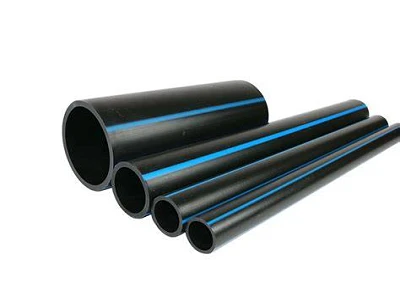
Rather than selecting a product based only on nominal diameter, a mine project team should establish the conditions the pipeline will actually face.
The most useful starting information includes the required internal diameter, estimated flow, burial depth, surface loading, soil characteristics, groundwater conditions and whether the line will operate by gravity or under pressure.
The applicable ring-stiffness class should then be verified against the project design and the relevant product standard. Depending on the market and specification, standards such as GB/T 19472.1, EN 13476 or ISO 21138 may be relevant to structured-wall polyethylene drainage systems. The specific edition, scope and applicability should be confirmed for the project and supplied product.
Test documentation should also match the product being purchased. Ring stiffness, ring flexibility, impact performance and resistance to wall separation are relevant checks for double-wall corrugated pipe. These test results are more useful than general statements about strength because they provide evidence for defined properties under defined test conditions.
For Australian projects, the purchaser should confirm the required local specifications and acceptance criteria with the project engineer before ordering. Compliance should never be assumed simply because a pipe is manufactured from HDPE.

HDPE Double-Wall Corrugated Pipe: Technical Specifications
|
Parameter |
Specification |
|
Product Name |
HDPE Double-Wall Corrugated Pipe |
|
Material |
High-Density Polyethylene (HDPE) |
|
Pipe Diameter |
DN200–DN2000 mm |
|
Standard Length |
6 m / 9 m |
|
Pipe Structure |
Smooth inner wall and corrugated outer wall |
|
Ring Stiffness Classes |
SN4 / SN8 / SN10 / SN12.5 / SN16 |
|
Ring Stiffness |
SN4: ≥4 kN/m²; SN8: ≥8 kN/m²; SN10: ≥10 kN/m²; SN12.5: ≥12.5 kN/m²; SN16: ≥16 kN/m² |
|
Material Density |
≥930 kg/m³ |
|
Tensile Strength |
≥20 MPa |
|
Elongation at Break |
≥350% |
|
Operating Temperature Reference |
Approximately −40°C to +60°C |
|
Main Characteristics |
Corrosion resistance, impact resistance, lightweight construction and flexibility |
|
Typical Applications |
Mine drainage, stormwater drainage, groundwater collection and buried drainage systems |
|
Installation |
Buried or trench installation, subject to project design |
Note: Ring stiffness is a measure of a pipe's resistance to external deformation, not its internal pressure rating. Actual specifications, test methods and applicable standards should be confirmed for the selected product model and project requirements.
Conclusion: Drainage Performance Starts with the Right Pipe Design
In Australian coal mines, drainage systems must contend with more than water. Ground movement, external loading, changing groundwater conditions and installation quality can all influence long-term pipeline performance.
HDPE double-wall corrugated pipe offers a smooth inner wall for water conveyance, a corrugated outer structure for ring stiffness, relatively low weight and resistance to many common corrosive environments. For suitable non-pressure drainage applications, these characteristics make it worth considering as part of a properly designed mine drainage system.
The final decision should be based on the actual site conditions, required hydraulic capacity, burial depth, loading conditions and verified product test data. Choosing the right pipe-and installing it correctly-can help reduce avoidable maintenance and keep mine drainage infrastructure working as intended.
Luoyang Zhengju New Materials Technology Co., Ltd. manufactures plastic piping products, including HDPE pipes and drainage solutions. For Australian coal mine projects, the appropriate next step is to compare the required diameter, ring stiffness, installation conditions and applicable test requirements with the actual product range and supporting documentation.
A drainage pipe should not merely carry water on the day it is installed. It should be designed as part of a buried system that can continue to perform under the site's real ground and loading conditions.
FAQ
1. Is HDPE double-wall corrugated pipe suitable for coal mine drainage?
It can be suitable for non-pressure drainage applications, such as stormwater collection, buried drainage and certain subsurface drainage systems. Suitability depends on the required flow capacity, external loading, burial depth, ground conditions and product specifications.
2. Can HDPE double-wall corrugated pipe withstand heavy mining vehicle loads?
It may be suitable beneath roads and other loaded areas when its ring stiffness, cover depth, bedding and backfill are properly designed for the expected loads. The pipe should not be selected on material type alone; project-specific structural requirements must be checked.
3. Can double-wall corrugated HDPE pipe be used for pressurized mine water?
Ordinary double-wall corrugated drainage pipe is generally designed for non-pressure applications. For pumped mine-water transmission, use a pressure-rated piping system that is suitable for the operating pressure and relevant surge conditions.
4. What is the difference between HDPE double-wall corrugated pipe and solid-wall HDPE pipe?
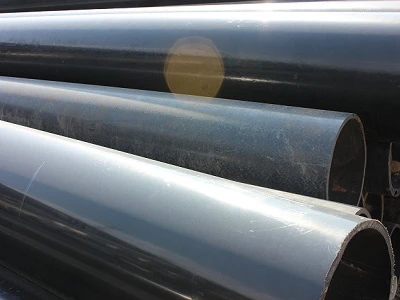
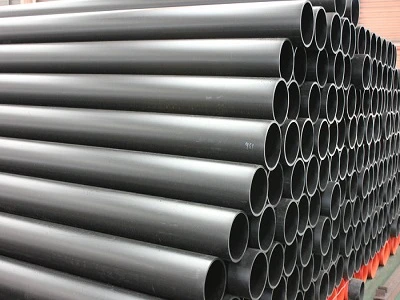
Double-wall corrugated pipe has a smooth inner wall and a corrugated exterior designed to provide ring stiffness for buried applications. Solid-wall HDPE pipe has a continuous solid wall and is available in pressure-rated designs for suitable water transmission duties. The appropriate choice depends on whether the system requires gravity drainage or pressure conveyance, along with its structural and hydraulic requirements.
5. What information is needed to select HDPE drainage pipe for a mine?
The main details include the required diameter, expected flow rate, burial depth, surface loading, ground and groundwater conditions, installation method and whether the line operates under gravity or pressure. The applicable product standard, ring stiffness and test documentation should also be confirmed before procurement.
6. Is HDPE pipe resistant to corrosion in mine environments?
HDPE is resistant to many common corrosive environments, which can be an advantage over some conventional metallic materials. However, compatibility depends on the specific chemicals, concentrations, temperatures and exposure conditions. The actual mine water and soil conditions should be assessed before the material is approved.
Primary Keyword
HDPE double wall corrugated pipe for coal mine drainage
Secondary Keywords
Australia coal mine drainage pipe, HDPE mining drainage pipe, underground mine drainage system, HDPE corrugated pipe ring stiffness, flexible drainage pipe, mine site stormwater drainage