Introduction
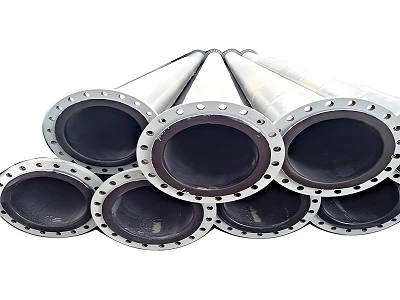
A mine may choose UHMWPE pipe because the transported slurry is highly abrasive. Yet the first damage to the pipeline may happen before the pumps are switched on.
On a rocky mining site, pipe sections are unloaded beside rough access roads, moved across uneven ground and lowered into trenches where broken rock is difficult to remove completely. A section can be dragged over a sharp edge or placed on a hard point without anyone noticing a serious problem. Later, when the line begins carrying mineral slurry, the team may be dealing with two different issues: wear from inside the pipe and damage caused during installation.
These problems have different causes. Treating them as one general question of "wear resistance" can lead to the wrong solution.
A Wear-Resistant Pipe Still Needs Careful Handling
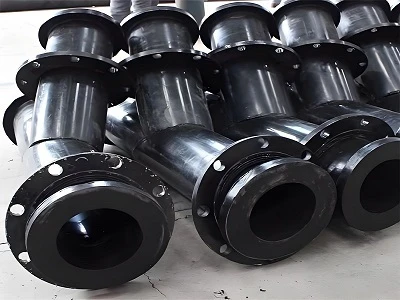
UHMWPE is used in abrasive slurry applications because its wear-resistant surface can help reduce material loss under suitable operating conditions. Its performance in a particular mine, however, depends on the slurry itself and how the pipeline is operated.
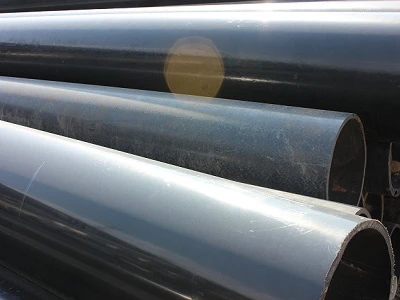
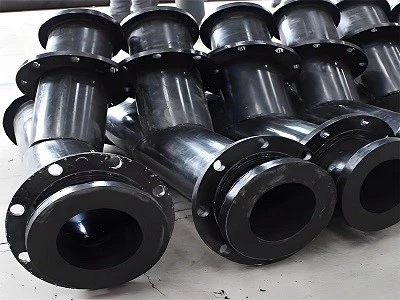
The outside surface faces a different set of hazards. Sharp rock, rough lifting points and dragging during positioning can scratch or gouge the pipe. Damage should be assessed before installation continues, especially if it is deep, concentrated or close to a joint.
The appropriate response depends on the manufacturer's acceptance criteria. A superficial mark is not necessarily equivalent to structural damage, and a damaged section should not be accepted or rejected solely by appearance without reference to the product requirements.
For this reason, pipe handling is part of pipeline quality control, not merely a transport issue.
The Trench Can Create Problems That the Pipe Material Cannot Fix
Rock excavation often leaves an irregular trench bottom. If loose fragments remain beneath the pipe, the pipe may rest on a few hard points instead of receiving reasonably continuous support.
The concern becomes more serious where the line crosses uneven ground or where the trench is backfilled with mixed excavated material. Local support conditions can change along a single pipe section. The installation team may need to remove protruding rock, prepare suitable bedding and check the pipe's position before covering it.
This does not mean every rocky route requires a thick layer of imported bedding. The appropriate preparation depends on the excavation, pipe design, loading conditions and project specification. The important point is that the pipe should not be forced to compensate for a poorly prepared trench.
A pipeline designed to carry abrasive slurry still needs a suitable foundation.
Inside the Pipe, the Slurry Tells a Different Story
Once operation begins, wear is influenced by the material moving through the line. Two mines using the same nominal pipe size can experience different results because their slurry conditions are not the same.
Particle hardness matters, but it is not the only variable. Particle shape, size distribution, solids concentration, flow velocity and changes in flow direction can all influence where material loss develops.
For example, a section carrying a relatively consistent slurry may experience a different wear pattern from a section where the solids concentration changes frequently. A poorly chosen operating condition may also create localized wear rather than distributing the abrasive load evenly along the pipeline.
The location of a failure can therefore provide useful evidence. If damage repeatedly appears at the same operating location, the investigation should consider local flow conditions, route geometry and operating history instead of assuming that the pipe material alone is responsible.
UHMWPE can be a strong candidate for abrasive mineral transport, but the material name by itself does not establish a guaranteed service life.
Choosing Pipe Dimensions Without Guessing at Service Life
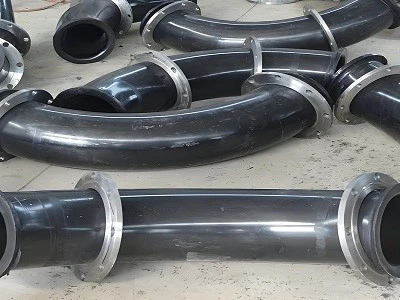
UHMWPE pipe dimensions and pressure ratings must be selected for the actual system. The table below summarizes representative product information for initial discussion; it does not pair specific diameters with guaranteed pressure ratings.
|
Parameter |
Representative information |
What it means for the project |
|
Nominal diameter |
DN65–DN1000 |
The required size depends on flow, slurry characteristics and system design |
|
Standard section length |
9 m or 12 m |
Affects lifting, access, joint locations and installation planning |
|
Nominal pressure range |
PN1.0–PN10, subject to available configurations |
Confirm the actual rating for the selected diameter and pipe construction |
|
Molecular weight |
Above 1.5 million, as specified for the product |
A material characteristic associated with the pipe's wear-resistant properties |
|
Service temperature |
Product-specific; typical stated range is -269°C to 80°C |
Confirm the manufacturer's limits for the actual medium and operating conditions |
These figures are not a substitute for a product datasheet. Available sizes, pressure ratings and temperature limits must be verified for the particular pipe being quoted. The selected pressure rating must also account for the system's design conditions, including relevant operating transients.
For an abrasive slurry line, the engineering review should go beyond nominal diameter. The supplier needs to understand the transported material, the operating conditions and the installation environment before making a meaningful recommendation.
What to Record When a Slurry Pipeline Shows Wear
When a mine reports that a pipe section has worn through earlier than expected, the most useful investigation begins with the actual failure location.
Record the pipe diameter, wall construction, operating pressure and approximate service time. Describe the slurry, including particle size distribution, solids concentration and any known changes in the material being transported. Note the flow conditions and whether the damage appears near a bend, a joint, a low point or a section where operating conditions change.
Photographs of the failed section and nearby pipe can help distinguish external installation damage from internal wear. If practical, retain the removed section for inspection rather than relying only on a brief description of the failure.
This information is more useful than simply asking for a pipe with a thicker wall. Additional wall thickness may be worth evaluating, but it should not be the automatic answer to every wear problem. The root cause may involve the slurry, operating conditions, installation damage or a combination of factors.
FAQ
Is UHMWPE suitable for hard-rock mining slurry?
It can be suitable for abrasive mineral slurry, depending on the particle characteristics, concentration, flow conditions, pressure and temperature. The actual service conditions should be reviewed before selecting a pipe configuration.
Can sharp rocks damage UHMWPE pipe during installation?
Yes. The material's internal wear resistance does not make it immune to external gouging or damage from rough handling. Pipe sections should be supported and moved using an appropriate method, and any suspected damage should be checked against the manufacturer's acceptance criteria.
Should a thicker UHMWPE pipe always be selected for abrasive slurry?
Not necessarily. Wall thickness is one part of the design. The slurry conditions, operating pressure, expected wear pattern and practical inspection or replacement requirements also matter. A thicker wall may help in some applications, but it does not correct unsuitable operating conditions.
What information is needed for a preliminary pipe recommendation?
Provide the required diameter, operating pressure and temperature, slurry composition, approximate particle size and concentration, flow conditions, pipe route and installation method. Information about previous wear or failure locations is particularly useful for replacement projects.
Primary Keyword
UHMWPE slurry pipe in rocky mining environments
Secondary Keywords
UHMWPE mining pipe, abrasive slurry pipeline, mining pipe abrasion, UHMWPE pipe installation, wear-resistant slurry pipe, rocky ground pipeline installation
Request a UHMWPE Pipe Quotation
|
Step |
Process |
|
1 |
Send Requirements - DN, pressure, quantity and application |
|
2 |
Specification Confirmation - Pipe type, size, wall thickness and connection |
|
3 |
Quotation - Price, lead time, packing and shipping terms |
|
4 |
Order & Production - Contract, payment and production |
|
5 |
Inspection & Delivery - Quality inspection and shipment |
For UHMWPE mining pipe, UHMWPE lined steel pipe, UHMWPE elbows and link flanges, send us:
DN + PN + Slurry Type + Solid Concentration + Particle Size + Flow Rate + Pipeline Length + Quantity
Luoyang Zhengju New Materials Technology Co., Ltd.
WhatsApp:+86 19937270645
Email: baibaili456@gmail.com
Wechat: +86 19937270645
Get Best Price for Your Grinding Slurry Pipeline.