Introduction
Spodumene processing involves several stages that can place very different demands on a plant's pipeline network. Depending on the operation, pipelines may transport mineral slurry, concentrate, tailings, process water, or other fluids associated with production. Although these services may exist within the same facility, they should not automatically be specified with the same pipe material.
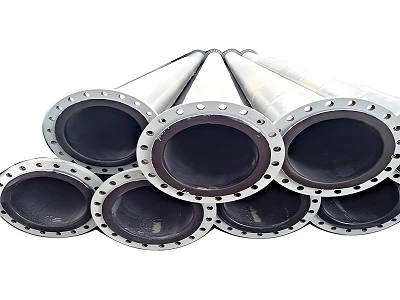
Ultra-high-molecular-weight polyethylene (UHMWPE) pipe is considered for selected abrasive mineral transport duties because of its wear resistance, low-friction surface, and relatively low weight. These characteristics can be valuable where internal wear, material buildup, and maintenance access affect operating costs.
For Australian lithium operations, however, material selection needs to account for the actual process rather than the general label of "lithium mining." The properties of the transported slurry, operating pressure, temperature, chemical exposure, pipe dimensions, and connection arrangement all influence whether UHMWPE is a suitable choice.
One Processing Plant Can Have Several Different Pipeline Requirements
The first step is to identify the service of each pipeline. A line carrying slurry from one process stage may contain coarse particles, while a line downstream of further processing may carry finer solids. A tailings line can also behave differently from a concentrate transfer line because the particle distribution and solids concentration may be different.
These differences matter because particle size alone does not determine wear. Particle shape, mineral hardness, concentration, and flow conditions also affect the way solids interact with the internal pipe wall. Angular particles may create different wear patterns from rounded grains, and changes in solids concentration can alter the conditions experienced by the pipeline.
A process plant may also contain lines that are not primarily exposed to abrasion. Utility water, certain process fluids, and other services require their own material and compatibility assessments. Specifying UHMWPE throughout the facility without examining each duty can add unnecessary complexity or fail to address the real requirements of a particular line.
The process engineer should therefore identify the material entering each pipeline, its destination, the expected operating range, and the consequences of leakage, blockage, or unplanned shutdown.
Understand the Slurry Before Comparing Pipe Materials
A quotation request that says only "pipe for spodumene slurry" leaves several important questions unanswered. The supplier needs enough information to understand the application, while the engineering team needs to establish the design duty.
Particle size distribution helps describe the solids being transported, but it should be considered alongside particle shape and mineral composition. Solids concentration is also relevant because a change in concentration may affect the slurry's flow behavior and pumping requirements.
Flow velocity requires particular attention. If the flow is insufficient for the specific material and pipeline profile, solids may settle and accumulate. If velocity is unnecessarily high, energy consumption and particle impacts may increase. The suitable operating range depends on the slurry, pipe diameter, flow rate, elevation changes, and pump characteristics.
The pipeline's operating history can help establish whether wear is actually the main problem. If an existing metallic pipe repeatedly develops internal wear, an abrasion-resistant alternative may deserve evaluation. If the main issues are poor supports, joint leakage, or external loading, changing the material alone may not solve them.
Where UHMWPE May Offer Practical Benefits
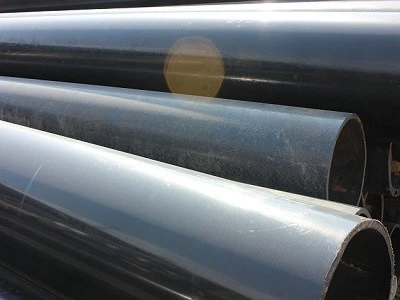
UHMWPE is known for its resistance to abrasion and its low-friction surface characteristics. In suitable mineral slurry services, these properties may help reduce internal wear or material adhesion compared with less suitable alternatives. Its relatively low weight may also simplify handling and transportation, depending on pipe dimensions and site conditions.
These benefits need to be assessed against the actual duty. A material's general properties do not establish the service life of a complete pipeline. The result depends on the pipe product, dimensions, manufacturing quality, connection system, operating conditions, and installation arrangement.
Chemical compatibility should also be confirmed. Process water and mineral slurries may contain dissolved substances or reagents that vary between operations. Temperature, chemical concentration, exposure duration, and cleaning procedures should be considered when reviewing the suitability of the proposed product.
A practical comparison should therefore examine the failure mechanism the project is trying to address. If internal abrasion is the dominant issue, UHMWPE may be a useful candidate. If the failure is caused by pressure exceeding the product rating or by repeated movement at an unsupported joint, the design must address those problems regardless of the material selected.
Pressure Rating and Pipe Dimensions Need Separate Verification
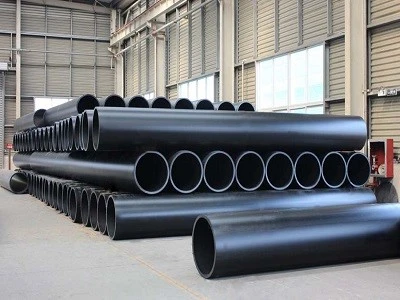
Wear resistance and pressure capacity are different properties. The selected pipe must have a confirmed pressure rating appropriate for the operating conditions, including relevant pressure fluctuations and temperature. The supplier should provide product-specific technical information for the proposed dimensions and connection system.
Diameter selection also requires care. At a given volumetric flow rate, changing the pipe diameter changes flow velocity. However, selecting a diameter solely to reduce velocity can create other problems if the resulting flow conditions allow solids to settle. The hydraulic assessment should consider both transport requirements and pressure losses.
Wall thickness, pipe length, and connection arrangement should be checked alongside the diameter. Where a pipeline replaces an existing installation, the old dimensions can provide a useful reference, but they should not be copied without review. Process conditions may have changed, and the original design may itself have contributed to recurring failures.
The project team should also consider transportation and installation. Long pipe sections may reduce the number of joints, but the available access route, lifting equipment, and installation space can limit practical section lengths. The final arrangement should balance hydraulic requirements, joint count, maintenance access, and site logistics.
Connections and Supports Affect Reliability
A pipeline can experience leakage even when the pipe wall remains in acceptable condition. Joint alignment, sealing components, support design, and movement near pumps or valves can all affect reliability.
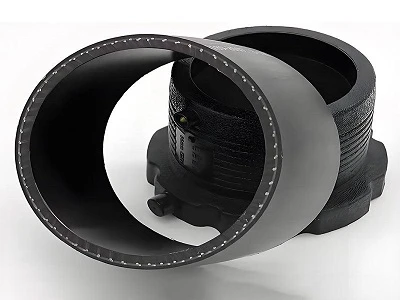
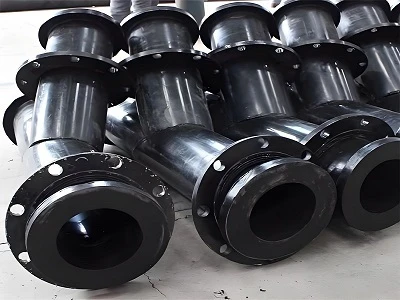
The connection method should be compatible with the selected pipe product and the system's operating requirements. Flange dimensions, fittings, sealing arrangements, and assembly procedures should be confirmed before procurement. If the new pipe must connect to existing equipment, drawings and interface dimensions can help avoid problems during installation.
Supports should be considered as part of the pipeline design rather than as an installation detail to be decided later. The support arrangement needs to account for the actual pipe system, contained material, operating loads, and relevant temperature effects. Support spacing should be confirmed against the product and installation conditions rather than copied from an unrelated project.
Maintenance access is another consideration. A pipeline may be technically suitable but difficult to service if critical joints, valves, or wear-prone sections cannot be
inspected safely. The design should allow the maintenance team to reach the locations that are most likely to need attention.
Remote-Site Logistics Should Influence Procurement
For remote mine sites, an unexpected pipeline failure can involve more than the cost of replacement pipe. Transportation, labor, equipment access, production interruption, and the availability of compatible fittings may all affect the total impact.
Procurement teams should compare the complete operating implications of the available materials. Purchase price alone does not show whether a solution will reduce maintenance effort or improve availability. Where operating records exist, they can be used to estimate the frequency of repairs, the locations of repeated failures, and the consequences of shutdowns.
Product documentation should be agreed before production. Depending on the project, this may include dimensional records, material identification, inspection reports, test documentation, and traceability information. If third-party inspection is required, the buyer should define the scope and acceptance criteria in advance.
Spare-parts planning also deserves attention. Keeping compatible connection components and selected replacement sections available can reduce response time when an unexpected problem occurs. The appropriate inventory depends on the pipeline's criticality, the supplier's lead time, and the consequences of interruption.
Typical UHMWPE Mining Pipe Specifications
|
Parameter |
Specification |
|
Pipe Material |
UHMWPE (Ultra-High Molecular Weight Polyethylene) |
|
Nominal Diameter |
DN50–DN800 mm |
|
Wall Thickness |
5–30 mm |
|
Density |
≥ 0.93 g/cm³ |
|
Tensile Strength |
≥ 21 MPa |
|
Elongation at Break |
≥ 350% |
|
Vicat Softening Temperature |
≥ 120°C |
|
Abrasion Test Indicator |
≤ 0.05 g/1.61 km |
|
Working Pressure |
0.6–2.5 MPa |
|
Standard Length |
6 m; customized lengths available |
|
Connection Method |
Flange Connection |
Note: The specifications above are based on the manufacturer's UHMWPE mining pipe product information. The applicable wall thickness and working pressure must be confirmed for the selected pipe diameter and actual operating conditions.
FAQ
Is UHMWPE pipe suitable for every spodumene slurry line?
No. Suitability depends on the slurry characteristics, pressure, temperature, chemical exposure, pipe dimensions, and installation conditions. Each pipeline should be assessed according to its own duty.
Does UHMWPE eliminate pipeline maintenance?
No. Wear-resistant pipe still requires inspection. Bends, joints, supports, valves, and sections affected by operating changes can develop problems even when straight pipe sections perform well.
Can the same pipe dimensions be used for every process stage?
Not automatically. Different process stages may involve different flow rates, solids concentrations, particle characteristics, and pressure requirements. Diameter and wall thickness should be selected for the individual service.
What information should a mine provide to a pipe manufacturer?
Useful information includes the process duty, transported material, particle characteristics, solids concentration, flow rate, operating pressure, temperature, required dimensions, connection arrangement, and installation environment.
Can UHMWPE replace an existing steel pipeline?
It may be suitable for selected services, but the replacement requires a technical review of pressure capacity, connection design, support requirements, hydraulic performance, and installation conditions. The existing pipeline's failure history should be reviewed to determine whether changing materials will address the root cause.
Conclusion
Selecting UHMWPE pipe for spodumene processing is a duty-specific engineering decision. The slurry, particle characteristics, flow conditions, pressure, chemical exposure, connections, and site maintenance requirements all influence whether the material is suitable.
For Australian lithium operations, a more reliable procurement process starts by separating the plant into individual pipeline duties and evaluating each one against verified operating information. UHMWPE may offer practical benefits in selected abrasive services, but dependable performance requires the pipe product and complete installation system to match the actual process.
Primary Keyword: UHMWPE pipes for spodumene processing
Secondary Keywords: Australian lithium mining pipeline, spodumene slurry pipe, lithium mineral processing pipes, UHMWPE abrasion-resistant pipe, lithium plant slurry transfer, mineral processing pipeline selection
Request a UHMWPE Pipe Quotation
|
Step |
Process |
|
1 |
Send Requirements - DN, pressure, quantity and application |
|
2 |
Specification Confirmation - Pipe type, size, wall thickness and connection |
|
3 |
Quotation - Price, lead time, packing and shipping terms |
|
4 |
Order & Production - Contract, payment and production |
|
5 |
Inspection & Delivery - Quality inspection and shipment |
For UHMWPE mining pipe, UHMWPE lined steel pipe, UHMWPE elbows and link flanges, send us:
DN + PN + Slurry Type + Solid Concentration + Particle Size + Flow Rate + Pipeline Length + Quantity
Luoyang Zhengju New Materials Technology Co., Ltd.
WhatsApp:+86 19937270645
Email: baibaili456@gmail.com
Wechat: +86 19937270645
Get Best Price for Your Grinding Slurry Pipeline.