Introduction
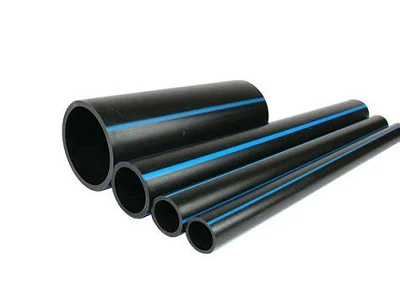
Horizontal directional drilling (HDD) allows pipelines to cross roads, rivers, railways and developed areas without opening a continuous trench. For contractors installing HDPE pipelines, however, trenchless construction introduces a different set of risks. The pipe must pass through a prepared bore, follow the planned alignment and withstand the loads generated during pullback.
A pipe that performs well in a conventional buried installation is not automatically suitable for every HDD project. Pipe dimensions, material properties, joint quality, bore geometry, installation temperature and the pullback procedure all influence the outcome.
The key is to assess the pipe as part of the complete installation system rather than treating HDD as simply another way to lay a pipeline.
Pullback Force Is Not the Same as Operating Pressure
One common specification mistake is to select an HDPE pipe primarily by its internal pressure rating. Pressure class describes performance under defined internal-pressure conditions. During HDD installation, the pipe may instead be exposed to axial tension, bending, contact with the bore wall and localized loads caused by obstructions.
These are different loading conditions.
The maximum pullback force depends on several interacting factors, including the length of the drilled section, bore geometry, friction, pipe weight, fluid conditions, the size of the reamer, ground characteristics and the installation method. A long crossing with difficult ground may impose substantially different demands from a short, straight crossing.
The drilling contractor should estimate the anticipated pullback load using the actual project information. The pipe supplier should then be given the proposed diameter, wall thickness, length, installation temperature, jointing method and estimated maximum pullback force so that the pipe's suitability can be evaluated.
Do not assume that a pipe is suitable for HDD merely because its internal pressure rating appears adequate. Equally, do not treat the estimated pullback force as a direct substitute for an engineering assessment of allowable installation loads.
Why Bore Conditions Matter
The drilled path is not always perfectly smooth. Ground composition, drilling-fluid management, reaming operations and changes in formation can affect the condition of the bore.
Coarse gravel, fractured rock and other irregular ground may increase the likelihood of localized contact or abrasion. A bore that is too small for the intended pullback arrangement can increase resistance, while unstable sections may collapse or accumulate material around the pipe.
The contractor should establish the expected geological conditions before finalizing the installation plan. Bore diameter, reaming sequence and drilling-fluid management should be designed for the actual ground and pipe dimensions.
If the pullback force rises unexpectedly, the crew should not automatically respond by increasing the pulling load. A sudden change can indicate excessive resistance, an obstruction, a bore problem or another installation issue. The cause should be assessed under the project's approved procedure before work continues.
Pipe Dimensions and SDR Selection
For a conventional solid-wall HDPE pipe, the standard dimension ratio (SDR) is commonly expressed as:
SDR = nominal outside diameter / nominal wall thickness.
A lower SDR generally indicates a thicker wall relative to the outside diameter. However, SDR alone does not establish whether a particular pipe is suitable for a given HDD crossing.
The pipe's dimensions must be assessed alongside the installation loads, internal operating requirements, temperature and applicable product standards. The actual dimensional designation and tolerances should be confirmed from the manufacturer's technical documentation.
Internal diameter also matters because it affects flow area. For a circular pipe:
A = π × Di² / 4
Here, A is the internal flow area and Di is the internal diameter.
If the design requires a specific flow capacity, a change in wall thickness can change the internal diameter and therefore the available flow area. The pipe selection must satisfy both the installation assessment and the pipeline's intended operating requirements.
Joint Quality Is Part of the Pullback Design
A pipe string can be exposed to considerable axial loading during pullback. The jointing system therefore needs to be compatible with the pipe material, dimensions and installation procedure.
Where butt fusion is used, the joining equipment, alignment, surface preparation, heating cycle, joining pressure and cooling procedure must follow the applicable qualified process. Contamination, misalignment or movement before the joint has cooled sufficiently can compromise joint quality.
The contractor should maintain traceable records for the fused joints, including the equipment and procedure used, relevant machine records and identification of each joint where the project requires it.
The pulling head and connection arrangement also need to be engineered for the anticipated load. The pull force should be transmitted through an appropriate installation arrangement rather than being applied through an improvised connection.
Bending Radius and Pipe Handling
HDPE can accommodate bending, but it should not be treated as a pipe that can be bent without limits. The acceptable bending radius depends on pipe dimensions, material characteristics, temperature, duration of loading and manufacturer guidance.
The installation design should check the entry and exit geometry, the planned alignment and the curvature imposed during pullback. Avoid sharp changes in direction, uncontrolled bending and localized kinks.
Before installation, inspect the pipe for cuts, deep scratches, impact damage, ovality and damage around the ends. Pipe sections should be lifted using suitable equipment and handled without dragging them across sharp rocks or abrasive surfaces.
Damage identified before pullback should be evaluated against the project's acceptance criteria. Do not assume that every surface mark is harmless, and do not apply a universal allowable scratch depth without a relevant engineering basis.
Temperature and Drilling Fluid
Temperature affects the mechanical behaviour and dimensions of thermoplastic pipe. A pipe stored in direct sunlight may be at a different temperature from the surrounding ground, and this difference can change during installation.
The contractor should follow the manufacturer's handling guidance and account for temperature when assessing bending, dimensions and jointing. Fusion work should be performed under the qualified procedure's environmental limits, with suitable protection from contamination and weather where required.
Drilling fluid helps manage the bore and remove cuttings, but its properties and circulation must be controlled according to the ground conditions and installation plan. Fluid management cannot be replaced by simply choosing a thicker pipe.
A Practical HDD Pre-Installation Checklist
Before pullback, the contractor and supplier should confirm the following items in the project documentation.
|
Check |
Information to Confirm |
|
Pipe specification |
Material grade, outside diameter, wall thickness and applicable standard |
|
Operating requirements |
Required flow, internal pressure, temperature and service conditions |
|
Installation loads |
Estimated pullback force and engineering assessment of allowable loads |
|
Bore design |
Crossing length, alignment, reaming plan and anticipated ground conditions |
|
Jointing |
Qualified fusion procedure, equipment and inspection records |
|
Handling |
Approved lifting, storage and pipe-string preparation methods |
|
Geometry |
Entry and exit angles, alignment and permissible bending conditions |
|
Inspection |
Pre-installation damage assessment and acceptance criteria |
|
Contingency plan |
Procedure for unexpected pullback resistance or bore problems |
The exact acceptance criteria must be set by the project engineer and the applicable standards. This table is a planning aid, not a substitute for a project-specific design.
Typical HDPE Pipe Parameters for HDD Projects
|
Parameter |
DN/OD 110 |
DN/OD 225 |
DN/OD 315 |
|
Material |
PE100 |
PE100 |
PE100 |
|
Outside Diameter (mm) |
110 |
225 |
315 |
|
Wall Thickness, SDR11 (mm) |
10.0 |
20.5 |
28.6 |
|
Wall Thickness, SDR17 (mm) |
6.6 |
13.4 |
18.7 |
|
Nominal Pressure, SDR11 (PN) |
PN16 |
PN16 |
PN16 |
|
Nominal Pressure, SDR17 (PN) |
PN10 |
PN10 |
PN10 |
|
Typical Joining Method |
Butt Fusion |
Butt Fusion |
Butt Fusion |
|
Installation Method |
HDD |
HDD |
HDD |
Note: The values above are typical PE100 reference dimensions based on common ISO 4427 specifications. Actual dimensions, pressure ratings and suitability for HDD depend on the applicable standard, manufacturer specifications and project conditions. Confirm the exact product configuration before publication.
Conclusion
Successful HDD installation depends on more than selecting an HDPE pipe with a suitable pressure rating. Pullback tension, bore conditions, bending geometry, joint integrity and handling damage all need to be considered before installation begins.
The most reliable approach is to share the actual crossing details with the pipe manufacturer and drilling contractor early in the design process. With the pipe specification, installation loads and jointing procedure reviewed together, the team can reduce avoidable risks and make a more defensible material selection.
FAQ
1. Can every HDPE pipe be used for HDD?
No. Suitability depends on the pipe specification, installation loads, dimensions, jointing system and project conditions. The selected product must be assessed for the intended installation.
2. Does a higher pressure rating mean the pipe is better for pullback?
Not necessarily. Internal pressure capacity and axial installation loading are different design considerations. HDD suitability requires a separate assessment.
3. What causes pullback force to increase unexpectedly?
Possible causes include increased friction, bore instability, an obstruction, unsuitable bore geometry or changes in the installation conditions. The crew should investigate the cause rather than automatically increasing pulling force.
4. Why is fusion quality important during HDD?
The fused joints form part of the continuous pipe string. Poor preparation, misalignment, contamination or inadequate cooling can compromise joint integrity during installation.
5. What information should a buyer provide when requesting HDPE pipe for HDD?
Provide the outside diameter, wall thickness or SDR, crossing length, ground conditions, estimated pullback load, operating requirements, jointing method and relevant project standards.
Primary Keyword: HDPE pipe for HDD
Secondary Keywords: horizontal directional drilling pipe, HDPE pipe pullback force, trenchless pipeline installation, HDD pipe selection, HDPE pipe bending radius, HDPE fusion joint quality, HDPE pipe for underground crossings
Request an HDPE Pipe Quotation
|
Step |
Process |
Details |
|
1 |
Send Requirements |
DN, pressure, medium, working temperature and application |
|
2 |
Specification Confirmation |
Pipe type, material grade, pressure rating, wall thickness/SDR and connection |
|
3 |
Quotation |
Price, lead time, packing and shipping terms |
|
4 |
Order & Production |
Contract, payment and production |
|
5 |
Inspection & Delivery |
Quality inspection and shipment |
For HDPE Mining Pipe, Send Us:
DN + PN/SDR + Medium + Working Temperature + Installation Method + Pipeline Length + Quantity
For mine drainage and dewatering applications, please also provide:
Application + Working Pressure + Installation Environment
For mineral-containing mine water, if available:
Water Chemistry / pH + Temperature + Suspended Solids
Luoyang Zhengju New Materials Technology Co., Ltd.
WhatsApp: +86 19937270645
Email: baibaili456@gmail.com
WeChat: +86 19937270645
Get Best Price for Your HDPE Mining Pipe.