Introduction
A bauxite operation can have a well-designed processing plant and still lose valuable operating time because of its slurry pipeline. The problem may not be a dramatic pipe rupture. More often, maintenance crews discover a worn section during an inspection, replace a leaking connection, or find that one part of the line needs attention much sooner than expected.
In Guinea, where bauxite mining and processing involve moving large quantities of mineral material, the distance between extraction, processing and storage can make pipeline maintenance a practical concern. The suitability of a pipe depends on what is being transported and how the line operates, not simply on the fact that the material is bauxite.
Bauxite slurry can vary considerably from one operation to another. Particle size, clay content, solids concentration and the amount of process water influence its behaviour inside the pipe. A line carrying relatively fine material may experience different conditions from one transporting a mixture with larger particles. Changes in flow rate or pipeline geometry can create further differences.
UHMWPE pipe is worth evaluating when abrasive wear is a concern. Its value, however, should be assessed against the actual slurry, the required pressure and the maintenance history of the existing line. Choosing a wear-resistant material without understanding where the previous pipe failed may simply move the problem to another location.
Start With the Material Moving Through the Pipe
The word "bauxite" does not describe a single, consistent slurry. The material may be crushed, washed, screened or mixed with water before it enters a transport system. The resulting particle distribution and solids concentration depend on the process.
Clay-rich material presents different handling conditions from a slurry containing a greater proportion of coarse particles. Fine particles can influence viscosity and settling behaviour, while larger particles may contribute to localised abrasion or impact. These effects need to be evaluated using actual process data rather than assumptions about the ore.
Water chemistry also deserves attention. Process water may contain dissolved minerals or chemicals introduced during treatment. The selected pipe should be compatible with the actual medium and operating temperature.
For a pipeline replacement project, operating records are often the most useful starting point. If the current line has been in service for several years, maintenance reports may reveal whether wear is concentrated near bends, at the pump outlet or along long straight sections. Those observations help determine what needs to change in the new design.
|
Information to collect |
Why it matters |
|
Bauxite particle size distribution |
Helps distinguish fine material from slurry containing larger particles |
|
Clay content and solids concentration |
Influences slurry flow behaviour and hydraulic calculations |
|
Slurry density |
Supports pump and pipeline design |
|
Required flow rate |
Determines the flow capacity needed from the pipe |
|
Operating and design pressure |
Establishes the pressure requirements for the selected pipe |
|
Process water chemistry |
Helps assess material compatibility |
|
Operating temperature |
Must remain within the limits of the selected product |
|
Pipeline length and elevation |
Affects pressure losses and pumping requirements |
|
Previous wear locations |
Helps identify whether the problem is material-related, hydraulic or installation-related |
What UHMWPE Can Offer in an Abrasive Pipeline
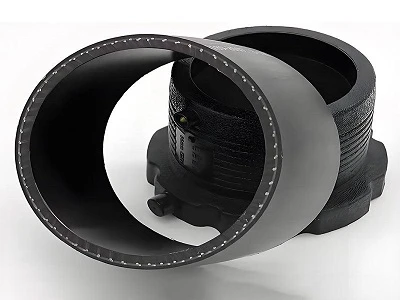
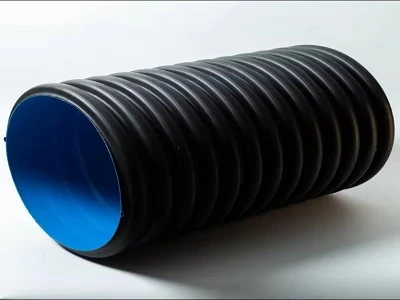
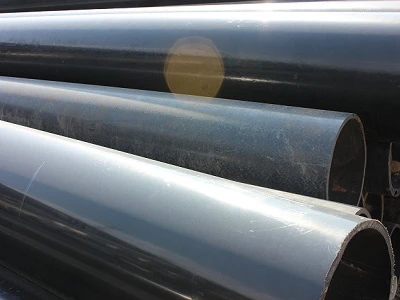
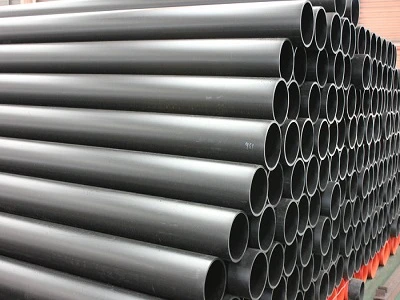
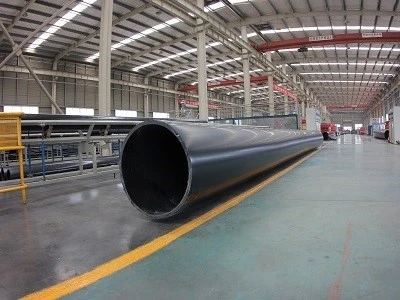
Ultra-high molecular weight polyethylene, or UHMWPE, is a polymer used in applications where abrasion resistance and toughness are important. In mining, it can be considered for transporting mineral slurry, tailings, sand and other media containing solid particles.
The internal surface is one reason the material attracts attention. As particles move through a pipeline, they contact the wall repeatedly. Their effect depends on particle hardness, shape, concentration and movement. A wear-resistant pipe can help address this problem, but its actual performance still depends on the service conditions.
UHMWPE also has a relatively low-friction surface. This may be beneficial when assessing hydraulic performance, although the pressure loss of a complete bauxite slurry pipeline cannot be determined from the material alone. Internal diameter, flow rate, slurry properties, bends and changes in elevation all matter.
Weight can be another practical consideration. UHMWPE pipe is relatively lightweight compared with many steel pipe systems, which may simplify transport and handling at a remote site. This does not remove the need for proper lifting procedures, suitable supports or careful alignment during installation.
The important distinction is between a material property and a complete pipeline result. A pipe may have good abrasion resistance but still be unsuitable if its pressure rating, dimensions or connection arrangement do not match the project.
The Wear Pattern Is Often More Useful Than the First Leak
Suppose an operator finds that a straight section of pipeline remains in reasonable condition while a bend develops a worn area near its outer radius. Replacing the bend with the same component may restore the line, but it does not explain why that location wore faster.
A change in flow direction affects the movement of suspended particles. Depending on the slurry and bend geometry, the particles may interact with different parts of the internal surface. The resulting wear pattern is specific to the operating conditions; it should be examined rather than assumed.
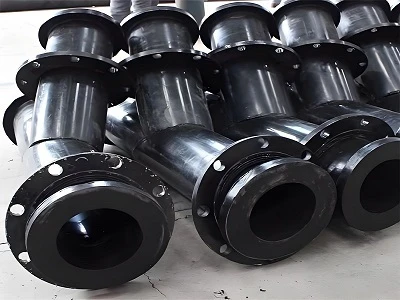
Reducers deserve similar attention. A poorly matched transition can disturb the flow and create a local area where abrasion becomes more severe. If the internal profile changes abruptly, the issue may involve component geometry rather than the pipe material itself.
Pump outlets and valve connections should also be inspected. Pressure fluctuations, vibration, misalignment or insufficient support may contribute to damage around a joint. A leaking flange does not necessarily mean the pipe wall has worn through.
For maintenance teams, a useful inspection record includes the component location, the visible damage, the operating hours since the previous inspection and the slurry conditions at the time. Photographs and measurements taken consistently over successive inspections can show whether wear is progressing and whether the damage remains concentrated in one area.
This evidence can guide decisions about replacement dimensions, component geometry and inspection frequency. It is more valuable than treating every damaged section as an isolated event.
Selecting a Pipe for the Actual Operating Pressure
Bauxite slurry pipelines may operate under different pressure conditions depending on their length, elevation, flow rate and pumping arrangement. A pipe suitable for one section of a plant may not be suitable for another section with different design requirements.
The nominal diameter must provide the flow capacity required by the process. The wall thickness and allowable working pressure must then be confirmed for the selected product configuration. Abrasion resistance cannot compensate for an inadequate pressure rating.
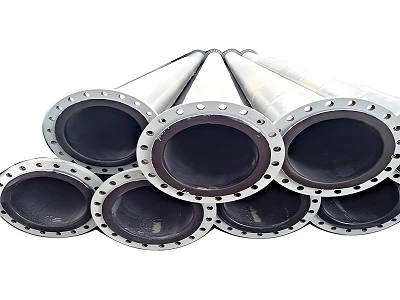
The manufacturer's published UHMWPE mining pipe information provides the following reference specifications.
Typical UHMWPE Mining Pipe Specifications
|
Parameter |
Published Specification |
|
Pipe Material |
UHMWPE (Ultra-High Molecular Weight Polyethylene) |
|
Nominal Diameter |
DN50–DN800 mm |
|
Wall Thickness |
5–30 mm |
|
Density |
≥ 0.93 g/cm³ |
|
Tensile Strength |
≥ 21 MPa |
|
Elongation at Break |
≥ 350% |
|
Vicat Softening Temperature |
≥ 120°C |
|
Abrasion Test Indicator |
≤ 0.05 g/1.61 km |
|
Working Pressure |
0.6–2.5 MPa |
|
Standard Length |
6 m; customized lengths available |
|
Connection Method |
Flange connection |
Source: UHMWPE Mining Slurry Pipes - Manufacturer's Product Information.
These values describe the published product range. They do not mean that every diameter can be supplied with every wall thickness and pressure rating. The manufacturer should confirm the combination required for the specific project.
The abrasion test indicator should also be interpreted according to the applicable test method. It should not be converted directly into a predicted service life for bauxite slurry because actual wear depends on the material being transported and the operating conditions.
Installation Decisions That Affect Maintenance
The route itself can create problems if it is not considered during the pipe selection stage. A long pipeline may include elevated sections, changes in direction, pump stations and areas where access is limited. These locations influence the support arrangement and the practicalities of future repairs.
Above-ground sections require supports suitable for the selected pipe dimensions, operating temperature and service conditions. A heavy valve or fitting should not be left to impose unnecessary loads on a pipe connection. Flanges should align naturally before bolts are tightened; using the bolts to pull misaligned pipe ends together can introduce stress into the joint.
For buried pipelines, trench preparation, bedding, backfill and external loads must be considered. Ground movement and poor support beneath the pipe can affect alignment and create local loading. The construction method should follow the manufacturer's instructions and the project's applicable engineering requirements.
It is also worth considering how a damaged section will be replaced. If the line passes through a difficult-to-access area, the project team may need to plan isolation points, replacement sections and access for lifting equipment before construction is complete.
These details are not secondary to material selection. They influence whether a pipeline can be maintained efficiently after it enters service.

A Better Basis for Comparing Replacement Options
When a bauxite pipeline requires frequent repairs, the replacement decision should include more than the initial cost per metre. Installation work, connection components, inspection access and the consequences of an unplanned shutdown can all affect the overall cost.
Steel, lined steel and polymer pipes have different characteristics. A meaningful comparison should use the same slurry conditions, flow requirements and design pressure. It should also distinguish between test results and operating records from a comparable application.
If a supplier claims that a pipe will last substantially longer than an alternative, the purchasing team should ask what the comparison is based on. The slurry composition, particle size, velocity and test method can change the result. A general abrasion-resistance ratio is not enough to guarantee a particular number of operating years.
For a project in Guinea, the most useful specification will state the actual medium, operating conditions, required dimensions and connection method. That gives suppliers a clear basis for confirming whether the proposed UHMWPE pipe is suitable.
Conclusion
UHMWPE pipe can be considered for bauxite slurry transport where abrasive wear is a significant concern. Its suitability depends on the actual slurry characteristics, hydraulic requirements, pressure conditions and installation arrangement.
Before replacing a worn line, operators should look closely at the locations and patterns of previous damage. A bend that repeatedly wears, a leaking flange or a straight section showing uniform thinning may require different corrective actions.
A sound replacement decision combines material selection with operating data, appropriate pipe dimensions and a realistic installation plan. That approach gives a mining operation a better basis for reducing avoidable maintenance and improving pipeline reliability.
FAQ
1. Is UHMWPE pipe suitable for bauxite slurry?
It can be evaluated for bauxite slurry where abrasion resistance is important. Suitability depends on particle size, solids concentration, flow rate, pressure, temperature and the pipe's confirmed dimensions.
2. What diameter range is listed for UHMWPE mining pipe?
The manufacturer's published information lists DN50–DN800 mm. The available wall thickness and pressure rating should be confirmed for the required diameter.
3. Can abrasion test results predict how long a bauxite pipeline will last?
Not by themselves. Service life depends on the slurry, flow conditions, pipeline geometry, installation quality and operating history. Test results should be evaluated alongside relevant field data.
4. Why might a bend wear faster than a straight pipe?
Changes in flow direction can change how particles interact with the pipe wall. The actual wear pattern depends on particle characteristics, slurry conditions and bend geometry.
5. What should be included in a quotation request?
Provide the required diameter, wall thickness if specified, design pressure, flow rate, slurry composition, particle size, solids concentration, operating temperature, pipeline length and connection requirements. Existing inspection or wear records can help the supplier assess the application.
Primary Keyword: UHMWPE pipe for bauxite slurry transport
Secondary Keywords: Guinea bauxite mining pipeline, bauxite slurry pipe, abrasion-resistant mining pipe, UHMWPE slurry pipeline, bauxite transport system, mining pipeline wear, UHMWPE mining pipe specifications
Request a UHMWPE Pipe Quotation
|
Step |
Process |
|
1 |
Send Requirements - DN, pressure, quantity and application |
|
2 |
Specification Confirmation - Pipe type, size, wall thickness and connection |
|
3 |
Quotation - Price, lead time, packing and shipping terms |
|
4 |
Order & Production - Contract, payment and production |
|
5 |
Inspection & Delivery - Quality inspection and shipment |
For UHMWPE mining pipe, UHMWPE lined steel pipe, UHMWPE elbows and link flanges, send us:
DN + PN + Slurry Type + Solid Concentration + Particle Size + Flow Rate + Pipeline Length + Quantity
Luoyang Zhengju New Materials Technology Co., Ltd.
WhatsApp:+86 19937270645
Email: baibaili456@gmail.com
Wechat: +86 19937270645
Get Best Price for Your Grinding Slurry Pipeline.