Introduction
An SRTP pipe is not made by placing steel wire inside a plastic pipe and then sealing it.
The reinforcement and polyethylene have to become a stable composite wall during the manufacturing process.
That requires control of several connected stages: polyethylene extrusion, steel wire positioning, polymer encapsulation, layer bonding, cooling and final inspection.
Among these stages, the interaction between molten PE and the steel reinforcement is particularly important.
The wire must remain in the designed position while polyethylene surrounds it. The polymer layers must also remain dimensionally stable during cooling.
If these conditions are not controlled, the final pipe may have a visually acceptable surface while the internal composite structure is less uniform than required.
PE Does More Than Protect the Steel Wire
The polyethylene layers have several jobs in an SRTP pipe.
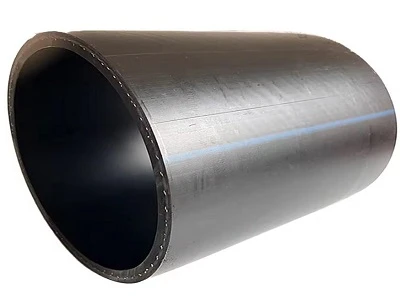
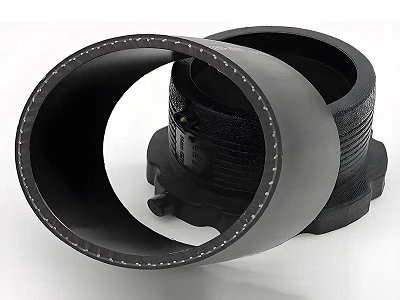
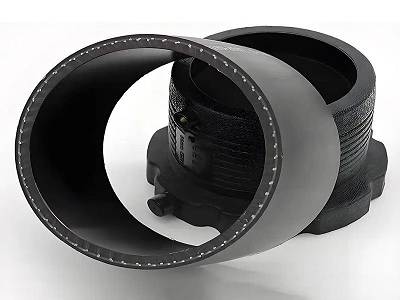
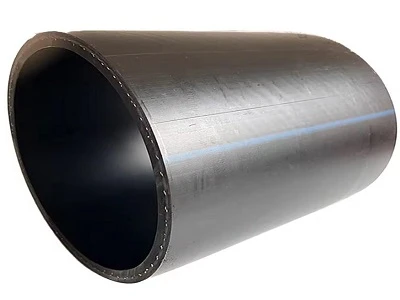
The inner PE layer forms the surface that contacts the transported medium. The outer PE layer protects the pipe from the external environment. Between them, the polymer surrounds the steel reinforcement and helps integrate it into the pipe wall.
The steel reinforcement provides the high-strength structural component.
The PE provides continuity, toughness, chemical resistance and protection.
The performance of the finished pipe comes from the interaction of these materials.
That is why the manufacturing process cannot treat the steel and PE as two independent components.
How Does PE Surround the Steel Wire?
During production, polyethylene is processed in a molten state and formed around the reinforcement.
At this stage, polymer flow has to reach the spaces around the steel wire sufficiently to create a continuous composite structure.
The process is influenced by factors such as melt temperature, material flow, extrusion stability and the position of the reinforcement.
If the polymer does not properly surround the wire, voids or poorly filled areas can affect the integrity of the pipe wall.
If the reinforcement moves during encapsulation, the thickness distribution around the pipe can also change.
The objective is therefore not simply to cover the wire.
The objective is to establish a stable and repeatable composite structure.
The Steel–PE Interface Is Different from PE–PE Fusion
The interfaces within an SRTP pipe are not all identical.
PE contacting PE can form a continuous polymer structure when the processing temperature and conditions allow appropriate fusion.
Steel contacting PE is different because steel is not a thermoplastic material.
The polymer has to establish intimate contact with the prepared metal surface, while the interface must remain stable as the composite wall cools.
This makes steel wire surface preparation and PE encapsulation closely related processes.
A good wire surface cannot compensate for poor encapsulation, and good polymer processing cannot completely compensate for a poorly prepared reinforcement surface.
Both have to be controlled.
Thermal Shrinkage During Cooling
Cooling is sometimes treated as the final step after the pipe has already been formed.
For a multilayer composite pipe, that is not quite accurate.
Polyethylene undergoes thermal contraction as it cools from the processing temperature to ambient conditions.
Steel and polyethylene do not respond to temperature changes in exactly the same way.
The composite wall therefore develops internal stresses during cooling.
If cooling is uneven, different parts of the pipe wall may contract at different rates.
This can affect dimensional stability and the position of the reinforcement.
For continuous pipe production, cooling conditions therefore need to be sufficiently controlled to allow the composite wall to stabilize without creating unacceptable deformation.
Why Cooling Uniformity Matters for Large-Diameter Pipe
As pipe diameter increases, the amount of material forming the wall also increases.
A larger composite wall does not necessarily cool at the same rate throughout its thickness.
The external surface can lose heat more quickly than the internal regions.
If cooling is not properly controlled, temperature differences can remain inside the wall for a period of time.
That is one reason dimensional control becomes increasingly important when producing larger-diameter SRTP products.
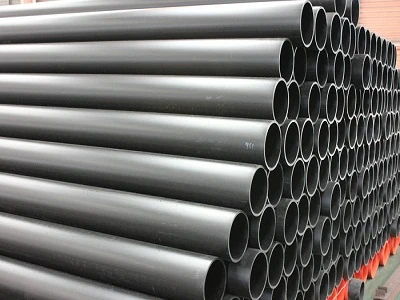
For a product range covering DN50–DN600, manufacturing equipment and cooling conditions need to accommodate different pipe dimensions rather than treating every diameter in exactly the same way.
Layer Bonding Determines Composite Integrity
A multilayer pipe depends on the relationship between its different layers.
The inner PE layer, reinforcement region and outer PE layer need to remain structurally integrated.
If separation develops between layers, the steel reinforcement may no longer transfer loads through the composite wall in the intended manner.
Layer bonding therefore has a direct relationship with structural integrity.
Inspection should not focus only on the external surface.
The internal condition of the composite wall matters because many important interfaces are hidden after production.
How Is the Finished Pipe Evaluated?
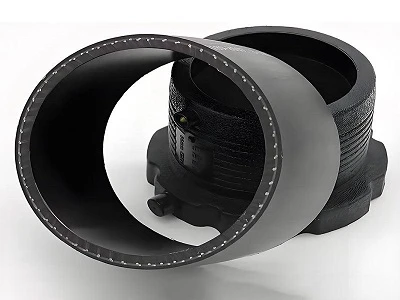
A finished SRTP pipe normally needs more than one type of inspection.
Dimensional inspection verifies that the pipe meets the specified size.
Visual inspection can identify surface defects and obvious manufacturing problems.
Hydraulic testing evaluates the pipe under internal pressure and provides information about its pressure-bearing behavior.
Depending on the quality-control system, inspection can also examine the integrity of the composite structure and the condition of the interfaces.
The purpose is to verify that the production process has produced a pipe that behaves as a composite structure rather than simply confirming that the external diameter looks correct.
Static Hydraulic Testing
Static hydraulic testing is particularly relevant for pressure-rated SRTP products.
For example, the product range may include PN1.0, PN1.6, PN2.0 and PN2.5 MPa pressure classes.
The actual test conditions should correspond to the applicable product standard and quality-control requirements rather than being selected arbitrarily.
During hydraulic testing, the pipe wall is subjected to internal pressure over a defined period.
The test evaluates the stability of the pipe under hydraulic loading and can help identify problems associated with the composite structure.
This is fundamentally different from checking whether the pipe simply looks uniform after extrusion.
What Can Layer Separation Tell Us?
If separation occurs between layers, it may indicate a problem somewhere in the manufacturing chain.
Possible causes can include insufficient interfacial contact, contamination, unstable polymer processing, reinforcement movement or unsuitable cooling conditions.
For this reason, a separation defect should not be treated only as an isolated visual problem.
It can be a clue that the relationship between materials or process stages was not properly controlled.
That is why process traceability and inspection are important in composite pipe manufacturing.
SRTP Product Parameters
|
Parameter |
Typical Range / Configuration |
|
Product |
SRTP Steel Wire Reinforced Thermoplastic Pipe |
|
Nominal Diameter |
DN50–DN600 |
|
Pressure Rating |
PN1.0 / PN1.6 / PN2.0 / PN2.5 MPa |
|
Standard Length |
9 m / 12 m |
|
Wall Structure |
PE inner layer + steel wire reinforcement + PE outer layer |
|
Reinforcement |
High-strength steel wire |
|
Main Applications |
Mine drainage, mine water supply, pressurized water |
The pressure rating and nominal diameter describe the finished pipe, but the manufacturing process determines whether the internal structure actually corresponds to the intended design.
Why Manufacturing Consistency Matters
SRTP is a continuous composite product.
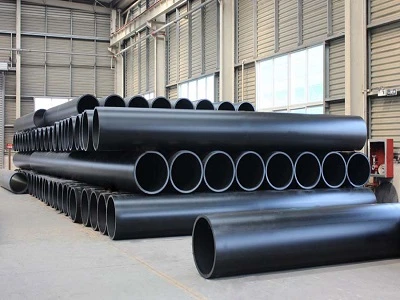
A pipe may be 9 m or 12 m long, but the reinforcement structure extends continuously throughout that length.
That means a production problem that continues for several minutes can affect a significant section of finished pipe.
Stable extrusion, stable wire tension, stable reinforcement position and controlled cooling are therefore more important than achieving one perfect section of pipe.
Manufacturing quality is fundamentally about repeatability.
From Steel Wire to Composite Pipe Wall
The transformation can be understood as a sequence of material states.
Steel wire begins as a separate reinforcement material. It is prepared, tension-controlled and formed into the required reinforcement pattern.
Polyethylene is processed and brought around the reinforcement.
The steel and polymer then become part of the same pipe wall.
Cooling stabilizes the composite structure, while dimensional and hydraulic testing verifies the finished product.
Each stage affects the next.
That is why SRTP manufacturing should be evaluated as one integrated process rather than as several unrelated production steps.
Conclusion
The performance of an SRTP pipe depends on how effectively steel wire and polyethylene are turned into one stable composite structure.
Steel wire provides reinforcement, while PE surrounds and protects it and forms the continuous pipe wall.
The critical manufacturing stages include reinforcement positioning, polymer encapsulation, interfacial contact, layer bonding and controlled cooling. Final inspection then checks whether the finished pipe has the required dimensions and pressure performance.
For DN50–DN600 SRTP products and pressure classes such as PN1.0–PN2.5 MPa, manufacturing consistency is essential.
The real quality of a composite pipe is not visible from the outside alone. It is built inside the wall during production.
FAQ
Why is cooling important after the PE and steel wire are combined?
Cooling stabilizes the dimensions of the composite wall. Because steel and polyethylene respond differently to temperature changes, uncontrolled cooling can contribute to dimensional variation and internal stress.
Can visual inspection detect all layer-bonding problems?
No. Some interfaces are located inside the pipe wall and cannot be fully evaluated from the external surface. Dimensional, hydraulic and appropriate structural inspections provide additional information.
Does the steel wire directly contact the transported water?
The steel reinforcement is embedded within the polyethylene structure. The inner PE layer separates the reinforcement from the transported medium.
Request an SRTP Pipe Quotation
|
Step |
Process |
Details |
|
1 |
Send Requirements |
DN, pressure, medium, working temperature and application |
|
2 |
Specification Confirmation |
Pipe structure, pressure rating, specification and connection |
|
3 |
Quotation |
Price, lead time, packing and shipping terms |
|
4 |
Order & Production |
Contract, payment and production |
|
5 |
Inspection & Delivery |
Quality inspection and shipment |
For Steel Wire Mesh Reinforced PE Pipe (SRTP), steel wire reinforced PE pipe and mining pressure pipelines, send us:
DN + PN + Medium + Working Temperature + Installation Method + Pipeline Length + Quantity
For slurry applications:
Slurry Type + Solid Concentration + Particle Size
Luoyang Zhengju New Materials Technology Co., Ltd.
WhatsApp:+86 19937270645
Email: baibaili456@gmail.com
Wechat: +86 19937270645
Get Best Price for Your Mining Pressure Pipeline.