Introduction
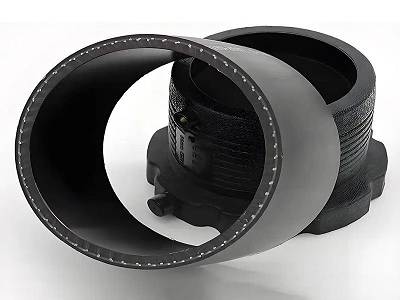
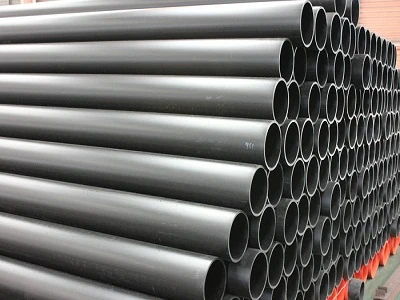
In an SRTP pipe, steel wire is not simply placed between two layers of polyethylene.
The steel wire is the main reinforcement that carries a large part of the load generated by internal pressure. Around it, the polyethylene layers provide corrosion resistance, protect the reinforcement and form the continuous inner and outer pipe surfaces.
That makes the interface between steel wire and polyethylene an important part of the pipe structure.
Before the wire enters the reinforcement-forming section, its surface condition has to be controlled. Drawing lubricant, oxide residue, contamination and inconsistent surface characteristics can all affect how polyethylene contacts the steel wire during composite forming.
For this reason, steel wire surface treatment is not a cosmetic step. It is part of the process used to establish a stable steel–PE interface.
What Is on the Steel Wire Surface Before Treatment?
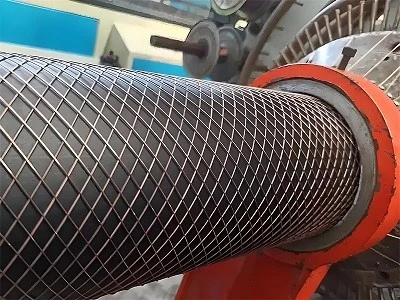
High-strength steel wire normally goes through several mechanical processing stages before it becomes reinforcement material. Wire drawing is one of the important processes used to obtain the required diameter and mechanical properties.
During drawing, lubricants are used to reduce friction between the wire and drawing dies. Depending on the production route, the finished wire surface may also contain residual lubricant, oxides or other contaminants.
These substances may not be obvious during visual inspection.
The problem is that the steel wire surface is later surrounded by molten polyethylene. If the interface contains excessive contamination, the polymer may not contact the metal surface consistently.
That can influence wetting and adhesion at the interface.
For an SRTP structure, this matters because the polyethylene layers and reinforcement are expected to work together rather than behave as independent components.
Surface Condition Affects the Steel–PE Interface
Polyethylene does not bond to steel in the same way that polyethylene layers fuse directly to each other.
When two PE layers are heated into the appropriate processing state, polymer chains can interdiffuse across the interface and form a continuous polymer structure after cooling.
The steel–PE interface is different.
The polymer has to make intimate contact with the treated steel surface, while the surface condition of the wire must allow the interface to remain stable during extrusion, winding, encapsulation and cooling.
A contaminated steel surface can interfere with this contact.
The issue becomes more important when the reinforcement is embedded inside the pipe wall. Once the outer PE layer has been formed, the steel wire is no longer directly accessible. A problem created at the wire surface during production cannot simply be corrected after the pipe has been completed.
Why Cleaning Alone Is Not the Whole Process
It is tempting to consider steel wire treatment simply as a cleaning operation.
That is too narrow.
The production objective is not merely to remove visible dirt. The wire surface has to reach a condition suitable for the subsequent composite process.
Surface cleanliness, surface activity, treatment uniformity and corrosion protection can all influence the stability of the interface.
The treated wire must also remain in a controlled condition while passing through guides, tension-control systems and the winding section. A good surface treatment followed by uncontrolled contamination during handling would reduce the value of the previous step.
This is why industrial production treats wire preparation as part of the continuous process rather than an isolated cleaning operation.
What Happens If the Surface Condition Is Poor?
An unstable steel–PE interface can create problems that may not immediately appear on the finished pipe surface.
Under internal pressure, the pipe wall experiences circumferential and axial stresses. The steel reinforcement carries a substantial portion of the pressure-related load, while the PE layers transfer and distribute loads around the composite structure.
If the interface between the reinforcement and surrounding PE is inconsistent, load transfer can become less uniform.
During pressure loading, this may increase local stress concentrations around poorly bonded regions.
In severe cases, interface defects can contribute to separation between the reinforcement and polymer layers. That is particularly undesirable because the defect is located inside the composite wall rather than on an easily visible external surface.
This is one reason production quality cannot be judged only by the appearance of the finished pipe.
Surface Treatment Must Match the Whole Manufacturing Process
SRTP production involves several interconnected stages.
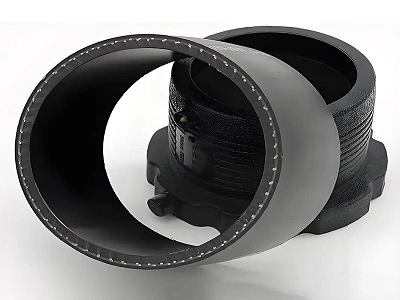
The steel wire first has to reach a controlled surface condition. It then enters the reinforcement-forming section, where wire tension, spacing and winding geometry determine the position of the steel reinforcement.
Polyethylene is subsequently formed around the reinforcement. During this stage, the polymer must adequately surround the wire and establish stable contact.
The pipe is then cooled and dimensionally stabilized.
A surface treatment that performs well in isolation is not necessarily suitable if it creates problems during the later stages. Production parameters therefore have to be considered as a complete system.
This is particularly important for larger-diameter SRTP products, where the reinforcement structure and polymer wall become more substantial and process stability becomes increasingly important.
SRTP Product Parameters
|
Parameter |
Typical Range / Configuration |
|
Product |
Steel Wire Reinforced Thermoplastic Pipe |
|
Nominal Diameter |
DN50–DN600 |
|
Pressure Rating |
PN1.0, PN1.6, PN2.0, PN2.5 MPa |
|
Standard Length |
9 m / 12 m |
|
Pipe Structure |
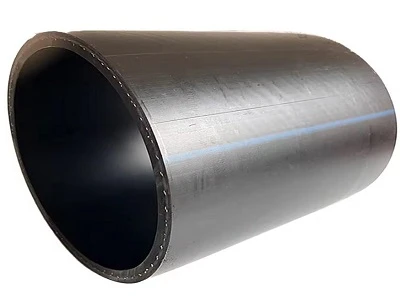
PE inner layer + steel wire reinforcement + PE outer layer |
|
Reinforcement |
High-strength steel wire |
|
Main Applications |
Mine drainage, mine water supply, pressurized water |
These pressure classes are not simply labels added after manufacturing. The selected PN rating affects the reinforcement structure, while the DN determines the scale of the pipe wall and reinforcement arrangement.
That is why wire preparation has to remain stable across different product specifications.
How Is Surface Treatment Controlled?
In a production environment, surface treatment needs to be consistent from one batch of wire to another.
Visual inspection can identify obvious contamination or surface defects, but it cannot completely describe the quality of an interface.
Process control therefore needs to consider the condition of the incoming wire, treatment stability, handling conditions and the subsequent composite-forming process.
The treated wire should also be protected from unnecessary contamination before it reaches the winding and extrusion sections.
This becomes particularly important when the production line operates continuously. The objective is not to produce a few wires with a good surface condition. The objective is to maintain that condition throughout the reinforcement material used for the entire pipe.
Surface Treatment Is a Structural Preparation Step
The steel wire inside an SRTP pipe is hidden after the composite wall has been formed.
That makes the preparation of the reinforcement particularly important.
A stable steel–PE interface begins before the wire enters the pipe wall. Surface treatment helps establish the conditions required for consistent polymer contact, while the following winding, extrusion and cooling stages determine how that interface becomes part of the finished composite structure.
For mining applications, where SRTP pipes may be used for pressurized mine water and drainage systems, manufacturing consistency is as important as the nominal pressure rating.
For buyers evaluating SRTP pipe, the manufacturing process behind the steel–PE interface is worth examining just as carefully as DN, PN rating and pipe length.
FAQ
Does surface treatment increase the strength of the steel wire?
Not necessarily. Its main purpose is to establish a suitable surface condition for the subsequent composite process. The final pipe performance depends on the steel reinforcement, PE structure and manufacturing process as a whole.
Can the steel wire be exposed to mine water?
The reinforcement is embedded within the polyethylene structure. The PE layers are designed to separate the steel reinforcement from the transported medium and the external environment.
Does a higher pressure rating require different reinforcement?
The reinforcement structure is related to the required pressure performance, pipe diameter and overall pipe-wall design. A higher PN rating cannot be achieved simply by changing the external appearance of the pipe.
Conclusion
Steel wire surface treatment is an important preparation stage in SRTP manufacturing because the reinforcement does not work independently from the surrounding polyethylene.
The condition of the wire surface affects polymer contact, interface stability and the ability of the composite wall to transfer loads consistently.
A properly manufactured SRTP pipe therefore starts with more than selecting high-strength steel wire. The wire surface, reinforcement geometry, PE encapsulation and cooling process all have to work together.
Request an SRTP Pipe Quotation
|
Step |
Process |
Details |
|
1 |
Send Requirements |
DN, pressure, medium, working temperature and application |
|
2 |
Specification Confirmation |
Pipe structure, pressure rating, specification and connection |
|
3 |
Quotation |
Price, lead time, packing and shipping terms |
|
4 |
Order & Production |
Contract, payment and production |
|
5 |
Inspection & Delivery |
Quality inspection and shipment |
For Steel Wire Mesh Reinforced PE Pipe (SRTP), steel wire reinforced PE pipe and mining pressure pipelines, send us:
DN + PN + Medium + Working Temperature + Installation Method + Pipeline Length + Quantity
For slurry applications:
Slurry Type + Solid Concentration + Particle Size
Luoyang Zhengju New Materials Technology Co., Ltd.
WhatsApp:+86 19937270645
Email: baibaili456@gmail.com
Wechat: +86 19937270645
Get Best Price for Your Mining Pressure Pipeline.