Introduction
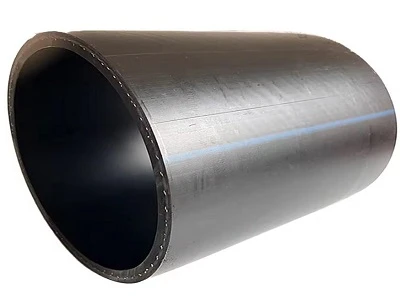
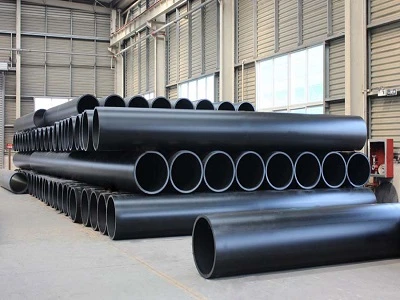
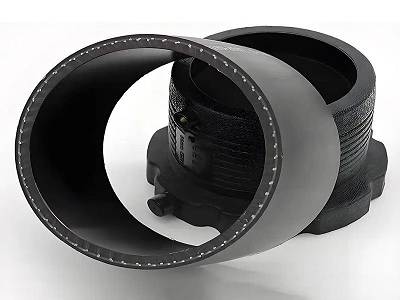
UHMWPE lined steel pipe combines the structural strength of steel with the wear resistance of ultra-high molecular weight polyethylene.
The steel pipe provides the outer support, while the UHMWPE liner forms the inner surface in contact with the conveyed material. For mining slurry, tailings and other abrasive media, this combination provides a steel structure with a much more wear-resistant flow surface.
The manufacturing challenge is straightforward to describe: the UHMWPE liner needs to be installed securely inside the steel pipe without damaging the liner or leaving excessive clearance between the two layers.
The main stages include liner preparation, steel pipe preparation, liner reduction and insertion, fitting, pipe-end processing and final inspection.
1. Preparing the UHMWPE Liner
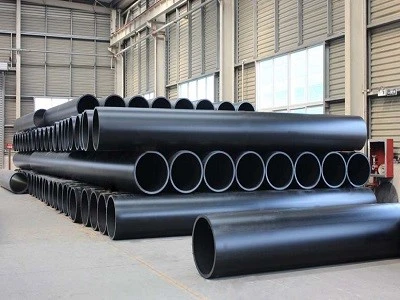
The UHMWPE liner is manufactured before it is installed into the steel pipe.
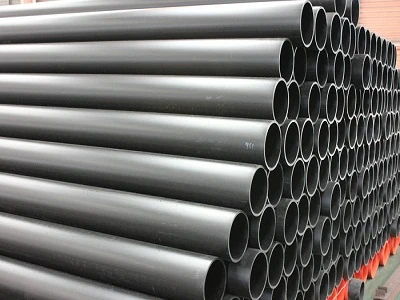
UHMWPE has an extremely high molecular weight and very high melt viscosity, so its processing is different from that of conventional polyethylene. Specialized forming processes are used to produce UHMWPE pipes and profiles.
For lined steel pipe, the liner must be produced to controlled dimensions. Outside diameter, inside diameter, wall thickness and length all need to match the requirements of the steel shell and the lining process.
The liner also needs enough wall thickness to provide the required wear allowance during service. At the same time, its dimensions must remain suitable for installation.
2. Preparing the Steel Pipe
The steel pipe becomes the structural body of the finished product.
Before lining, its internal diameter and overall geometry need to be suitable for the UHMWPE liner.
The dimensional relationship between the liner and steel pipe is especially important. The liner needs to be large enough to form the required final lining surface, but it cannot simply be forced into the steel pipe at its full size.
This is why the installation process uses controlled liner reduction.
3. Reducing the Liner Diameter
One documented UHMWPE lining process uses a reduction die.
The liner is connected to a drawing bar and pulled through the die before entering the steel pipe. As it passes through the die, its diameter is reduced so that the liner can be pulled into the steel shell. The outlet of the die is designed in relation to the internal diameter of the metal pipe.
The basic sequence is:
UHMWPE liner → diameter reduction → insertion into steel pipe
The reduction has to be controlled. Too little reduction makes insertion difficult, while excessive deformation can affect the liner.
Once the liner has passed through the reduction section, it can be drawn into the steel pipe and positioned along its required length.
4. Pulling the Liner Into the Steel Pipe
The liner is pulled through the steel pipe rather than simply pushed in from one end.
During this stage, the pulling force and liner movement need to remain controlled. The internal condition of the steel pipe also matters because irregularities can increase resistance during installation.
As the liner moves through the steel shell, it gradually takes its position along the full pipe length.
At this point, the liner is inside the steel pipe, but it still needs to establish its final fit with the steel.
5. Creating a Close Fit Between the Two Layers
After installation, the reduced UHMWPE liner can recover toward its original dimensions.
This recovery brings the liner into close contact with the inner surface of the steel pipe. A documented UHMWPE lined pipe process uses this principle to create the final fit between the polymer liner and metal pipe.
This is what turns the two separate components into a composite pipe.
The UHMWPE liner is not intended to move freely inside the steel shell. The steel supports the liner from the outside, while the UHMWPE remains as the working surface exposed to the conveyed material.
For mining applications, this arrangement is particularly useful because the steel does not need to serve as the direct wear surface.
6. Controlling Liner Thickness
Liner thickness directly affects the available UHMWPE wear layer.
In abrasive slurry service, the inner surface is continuously exposed to solid particles, so sufficient wear allowance is important.
But liner thickness cannot be selected independently of the rest of the pipe.
Increasing the liner thickness changes its overall dimensions and affects the relationship between the liner and steel pipe during installation. The liner must still be capable of being reduced, inserted and fitted correctly inside the steel shell.
For this reason, liner thickness, pipe diameter and the installation process need to be considered together.
7. Processing the Pipe Ends
Once the liner has been installed, the pipe ends require additional processing.
The UHMWPE liner is cut to the required length while leaving enough material for the end treatment. In a documented lining process, the liner is then flared at the pipe end to form the required connection structure.
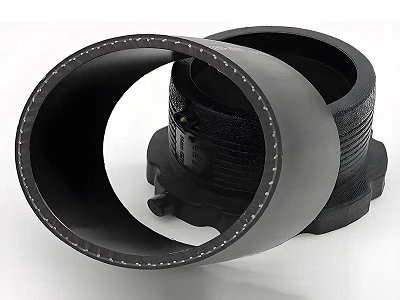
This part of the process matters because the UHMWPE lining should continue through the connection area.
For flange-connected pipe, the liner can be formed at the end while the steel provides the supporting structure for the mechanical connection.
The exact end configuration depends on the connection design and the finished pipe structure.
8. Final Inspection
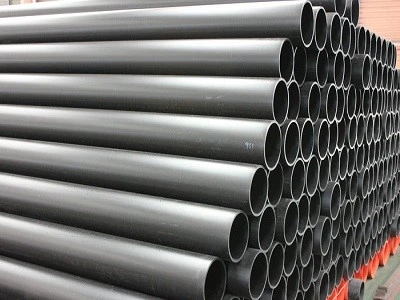
The finished lined pipe is inspected as a complete composite component.
Dimensional checks cover the steel pipe and UHMWPE liner, while the internal surface is checked for visible damage or defects produced during installation.
The liner position and pipe ends also need to meet the required dimensions.
The quality of the finished product depends on the whole process. A properly manufactured UHMWPE liner still needs to be installed correctly, and the steel shell needs to provide the dimensional support required by the lining process.
Conclusion
UHMWPE lined steel pipe is built around a simple combination: steel on the outside and UHMWPE on the inside.
The steel pipe provides structural support, while the UHMWPE liner provides the wear-resistant surface in contact with abrasive or corrosive media.
In the documented lining process, the UHMWPE liner is prepared separately, reduced in diameter, pulled into the steel pipe and allowed to recover toward the steel's inner surface. The liner ends are then processed for the required connection.
The result is not simply two pipes placed together. The dimensions, insertion process, final fit and pipe-end treatment all have to work together to produce a stable composite structure.
For mining slurry pipelines, this structure allows the steel shell to provide mechanical support while UHMWPE takes the direct contact with the abrasive flow.
Primary Keyword :UHMWPE Lined Steel Pipe Manufacturing
Secondary Keywords :UHMWPE lined steel pipe, UHMWPE pipe lining process, UHMWPE liner installation, UHMWPE steel pipe lining, UHMWPE liner insertion, UHMWPE lined pipe manufacturing, UHMWPE composite pipe, UHMWPE liner production
Request a UHMWPE Pipe Quotation
|
Step |
Process |
|
1 |
Send Requirements - DN, pressure, quantity and application |
|
2 |
Specification Confirmation - Pipe type, size, wall thickness and connection |
|
3 |
Quotation - Price, lead time, packing and shipping terms |
|
4 |
Order & Production - Contract, payment and production |
|
5 |
Inspection & Delivery - Quality inspection and shipment |
For UHMWPE mining pipe, UHMWPE lined steel pipe, UHMWPE elbows and link flanges, send us:
DN + PN + Slurry Type + Solid Concentration + Particle Size + Flow Rate + Pipeline Length + Quantity
Luoyang Zhengju New Materials Technology Co., Ltd.
WhatsApp:+86 19937270645
Email: baibaili456@gmail.com
Wechat: +86 19937270645
Get Best Price for Your Grinding Slurry Pipeline