Introduction
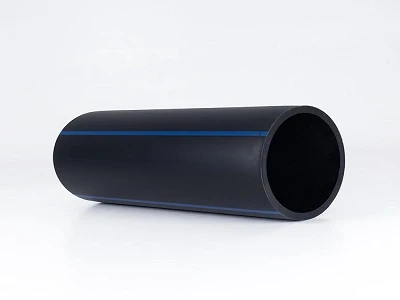
An SRTP pipe is made from two very different materials.
One is polyethylene, a thermoplastic material commonly used for corrosion-resistant fluid transport.
The other is steel wire, which provides much higher stiffness and tensile strength.
Putting these materials into the same pipe does not automatically create a good composite pipe.
The important question is how they are integrated.
For an SRTP composite pipe, the PE layers, steel reinforcement and bonding structure need to remain sufficiently integrated during manufacturing and service.
This becomes particularly important in mining, where a pressure pipeline may operate continuously and experience pressure fluctuations, buried loads, temperature changes and ground movement.
A Composite Pipe Has to Transfer Loads
Imagine a steel wire simply placed inside a plastic pipe.
When the pipe is pressurized, the PE wall would tend to expand.
The loose steel wire would not automatically move with the surrounding material in the way required for efficient structural reinforcement.
That is not how a properly manufactured SRTP pipe is intended to work.
The reinforcement is incorporated into the pipe wall so that the steel and polymer form a composite structure.
When the pipe experiences internal pressure, deformation of the polymer structure is restrained by the embedded reinforcement.
This interaction is what gives the reinforcement its structural value.
The Interface Between Steel and PE Matters
The interface between different materials is often the least visible part of a composite product.
It is also one of the parts that deserves attention.
The steel reinforcement needs to remain properly integrated with the surrounding polymer structure.
If the interface is poorly controlled, the steel and PE may not respond as one designed structure under loading.
This is why manufacturing quality is more complicated than simply checking the diameter and wall dimensions.
The pipe has to be produced so that the reinforcement, polymer and bonding system form a stable composite wall.
What Does the PE Layer Actually Do?
The PE layers have several functions.
The inner layer provides the surface in contact with the transported fluid.
This is important for mining water systems because the transported water may contain dissolved salts, minerals or other components that can be problematic for exposed metal surfaces.
The PE structure also surrounds the steel reinforcement.
The outer layer provides protection between the reinforcement and the surrounding environment.
So while the steel wire provides reinforcement, the PE structure provides both fluid containment and protection.
Neither material replaces the other.
Why Is the Steel Wire Protected?
If the steel reinforcement were exposed directly to mine water or wet soil, corrosion could become a concern.
This is particularly relevant in mines where groundwater chemistry varies significantly between locations.
An SRTP pipe instead places the reinforcement inside the polymer structure.
The steel is therefore not the primary fluid-contact surface.
This design allows the pipe to use the structural characteristics of steel while retaining the corrosion-resistant behavior of a PE-based external and internal surface.
What Happens During Pressure Loading?
Internal pressure creates a tendency for the pipe diameter to increase.
The PE structure responds to this pressure, while the embedded steel reinforcement provides additional resistance to radial expansion.
The interaction between the two materials is therefore important.
The steel does not simply "take over" the pressure.
The PE and reinforcement work together within the designed pipe structure.
This is also why pressure rating cannot be determined simply by looking at the tensile strength of the steel wire.
The complete pipe geometry and material system must be considered.
What About Long-Term Operation?
Mining pipelines are often expected to operate for extended periods.
Polyethylene is a viscoelastic material, meaning that its deformation behavior changes with time and temperature.
A reinforced structure can reduce the extent to which the polymer alone must carry the structural load.
The embedded steel reinforcement provides additional resistance to deformation under pressure.
However, long-term performance still depends on temperature, pressure, material properties and pipe design.
SRTP should therefore not be described as a pipe that cannot deform.
The more accurate description is that the reinforcement changes and controls the structural response of the PE-based pipe.
Why Manufacturing Process Matters
The final performance of an SRTP pipe depends heavily on how it is manufactured.
The steel reinforcement must be arranged according to the intended design.
The polymer layers must be properly formed around the reinforcement.
The interface must maintain sufficient integrity.
The finished pipe must also meet the required dimensional and pressure specifications.
A small change in one part of the manufacturing process can affect the finished composite structure.
This is one reason why SRTP should not be evaluated purely by raw-material descriptions.
"PE + steel wire" describes the ingredients.
It does not describe the quality of the finished pipe.

Does Steel Wire Density Determine Everything?
No.
Steel-wire density is one design parameter, but it is not the only one.
Pipe diameter, pressure class, wire arrangement, wire properties, PE material, bonding system and manufacturing process all affect the finished pipe.
Two SRTP pipes may use steel reinforcement but have different structural designs.
Therefore, procurement teams should compare the complete technical specification rather than focusing on one number.
How Does This Help in Mining?
Mining pipelines can experience several loads at the same time.
A buried pipeline may encounter soil pressure and equipment loads.
Ground settlement can create additional deformation.
Pump operation can create pressure fluctuations.
Long-distance pipelines can also experience changes in pressure as the system starts, stops or changes operating conditions.
The composite structure does not eliminate these loads.
Instead, the reinforced pipe wall provides a structural design intended to handle internal pressure while maintaining the corrosion-resistant characteristics of the PE layers.
The installation system still matters.
Correct bedding, backfilling, support and connection design remain part of the overall pipeline performance.

SRTP Is Not Simply "PE With Steel Inside"
This distinction is important when comparing suppliers.
A high-quality SRTP pipe should be regarded as a designed composite structure.
The steel reinforcement needs to be located correctly.
The PE layers need to maintain their intended dimensions.
The interface between the materials needs to remain sufficiently integrated.
The complete structure then needs to meet the pressure and dimensional requirements specified for the project.
This is very different from simply inserting steel wire into a plastic pipe.
Product Features
|
Feature |
Description |
|
Pipe Type |
Steel Wire Reinforced PE Composite Pipe |
|
Structure |
PE layers with embedded steel reinforcement |
|
Steel Function |
Structural reinforcement |
|
PE Function |
Fluid containment and environmental protection |
|
Steel Protection |
Reinforcement enclosed within the PE structure |
|
Composite Interface |
Designed to maintain structural integration |
|
Typical Application |
Mine dewatering and pressurized mine water pipelines |
|
Installation |
Buried, underground or above-ground according to project conditions |
|
Standard Length |
9 m / 12 m |
Product Parameters
|
Parameter |
Typical Specification |
|
Product |
SRTP Mining Pipe |
|
Nominal Diameter |
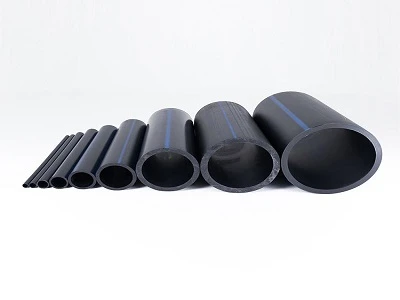
DN50–DN600 |
|
Pressure Rating |
According to project requirements |
|
Reinforcement |
High-strength steel wire |
|
Main Material |
PE composite |
|
Standard Length |
9 m / 12 m |
|
Operating Temperature |
Project-specific |
|
Application Medium |
Mine water and other compatible fluids |
|
Installation |
Buried or surface installation |
FAQ
1. Why does steel-to-PE bonding matter in SRTP pipe?
Because the pipe is designed to work as a composite structure. The reinforcement needs to remain properly integrated with the surrounding PE structure so that the different materials can respond together under pressure and other operating loads.
2. Can the steel wire move inside the pipe wall?
The reinforcement is incorporated into the composite structure rather than functioning as a loose wire inside the pipe. Its position and integration are controlled during manufacturing.
3. Does poor bonding immediately cause a pipe failure?
Not necessarily. Composite integrity is related to long-term structural performance, and problems may not always be visible immediately. This is why manufacturing control and appropriate quality testing are important.
4. Why isn't the steel wire exposed directly to the water?
The PE inner layer provides the fluid-contact surface. Enclosing the steel reinforcement within the polymer structure helps protect it from direct contact with the transported medium and surrounding environment.
5. Does SRTP eliminate PE creep?
No. PE remains a thermoplastic material and has time-dependent deformation behavior. The steel reinforcement changes the structural response and helps carry part of the pressure-related load.
6. Does a thicker PE layer always make SRTP better?
Not necessarily. The finished performance depends on the complete pipe structure, including PE material, reinforcement arrangement, diameter, pressure rating and manufacturing process.
7. Can SRTP be used for mine dewatering?
Yes. SRTP is particularly relevant to pressurized mine water applications such as mine dewatering and water supply when the selected pipe specification matches the project conditions.
Conclusion
The value of an SRTP composite pipe is not simply the combination of PE and steel.
It comes from how those materials are integrated into one pipe structure.
The steel reinforcement provides structural support, while the PE layers contain the transported fluid and protect the reinforcement. The interface between these materials allows the composite structure to respond as designed under pressure.
For mining buyers, this is an important point when comparing SRTP products.
A good SRTP pipe is not defined only by its steel-wire content. The reinforcement arrangement, PE material, composite integrity and manufacturing process all contribute to the final performance.
Primary Keyword: SRTP composite pipe
Secondary Keywords: steel wire reinforced PE pipe, SRTP pipe structure, steel PE bonding, steel wire reinforced pipe, SRTP mining pipe, composite pressure pipe
Request an SRTP Pipe Quotation
|
Step |
Process |
Details |
|
1 |
Send Requirements |
DN, pressure, medium, working temperature and application |
|
2 |
Specification Confirmation |
Pipe structure, pressure rating, specification and connection |
|
3 |
Quotation |
Price, lead time, packing and shipping terms |
|
4 |
Order & Production |
Contract, payment and production |
|
5 |
Inspection & Delivery |
Quality inspection and shipment |
For Steel Wire Mesh Reinforced PE Pipe (SRTP), steel wire reinforced PE pipe and mining pressure pipelines, send us:
DN + PN + Medium + Working Temperature + Installation Method + Pipeline Length + Quantity
For slurry applications:
Slurry Type + Solid Concentration + Particle Size
Luoyang Zhengju New Materials Technology Co., Ltd.
WhatsApp:+86 19937270645
Email: baibaili456@gmail.com
Wechat: +86 19937270645
Get Best Price for Your Mining Pressure Pipeline