Introduction
A mine dewatering pipeline may operate quietly for most of its service life. The difficult moments often occur when the pumping system starts, stops, or changes operating conditions.
When a pump starts, water inside the pipeline must be accelerated. When a pump stops or a valve closes quickly, the moving water cannot stop instantly. The resulting pressure fluctuation can travel through the pipeline as a pressure surge, commonly known as water hammer.
For mining projects, this matters even more when the pipeline is long, the static head is high, or several pumping stations operate along the route.
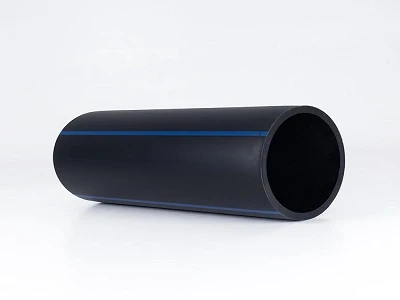
This is one reason why SRTP pipe for mine dewatering deserves attention. Its composite structure combines a polyethylene pipe body with high-strength steel wire reinforcement, providing a pressure-resistant structure while retaining the corrosion resistance of the PE layers.
The pipe, however, is only one part of the system. The actual working pressure, pump characteristics, pipeline length, elevation difference, valve operation and installation conditions still need to be considered together.
Why Pump Startup and Shutdown Matter in Mine Dewatering
Mine dewatering is different from a simple water transfer line.
A deep open-pit mine may continuously remove groundwater from the bottom of the pit. An underground mine may use several pumping stages to move water from lower workings toward the surface.
The pipeline therefore sees repeated changes in operating pressure.
During startup, the pump gradually builds flow and pressure. During shutdown, the flow velocity decreases. If the change happens too quickly, the pressure inside the pipeline can temporarily rise above the normal operating pressure.
A pipeline selected only according to the normal pump discharge pressure may therefore have an incomplete design basis.
For procurement teams, the more useful question is not simply "What is the pressure rating of this pipe?"
It is:
What pressure will the pipeline actually experience during the complete pumping cycle?

图 1
How SRTP Fits Into a Mine Dewatering System
SRTP pipe is a composite pressure pipeline.
The PE layers provide the internal fluid-contact surface and protect the reinforcement from direct contact with mine water. The embedded steel wire reinforcement contributes to the structural strength of the pipe.
This structure is particularly relevant to mine dewatering systems where the pipeline may need to carry pressurized water over long distances or through buried sections.
Compared with a conventional solid-wall PE pipe of the same nominal diameter, the reinforcement structure changes how the pipe handles internal pressure and deformation.
For the mine operator, the practical benefit is not simply the material combination itself. It is the ability to use a pressure pipeline structure that can be considered alongside the actual mining layout.
Long-Distance Dewatering Creates Another Challenge
The longer the mine dewatering pipeline becomes, the more important system conditions become.
A long pipeline may connect a pumping station at the bottom of a mine to a higher elevation discharge point. The elevation difference creates static head. The pump must overcome this head as well as friction losses along the pipeline.
If the route includes multiple pumps or valves, operating changes can produce additional pressure fluctuations.
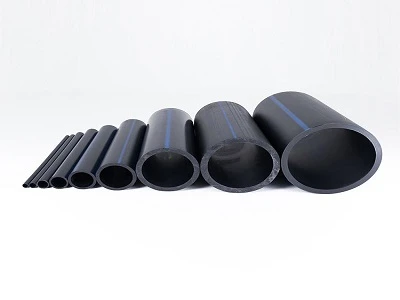
Pipeline diameter also matters. A smaller diameter can increase flow velocity and friction losses, while an oversized diameter may affect the overall system arrangement and pumping requirements.
This means an SRTP mining pipe should not be selected from pressure rating alone.
The pipe diameter, operating pressure, flow rate, elevation difference, pump curve and installation conditions should be evaluated as one system.
What About Buried Mine Dewatering Pipelines?
Mine dewatering pipelines are not always installed above ground.
Buried sections may cross haul roads, working areas, access routes or other parts of the mine site. In these locations, the pipe experiences external conditions in addition to internal water pressure.
Backfill quality, soil loads, surface traffic and ground movement can all affect a buried pipeline.
This is where the composite structure of SRTP becomes relevant. The steel reinforcement provides structural support while the PE structure provides the corrosion-resistant fluid-contact and protective layers.
However, proper trench preparation and backfilling remain important. A pressure-rated pipe should not be treated as independent of its installation environment.

图 2
Where SRTP Pipe Makes Sense in Mine Dewatering
SRTP can be considered for pressurized mine water systems where the pipeline needs a combination of pressure capacity, corrosion resistance and structural reinforcement.
Typical applications include underground mine water transfer, open-pit mine dewatering discharge lines, long-distance mine water pipelines and buried pressurized water lines.
For highly abrasive tailings or coarse mineral slurry, the selection criteria change. In those applications, internal wear may become the dominant concern, and a wear-focused material such as UHMWPE may be more appropriate depending on the slurry conditions.
This distinction is important when designing a complete mining pipeline system.
Product Features
|
Feature |
Relevance to Mine Dewatering |
|
Steel wire reinforcement |
Provides structural reinforcement for pressurized service |
|
PE pipe structure |
Provides corrosion-resistant fluid-contact layers |
|
Composite construction |
Combines pressure support with PE protection |
|
Corrosion resistance |
Suitable for many mine water environments |
|
Lower handling weight than conventional steel |
Can simplify transportation and site handling |
|
Buried or above-ground application |
Can be considered according to project conditions |
Product Parameters
|
Parameter |
Typical Project Consideration |
|
Pipe Type |
SRTP / Steel Wire Reinforced PE Pipe |
|
Nominal Diameter |
Project-specific |
|
Pressure Rating |
Selected according to working pressure and system conditions |
|
Standard Length |
Commonly 9 m or 12 m |
|
Installation |
Buried or above ground, according to site conditions |
|
Medium |
Mine water / drainage water |
|
Operating Temperature |
Project-specific |
|
Connection |
According to pipe specification and manufacturer design |
FAQ
Can SRTP pipe be used for mine dewatering?
Yes. SRTP pipe is designed as a reinforced pressure pipe and can be considered for mine dewatering, water transfer and other pressurized mining water systems when its pressure and installation requirements match the project.
Does SRTP pipe eliminate water hammer?
No. Pipe material alone does not eliminate water hammer. Pump startup and shutdown procedures, valve operation, pipeline length, flow velocity and system design all affect pressure surges.
Is SRTP suitable for underground mine drainage?
It can be used for pressurized underground mine water systems, particularly where pressure, corrosion and buried installation are important considerations.
Is SRTP suitable for tailings?
That depends on the solids concentration, particle size, hardness, velocity and required wear life. For highly abrasive slurry, UHMWPE may be considered where wear resistance is the primary requirement.
Conclusion
Mine dewatering pipelines experience more than normal operating pressure. Pump startup, shutdown, elevation differences and long-distance transport can all influence the actual load on the pipeline.
SRTP pipe for mine dewatering provides a reinforced PE structure for pressurized mining water systems, making it a practical option to evaluate for underground and open-pit dewatering projects.
Primary Keyword: SRTP pipe for mine dewatering
Secondary Keywords: mining dewatering pipe, mine dewatering pipeline, SRTP mining pipe, mine water drainage pipe, high-pressure mine water pipe
Request an SRTP Pipe Quotation
|
Step |
Process |
Details |
|
1 |
Send Requirements |
DN, pressure, medium, working temperature and application |
|
2 |
Specification Confirmation |
Pipe structure, pressure rating, specification and connection |
|
3 |
Quotation |
Price, lead time, packing and shipping terms |
|
4 |
Order & Production |
Contract, payment and production |
|
5 |
Inspection & Delivery |
Quality inspection and shipment |
For Steel Wire Mesh Reinforced PE Pipe (SRTP), steel wire reinforced PE pipe and mining pressure pipelines, send us:
DN + PN + Medium + Working Temperature + Installation Method + Pipeline Length + Quantity
For slurry applications:
Slurry Type + Solid Concentration + Particle Size
Luoyang Zhengju New Materials Technology Co., Ltd.
WhatsApp:+86 19937270645
Email: baibaili456@gmail.com
Wechat: +86 19937270645
Get Best Price for Your Mining Pressure Pipeline