Introduction
A tailings pipeline does not usually wear at the same rate from one end to the other.
A straight section may remain in service while an elbow starts showing wear much earlier. The same situation can occur around reducers, tees and pump discharge sections.
For mining operators and pipe buyers, this creates a practical problem. Replacing the entire pipeline because of a few high-wear locations is rarely the most sensible approach. At the same time, simply increasing the pipe wall thickness does not always address the reason why those sections are wearing faster.
The real issue is often flow direction, particle movement and local impact.
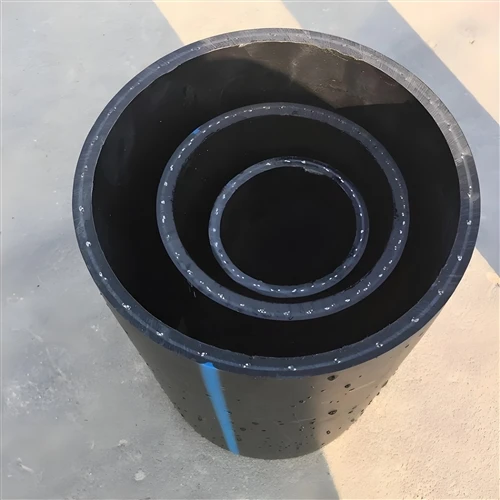
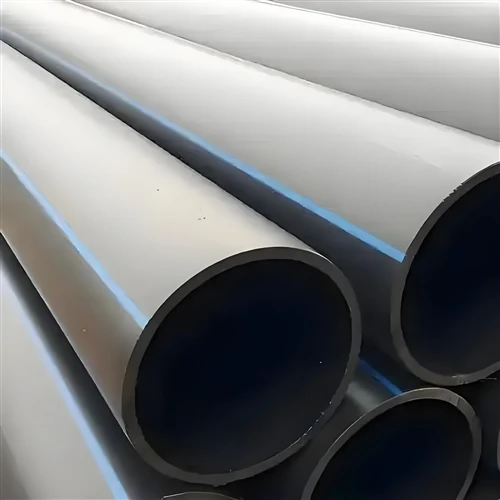
UHMWPE tailings pipe and fittings are designed to provide a wear-resistant internal surface in abrasive slurry service. Understanding where the wear actually occurs helps determine whether UHMWPE is suitable for the pipeline and which components deserve the most attention.
Why a Straight Pipe and an Elbow Wear Differently
Inside a straight pipe, slurry generally travels in the same direction.
Mineral particles move along the pipeline, although they still create continuous contact with the internal wall. The amount of wear depends on particle hardness, concentration, size, shape and flow velocity.
An elbow changes the situation.
The slurry has to change direction, but the solid particles do not always follow the liquid phase perfectly. Heavier or larger particles can continue toward the outer side of the bend before changing direction.
Repeated particle impact and sliding can then create a concentrated wear zone.
This is one reason why a pipeline inspection may show very different conditions between a straight section and a nearby elbow.
Pump Discharge Sections Can Be Different Too
The area immediately downstream of a pump can also experience demanding conditions.
The slurry enters the pipeline with a high local flow velocity, and larger particles can create repeated impact on the internal wall.
If the pump, reducer and elbow are positioned close together, the flow pattern becomes even more complicated.
This does not mean that every pump outlet will have the same wear rate. Actual performance depends on the slurry and system design.
For pipe buyers, though, it is worth providing information about pump locations when discussing the pipeline material. A supplier looking only at DN and pressure may not have enough information to understand the actual wear conditions.
Particle Size Matters
Two tailings slurries can have similar solids concentrations but produce different pipe wear.
A fine, relatively uniform slurry may behave differently from a slurry containing larger and angular mineral particles.
Particle hardness is another major factor.
Quartz-rich material, for example, can be highly abrasive. Angular particles can also create more aggressive contact with the internal surface than rounded particles.
This is why "tailings slurry" alone is not a sufficient description when selecting a wear-resistant pipe.
For an UHMWPE tailings pipe inquiry, useful information includes:
Slurry composition
Solids concentration
Particle size
Particle hardness
Flow velocity
Working pressure
Pipe diameter
Pipeline layout
Why UHMWPE Is Used at High-Wear Locations

UHMWPE has a combination of properties that suits abrasive slurry service.
Its abrasion resistance helps deal with continuous particle contact. The smooth inner surface provides low friction, while the material also has good chemical resistance and impact resistance.
For a tailings system, these properties can be useful in both straight pipe and fittings.
The smooth surface is particularly relevant around areas where mineral particles are constantly moving through the pipeline. It can reduce friction and the tendency of fine material to remain attached to the inner wall.
UHMWPE fittings can also be manufactured for elbows and other pipeline components, allowing the wear-resistant material to continue through areas where flow conditions change.
What About Rubber-Lined Steel Elbows?
Rubber-lined steel is a well-established option for abrasive slurry systems.
The steel body provides rigidity and structural strength. The rubber lining acts as the working surface and can provide good abrasion and impact resistance when the rubber formulation is properly matched to the slurry.
For heavy-duty installations that require a rigid steel structure, this construction has clear advantages.
UHMWPE approaches the problem differently.
The UHMWPE material itself provides the working surface. There is no separate rubber lining that needs to be bonded to a steel pipe body. The material also offers low friction, chemical resistance and considerably lower weight than a conventional steel-based system.
The choice depends on the actual operating conditions, but UHMWPE can be attractive when localized abrasion, low friction and easier handling are important considerations.
Don't Specify Only the Straight Pipe
One common mistake in slurry pipeline procurement is to specify the main pipe first and treat fittings as secondary items.
For abrasive tailings, that can create a mismatch.
If the straight pipe is UHMWPE but the elbows are made from a material with very different wear characteristics, the pipeline may still have vulnerable locations.
A better approach is to look at the complete slurry path:
Pump outlet → straight pipe → reducer → elbow → straight pipe → tee → elbow
The actual configuration will vary from one project to another, but the principle is the same.
The highest-wear locations deserve attention during the initial material selection, not after the first failure.
Product Features
High Abrasion Resistance
UHMWPE is suitable for tailings and mineral slurry where continuous contact with abrasive particles can cause internal wear.
Smooth Internal Surface
The low-friction surface supports slurry flow and can reduce the tendency of fine mineral particles to remain attached to the pipe wall.
Good Impact Resistance
The material can handle repeated particle impact, which is particularly relevant around elbows and other changes in flow direction.
Chemical Resistance
UHMWPE has good resistance to many acidic, alkaline and saline media that may occur in mining and mineral processing.
Lightweight
UHMWPE is relatively lightweight compared with conventional steel-based pipe systems, making handling and positioning easier.
UHMWPE Fittings Available
Elbows, link flanges and other components can be supplied for applications where the pipeline needs a consistent wear-resistant material through straight and high-wear sections.

Product Parameters
|
Parameter |
Typical Specification |
|
Material |
UHMWPE |
|
Molecular Weight |
>1.5 million g/mol |
|
Diameter |
DN50–DN1200 |
|
Pressure Rating |
PN1.0–PN10 |
|
Standard Length |
9 m / 12 m |
|
Working Temperature |
-269°C to +80°C |
|
Applications |
Tailings, mineral slurry, concentrate, abrasive slurry |
|
Fittings |
UHMWPE elbows, link flanges and customized components |
|
Connection |
Flange, mechanical or customized |
The appropriate diameter, pressure rating and fitting design should be selected according to the slurry properties and actual pipeline layout.
Comparison: UHMWPE vs Rubber-Lined Steel
Rubber-lined steel has a strong position in abrasive slurry transportation.
The steel body provides rigidity and mechanical strength, while the rubber lining provides the surface exposed to the slurry. Different rubber compounds can be selected for different abrasion and impact conditions.
UHMWPE offers a different combination of characteristics.
|
Property |
Rubber-Lined Steel |
UHMWPE |
|
Structural Rigidity |
High |
Application dependent |
|
Abrasion Resistance |
High, depending on rubber grade |
Very High |
|
Impact Resistance |
High, depending on rubber grade |
High |
|
Chemical Resistance |
Depends on rubber and steel protection |
High |
|
Internal Friction |
Low |
Very Low |
|
Weight |
Relatively High |
Relatively Low |
|
Elbow Construction |
Steel body + rubber lining |
UHMWPE wear-resistant material |
|
Main Strength |
Rigid structure + rubber lining |
Wear resistance + low friction + lower weight |
For a pipeline with severe structural or mechanical requirements, rubber-lined steel may remain a suitable choice.
UHMWPE becomes particularly interesting when the main concern is continuous internal abrasion combined with low-friction slurry flow, chemical exposure and easier handling.
The important point is to compare the complete pipe system rather than judging a material from abrasion resistance alone.
FAQ
Why do tailings elbows wear faster than straight pipe?
The slurry changes direction at an elbow. Solid particles can impact the outer part of the bend more heavily, creating localized abrasion.
Should elbows use the same material as the straight pipe?
Not necessarily, but the fitting material should be selected according to the same slurry conditions. For highly abrasive tailings, using a wear-resistant material at both straight and high-wear sections can help maintain a more consistent system.
Can UHMWPE elbows be used with UHMWPE tailings pipe?
Yes. UHMWPE elbows can be supplied for compatible pipe systems, with the connection method and dimensions selected according to the pipeline design.
Is rubber-lined steel better for elbows?
Rubber-lined steel offers high structural rigidity and can provide good abrasion and impact resistance when the rubber grade is correctly selected. UHMWPE offers lower weight, low friction and high wear resistance. The better fit depends on the actual operating conditions.
Request a UHMWPE Pipe Quotation
|
Step |
Process |
|
1 |
Send Requirements - DN, pressure, quantity and application |
|
2 |
Specification Confirmation - Pipe type, size, wall thickness and connection |
|
3 |
Quotation - Price, lead time, packing and shipping terms |
|
4 |
Order & Production - Contract, payment and production |
|
5 |
Inspection & Delivery - Quality inspection and shipment |
For UHMWPE mining pipe, UHMWPE lined steel pipe, UHMWPE elbows and link flanges, send us:
DN + PN + Slurry Type + Solid Concentration + Particle Size + Flow Rate + Pipeline Length + Quantity
Luoyang Zhengju New Materials Technology Co., Ltd.
WhatsApp:+86 19937270645
Email: baibaili456@gmail.com
Wechat: +86 19937270645
Get Best Price for Your Grinding Slurry Pipeline