Introduction
Choosing pipe for a mining slurry line is not just a matter of checking the PN rating.
A pipeline may be working under considerable pressure while carrying ore particles, tailings or concentrate. The pressure puts stress on the pipe structure. The solids, meanwhile, are constantly moving against the inside wall.
These are two different operating conditions.
A pipe can meet the required pressure rating and still have an internal wear problem. The opposite can also happen: a highly wear-resistant pipe may not be suitable if the system requires a pressure rating beyond its available design.
For mining buyers, the practical job is to find the right balance between pressure capacity and slurry wear resistance.
That is where UHMWPE mining slurry pipe and reinforced pipe systems such as SRTP often come into the discussion.
Start With the Actual Slurry
Before choosing the pipe, look at the material being transported.
Tailings, copper concentrate, iron ore slurry and other mineral slurries do not behave in exactly the same way. Particle hardness, particle size, solids concentration and flow velocity all affect the amount of wear inside the pipe.
A slurry containing hard and angular particles can be much more aggressive than a relatively fine slurry, even when both pipelines have the same diameter and working pressure.
The pipeline layout also matters.
An elbow changes the direction of flow. A reducer changes the flow area. A tee creates another flow pattern. The section immediately downstream of a pump can see particularly demanding conditions.
For this reason, pipe selection based only on diameter and pressure is often incomplete.
Pressure and Wear Are Different Problems
Pressure rating is mainly related to the structural design of the pipe.
Wear happens at the internal surface.
The two should be considered separately during specification.
For example, a long-distance slurry pipeline may require PN4.0 or higher because of elevation changes and pumping conditions. That tells the buyer something important about the pressure requirement, but it does not describe how quickly the internal surface may wear.
If the slurry contains quartz or other hard mineral particles, the internal wall can be exposed to continuous abrasion even when the pressure remains stable.
UHMWPE is interesting in this situation because its main strength is not simply pressure resistance. The material is widely used where the internal surface needs strong resistance to abrasive slurry.
What Makes UHMWPE Different?

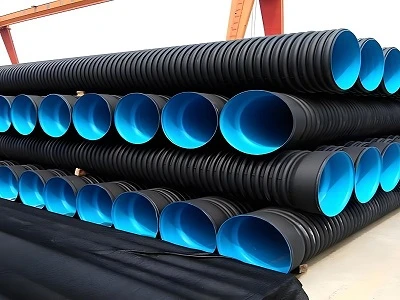
图 1
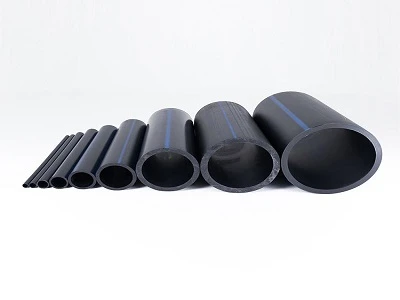
UHMWPE has a very smooth internal surface and a low coefficient of friction.
When mineral slurry moves through the pipe, the particles encounter a relatively smooth polymer surface rather than a rough metallic surface.
That matters in long pipelines.
It can help reduce flow resistance and limit the tendency of material to remain attached to the inner wall. UHMWPE also provides good resistance to many chemical media, which is useful where the slurry contains salts, acidic components, alkaline substances or processing chemicals.
For mining applications, the attraction is really the combination:
wear resistance + smooth surface + chemical resistance + impact resistance.
No single property tells the whole story.
Where SRTP Fits
SRTP, or steel wire reinforced polyethylene composite pipe, approaches the problem from another direction.
The pipe contains a high-strength steel wire reinforcement layer between polyethylene layers. The reinforcement increases the pressure-bearing capability while the polyethylene provides corrosion resistance and a relatively smooth flow surface.
That makes SRTP useful for high-pressure mine water, drainage and other pressurized fluid systems.
It can also be considered for slurry service when the internal layer is suitable for the actual medium.
But this point deserves attention when comparing SRTP with UHMWPE:
The reinforcement layer and the working inner surface perform different jobs.
Steel wire helps with structural pressure resistance. The inner polymer layer is the part directly exposed to the slurry.
If severe abrasion is expected, the wear performance of that inner layer becomes an important specification.
Long-Distance Pipelines Need More Than a Pressure Rating
A long slurry line may include several pump stations, elevation changes and numerous fittings.
The pipe can also be exposed to outdoor temperature changes and difficult installation conditions.
For buyers, it is worth looking beyond the nominal pressure number and checking the complete operating picture:
|
Selection Item |
Why It Matters |
|
DN |
Determines flow area and pipe size |
|
Working Pressure |
Determines pressure rating |
|
Slurry Concentration |
Affects abrasive loading |
|
Particle Size |
Influences impact and wear |
|
Particle Hardness |
Strongly affects abrasion |
|
Flow Velocity |
Changes particle-wall contact |
|
Pipeline Length |
Influences total flow resistance |
|
Elevation Difference |
Affects pumping pressure |
|
Elbows / Tees / Reducers |
Can create local wear |
|
Temperature |
Affects material selection |
This information gives a much more useful basis for selecting a mining slurry pipe.
Product Features

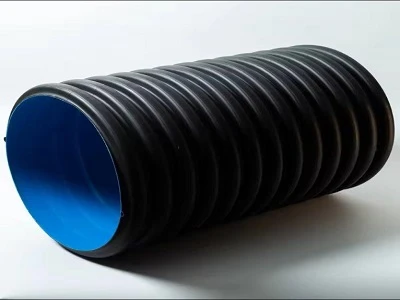
图 2
High Abrasion Resistance
UHMWPE is suited to mining applications where hard mineral particles continuously contact the internal wall.
Smooth Inner Surface
The low-friction surface helps slurry move through the pipeline and can reduce the tendency of fine mineral material to stick to the wall.
Chemical Resistance
UHMWPE has good resistance to many acidic, alkaline and saline environments encountered in mining.
Impact Resistance
Mineral particles do not always slide gently along the pipe wall. Larger or angular particles can create repeated impact, particularly around fittings.
Lightweight
Compared with many steel-based pipe systems, UHMWPE pipe is relatively light, which can make transportation and handling easier.
Multiple Pressure Options
UHMWPE mining pipe can be supplied in different pressure ratings. The correct PN class should be selected according to pipe diameter, working pressure and the actual pipeline design.
Product Parameters
|
Parameter |
Typical Specification |
|
Material |
UHMWPE |
|
Molecular Weight |
>1.5 million g/mol |
|
Diameter |
DN50–DN1200 |
|
Pressure Rating |
PN1.0–PN10 |
|
Standard Length |
9 m / 12 m |
|
Working Temperature |
-269°C to +80°C |
|
Applications |
Mining slurry, tailings, concentrate, mineral slurry |
|
Connection |
Flange, mechanical or customized |
Actual pressure and wall design should be confirmed according to diameter, working pressure, slurry conditions and installation requirements.
Comparison: UHMWPE vs SRTP
SRTP is not simply a competing version of UHMWPE.
Its steel-wire reinforcement gives it a clear advantage when high pressure and structural reinforcement are major requirements. It can be particularly useful in mine water systems and other pressurized applications.
UHMWPE puts more emphasis on the working surface exposed to abrasive slurry.
|
Property |
SRTP |
UHMWPE |
|
Reinforcement |
High-strength steel wire |
Material/design dependent |
|
Pressure Capability |
High |
Available in different PN ratings |
|
Corrosion Resistance |
High |
High |
|
Abrasion Resistance |
Depends on inner layer |
Very High |
|
Internal Surface |
PE-based |
UHMWPE |
|
Weight |
Lower than conventional steel pipe |
Relatively Low |
|
Main Strength |
Pressure reinforcement |
Abrasion resistance and low friction |
For a high-pressure slurry line, SRTP can make sense where structural reinforcement is the priority.
For abrasive slurry, UHMWPE offers a different advantage: the material used at the working surface is itself highly wear resistant.
When both requirements are important, the decision should be based on the complete pipe construction, not just the product name or pressure rating.
FAQ
Can UHMWPE pipe be used for high-pressure mining slurry?
Yes, UHMWPE pipe can be supplied in different pressure ratings, including PN1.0–PN10 depending on diameter and pipe design. The required PN rating should be determined from the actual working pressure and pipeline conditions.
Does high pressure directly cause pipe wear?
Pressure and abrasion are different mechanisms. Wear is more closely related to particle hardness, particle size, slurry concentration, flow velocity and changes in flow direction.
Is SRTP suitable for abrasive slurry?
It can be, depending on the inner layer and the actual slurry conditions. The steel-wire reinforcement mainly addresses pressure and structural requirements; the internal polymer layer is directly exposed to the slurry.
Which parts of a mining slurry pipeline should receive extra attention?
Elbows, tees, reducers and pump discharge sections deserve particular attention because changes in flow direction or velocity can increase local wear.
Request a UHMWPE Pipe Quotation
|
Step |
Process |
|
1 |
Send Requirements - DN, pressure, quantity and application |
|
2 |
Specification Confirmation - Pipe type, size, wall thickness and connection |
|
3 |
Quotation - Price, lead time, packing and shipping terms |
|
4 |
Order & Production - Contract, payment and production |
|
5 |
Inspection & Delivery - Quality inspection and shipment |
For UHMWPE mining pipe, UHMWPE lined steel pipe, UHMWPE elbows and link flanges, send us:
DN + PN + Slurry Type + Solid Concentration + Particle Size + Flow Rate + Pipeline Length + Quantity
Luoyang Zhengju New Materials Technology Co., Ltd.
WhatsApp:+86 19937270645
Email: baibaili456@gmail.com
Wechat: +86 19937270645
Get Best Price for Your Grinding Slurry Pipeline