I. Material Characteristics and Thermal Conductivity Efficiency
The core advantage of graphene floor heating pipes lies in their nanoscale material structure. The thermal conductivity of graphene is as high as 5300W/(m·K), which is more than 10 times that of copper. This enables heat to be transferred rapidly with almost no loss. In practical applications, graphene floor heating pipes can achieve uniform ground heating within 3-5 minutes after being powered on, and the heat radiation efficiency is over 30% higher than that of traditional water heating systems. Its unique "planar heating" feature avoids the local overheating problem caused by the "linear heat transfer" of traditional pipes.

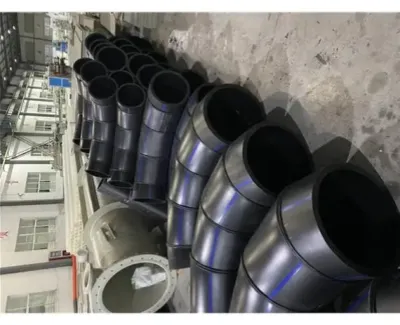
The PERT floor heating pipe (high-temperature resistant polyethylene) relies on the heat transfer through the circulation of hot water, with a thermal conductivity of only 0.4 W/(m·K). Although the uniformity of heat dissipation can be improved by increasing the pipe density (typically at a spacing of 15-20 cm), the system needs to preheat the water to the set temperature, which usually takes 1-2 hours. The experimental data from the Zhihu column shows that under the same power, the surface temperature of the graphene floor heating is 3-5°C higher than that of the PERT system.

II. Durability and Maintenance Costs
The PERT pipe material exhibits outstanding high-temperature resistance, capable of operating at a long-term temperature of 60℃ and enduring up to 90℃ for short periods. Its molecular structure is highly stable and has excellent resistance to creep. The designed lifespan typically exceeds 50 years. However, the system has two potential risks: Firstly, the probability of pipeline joint leakage (annual failure rate approximately 0.3%), and secondly, the need for regular cleaning of scale, with professional maintenance required every 2-3 years in areas with hard water.
Graphene floor heating adopts a fully enclosed circuit design and has no moving parts. The theoretical lifespan is in line with that of the building (more than 30 years). Its carbon crystal structure shows no performance degradation below 200℃, but attention should be paid to the issue of electromagnetic shielding in practical applications. Some early products had cases of local overheating leading to aging of the encapsulation materials. In recent years, this has been significantly improved through multi-layer coating technology.
III. Energy Consumption and Economic Comparison
From the perspective of installation cost, the PERT system has a significant price advantage. The cost for laying the system in a 100-square-meter ordinary residence is approximately 15,000 - 20,000 yuan, while the graphene floor heating, due to its complex material and process, costs around 25,000 - 35,000 yuan for the same area. However, the difference in energy consumption over the long term is remarkable:
- When the PERT system relies on a gas boiler, the cost per square meter for the heating season is approximately 25 - 35 yuan.
- The graphene floor heating uses intelligent time-controlled temperature regulation, and the energy consumption can be reduced to 15 - 20 yuan per square meter. If combined with photovoltaic power generation, it can be further decreased.
IV. Applicable Scenarios and Special Requirements
The PERT floor heating system is more suitable for:
1. Large-sized properties requiring continuous heating (over 120 square meters)
2. Renovation projects that already have a gas boiler installed
3. Special locations with electromagnetic sensitivity (such as medical institutions)
Graphene floor heating has the following advantages in the following scenarios:
1. Intermittent heating in small-sized rooms (can be quickly turned on and off)
2. Apartments with limited ceiling height (the laying thickness is only 3mm compared to 8cm of PERT)
3. Smart home systems requiring precise temperature control.