Introduction
Cold-region mining projects place buried pipelines under a combination of low temperatures, seasonal ground movement and difficult maintenance conditions. The greatest risk is not simply that the air temperature falls below zero. Problems arise when water in the surrounding soil freezes, expands and moves the ground supporting the pipeline.
For mine drainage and water-transfer lines, this movement can cause uneven support, joint displacement and localized deformation. For abrasive slurry pipelines, ground movement can also increase stress around connections and other vulnerable sections.
How Frost Heave Affects Buried Pipelines
Frost heave occurs when freezing ground develops ice lenses and pushes surrounding soil upward. During thawing, the soil may soften and settle. A pipeline crossing areas with different soil moisture, frost depth or ground composition can therefore experience uneven movement rather than uniform displacement.
Flexible pipes can accommodate some deformation, but flexibility alone does not eliminate the risk. Pipe diameter, wall thickness, burial depth, bedding, backfill and joint design all influence performance. Poorly compacted bedding or abrupt transitions between different ground conditions may concentrate loads on a short section of pipe.
Choosing Between UHMWPE, HDPE and SRTP
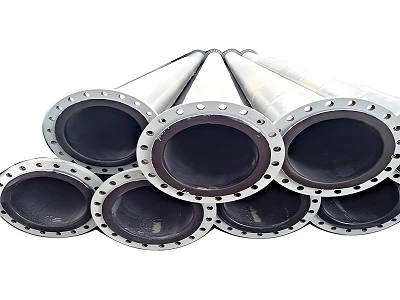
UHMWPE is worth evaluating for abrasive mine slurry because of its wear resistance and relatively low weight. In cold regions, however, the selected product must also be checked for its documented low-temperature performance, joint behavior and installation limits.
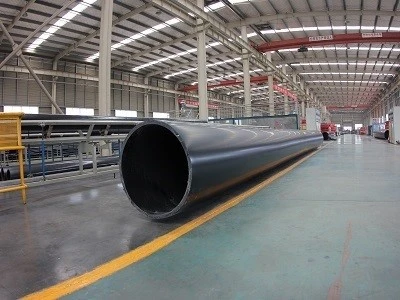
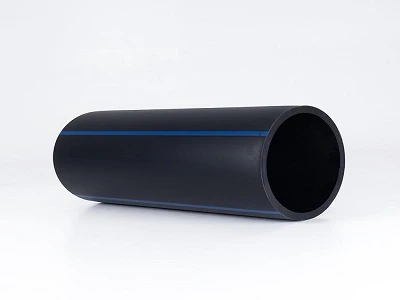
HDPE is a candidate for mine drainage and water-transfer pipelines where the pressure class, SDR, soil support and temperature conditions are suitable. Its flexibility can help accommodate ground movement, but the pipeline still requires proper bedding and backfill design.
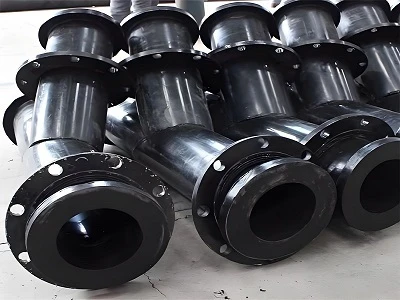
SRTP combines polymer layers with steel-wire reinforcement. It may be considered where the project requires a reinforced pressure-pipe structure, but its response to ground movement depends on the complete pipe construction and connection system. Reinforcement should not be treated as automatic protection against frost heave or settlement.
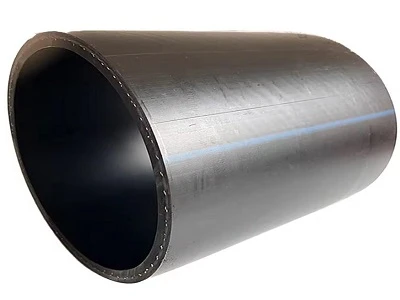
Illustrative Pipe Specification Parameters
The following table provides a preliminary specification framework for project discussion. These are example dimensions and SDR classes, not confirmation that every pipe material is available in these combinations or suitable for a particular mine.
|
Parameter |
Example A |
Example B |
Example C |
|
Nominal outside diameter |
110 mm |
225 mm |
315 mm |
|
Example SDR for a compatible HDPE system |
SDR11 |
SDR17 |
SDR11 |
|
Approximate wall thickness at the stated OD and SDR |
10.0 mm |
13.2 mm |
28.6 mm |
|
Nominal pressure class for PE100 water pipe at 20째C, subject to applicable standard |
PN16 |
PN10 |
PN16 |
|
Cold-region design check |
Frost depth and bedding |
Ground movement and joint strain |
Settlement, support and pressure |
Wall thickness is calculated approximately as outside diameter divided by SDR. The pressure classes shown are conventional PE100 reference values at 20째C; they must not be applied automatically to UHMWPE or SRTP, other media, elevated temperatures or every manufacturer's product.
Installation Measures That Reduce Risk
The pipeline route should be reviewed for frost-susceptible soil, groundwater, drainage paths and transitions between rock and softer ground. Where required, the design should consider burial below the local frost-affected zone, suitable granular bedding, controlled backfill and protection against localized settlement.
At connections, the designer should check allowable angular deflection, axial movement and the need for flexible transitions. The installation team should also prevent pipe damage during handling in low temperatures and follow the manufacturer's requirements for jointing.
FAQ
Can HDPE pipe be used in freezing climates?
It can be suitable for many cold-region applications, but the specific material grade, pipe design, operating conditions and installation procedure must be verified. Frozen ground movement and low-temperature handling require separate consideration.
Does a thicker pipe wall prevent frost heave damage?
Not by itself. Wall thickness affects structural capacity, but uneven ground movement, poor bedding and joint loads may still cause problems. The complete buried-pipe system must be designed.
Is UHMWPE suitable for mine slurry in cold regions?
It may be suitable where its wear performance and operating limits match the slurry duty. The manufacturer should confirm the specific product's low-temperature and connection requirements.
Conclusion
Cold-region pipeline reliability depends on managing the ground around the pipe as carefully as selecting the pipe itself. Frost depth, groundwater, bedding, backfill and joint movement should be evaluated alongside operating pressure and conveyed medium. A project-specific design is more reliable than choosing a pipe based on material name alone.
Primary Keyword
mining pipeline selection in cold regions
Secondary Keywords
frost heave pipeline design, HDPE pipe cold climate, UHMWPE mining slurry pipe, SRTP pressure pipe, mine pipeline ground movement, buried pipe settlement