Introduction
Abrasive mining slurry can wear the internal surface of a pipeline long before the outside shows any obvious damage. For this reason, mining operators often consider materials that can resist abrasion while handling the required pressure and operating conditions.
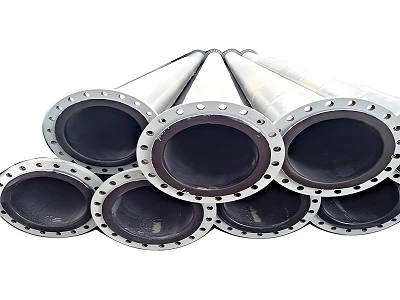
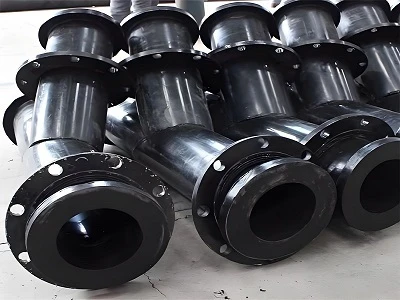
UHMWPE solid-wall pipe and UHMWPE-lined steel pipe both use ultra-high molecular weight polyethylene as a wear-resistant working surface. However, their structures are different. Solid-wall pipe uses UHMWPE for the pipe wall itself, while lined steel pipe combines an internal UHMWPE liner with an external steel shell.
That difference affects more than the material list. It influences structural support, weight, connections, installation and maintenance. Understanding the two constructions helps buyers make a more informed choice for their slurry pipeline.
1. How the Two Pipe Structures Differ
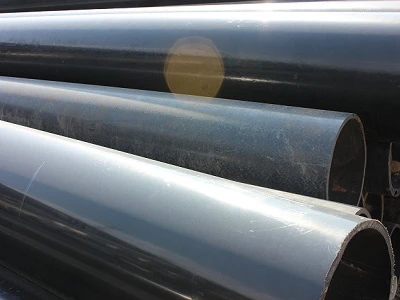
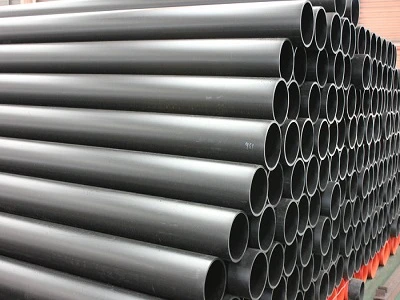
UHMWPE solid-wall pipe is manufactured from UHMWPE as the main pipe-wall material. The same wall provides the internal surface and the structural body of the pipe.
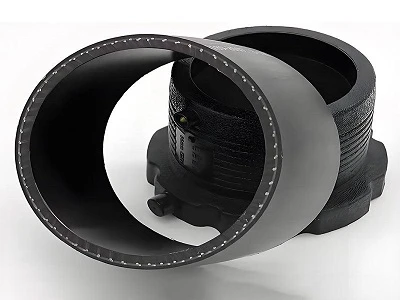
UHMWPE-lined steel pipe uses a different arrangement. A steel pipe forms the outer structural shell, while UHMWPE provides the internal lining exposed to the transported medium.
|
Comparison item |
UHMWPE solid-wall pipe |
UHMWPE-lined steel pipe |
|
Main structure |
UHMWPE pipe wall |
Steel shell with UHMWPE liner |
|
Internal working surface |
UHMWPE |
UHMWPE |
|
Structural support |
UHMWPE wall and complete pipe design |
Primarily the steel shell and complete composite design |
|
Internal abrasion resistance |
Depends on UHMWPE grade, wall and slurry conditions |
Depends on liner material, thickness and slurry conditions |
|
Internal corrosion resistance |
UHMWPE resistance to compatible media |
UHMWPE liner protects the internal surface when intact |
|
Relative weight |
Generally lighter |
Generally heavier because of the steel shell |
|
Handling requirements |
Depend on diameter and wall thickness |
Include the weight and handling needs of the steel shell |
|
Connection design |
Must suit the polymer pipe and pressure requirements |
Must accommodate both the steel structure and liner |
|
Typical consideration |
Lightweight polymer pipe structure |
Steel-supported structure with a wear-resistant inner surface |
The table describes general construction differences. It does not establish that one option has a higher pressure capacity or longer service life in every project. Those outcomes depend on the actual product design and working conditions.
2. What Makes UHMWPE Solid-Wall Pipe Attractive?
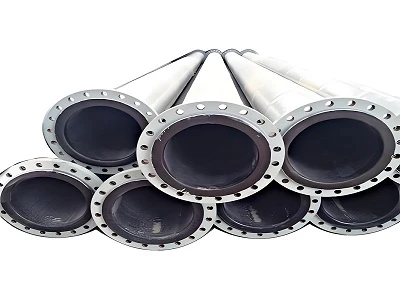
Solid-wall UHMWPE pipe combines the internal wear-resistant surface and the pipe body in one material structure.
Its main characteristics include high abrasion resistance, a smooth internal surface, low friction characteristics, resistance to many corrosive chemicals and relatively low weight compared with many steel pipe systems.
For slurry transportation, these characteristics can help address repeated particle contact and the corrosion issues that may arise with unsuitable materials. The smooth surface may also help reduce friction resistance, although actual pressure loss depends on flow rate, diameter, slurry properties and pipeline geometry.
Another consideration is handling. Without a steel outer shell, the pipe can be lighter than a comparable steel-based system. This may simplify certain transportation and installation operations, but the required lifting equipment and support arrangements must still be determined by the actual pipe dimensions and weight.
Solid-wall UHMWPE pipe is not automatically suitable for every pressure or structural requirement. Buyers need to confirm the allowable pressure, wall thickness, connection system and installation conditions for the selected model.
3. Why Use UHMWPE-Lined Steel Pipe?
UHMWPE-lined steel pipe combines two materials with different functions.
The steel shell provides the structural body, while the UHMWPE liner provides the internal surface exposed to the transported material. This arrangement can be considered when a project requires a steel-supported pipe structure but also needs improved internal abrasion resistance.
For existing steel-based pipeline systems, lined pipe may also fit certain established structural or connection arrangements. However, compatibility with existing infrastructure must be checked rather than assumed.
The liner and steel shell must function together. The design needs to account for liner retention, end details, connections, operating pressure, temperature and any conditions that could damage or compromise the lining.
A steel shell does not make the internal liner irrelevant. If the liner is damaged or becomes detached, the pipe's resistance to the transported medium may change. Inspection and maintenance procedures should therefore consider both the liner and the steel structure.
4. Compare the Operating Conditions Before Choosing
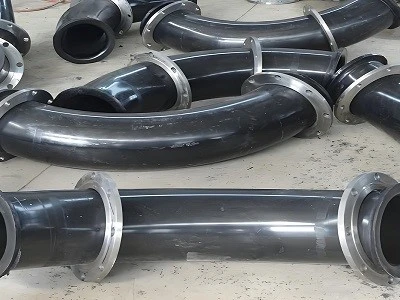
The right option depends on what the pipeline must do.
|
Project requirement |
Questions to evaluate |
|
Abrasive slurry |
What are the particle size, hardness, concentration and velocity? |
|
Internal corrosion |
What chemicals are present, and at what concentration and temperature? |
|
Pressure |
What are the normal and maximum expected operating pressures? |
|
External loading |
Is the pipe buried, exposed, supported or subject to vehicle loads? |
|
Installation |
What lifting equipment, route access and jointing methods are available? |
|
Maintenance |
Can critical sections be inspected or replaced easily? |
|
Existing infrastructure |
Must the new pipe connect to an existing steel system? |
|
Project economics |
What are the material, installation, maintenance and downtime implications? |
The comparison should consider the whole pipeline system rather than the purchase price of one pipe section. Installation equipment, connection work, support requirements and maintenance access can influence the final project decision.
5. Pressure and Connection Design
Neither the material name nor the presence of steel reinforcement is enough to establish the allowable operating pressure. The rating must come from the manufacturer's design and technical documentation for the selected pipe.
For solid-wall UHMWPE, the pipe wall, diameter, temperature and connection arrangement must meet the pressure requirements. For lined steel pipe, the steel shell, liner, end connections and composite construction must all be suitable for the service conditions.
Connections deserve particular attention because the pipe body and joint may not have identical design limitations. The selected system should specify the compatible connection type, pressure rating, gasket or sealing requirements and installation procedure.
For long-distance slurry transportation, the design should also account for pump operation, elevation changes and transient pressure conditions. The pipe should not be selected using normal operating pressure alone if the system may experience significant pressure fluctuations.
6. Installation and Maintenance Considerations
Solid-wall UHMWPE pipe and UHMWPE-lined steel pipe may require different handling procedures because their weights, structures and connection details differ.
For both types, installers should verify alignment, support and joint assembly. Excessive external loads, poor support or incorrect connections can create problems even when the internal material is suitable for abrasion resistance.
For lined steel pipe, inspection planning should include the condition of the liner where inspection is possible, particularly in locations exposed to demanding flow conditions. For solid-wall UHMWPE pipe, inspections should consider the overall pipe condition, connections, external loading and any visible signs of deformation or damage.
Maintenance intervals should be based on operating history, inspection findings and the consequences of failure rather than a generic service-life estimate.
FAQ
1. Which pipe has better abrasion resistance?
Both use UHMWPE as the internal working material. Actual abrasion performance depends on material grade, liner or wall thickness, manufacturing quality, particle characteristics and operating conditions.
2. Is solid-wall UHMWPE pipe lighter than lined steel pipe?
Generally, yes, because solid-wall UHMWPE pipe does not include the steel outer shell. Actual weight depends on diameter, wall thickness and the specific construction.
3. Is UHMWPE-lined steel pipe always suitable for higher pressure?
No. The allowable pressure depends on the complete product design, including the steel shell, liner, end connections and operating conditions. It should be confirmed from the manufacturer's technical documentation.
4. Can UHMWPE-lined steel pipe transport corrosive slurry?
It can be considered when the UHMWPE liner is chemically compatible with the medium and the complete pipe system is suitable for the operating conditions. Compatibility must be checked for the exact chemical composition, concentration and temperature.
5. Which option is easier to install?
Solid-wall UHMWPE pipe may offer handling advantages because of its lower weight, but installation also depends on diameter, pipe length, joint type, site access and lifting equipment. The project should compare the full installation requirements.
6. Which is better for mining slurry?
Neither option is universally better. Solid-wall UHMWPE may suit projects seeking a lightweight polymer pipe structure, while lined steel pipe may suit projects requiring a steel-supported structure. Selection should follow the project's pressure, wear, support and installation requirements.
Conclusion
UHMWPE solid-wall pipe and UHMWPE-lined steel pipe use the same general wear-resistant polymer but apply it in different structures.
The decision should be based on the pressure requirement, slurry characteristics, mechanical support, installation method, connections and maintenance plan. Comparing these factors gives mining buyers a more reliable basis for choosing a pipeline than relying on material names alone.
Primary Keyword
UHMWPE solid-wall pipe vs UHMWPE-lined steel pipe
Secondary Keywords
UHMWPE solid-wall pipe, UHMWPE-lined steel pipe, mining slurry pipe comparison, wear-resistant mining pipeline, UHMWPE pipe structure, UHMWPE slurry transportation
Request a UHMWPE Pipe Quotation
|
Step |
Process |
|
1 |
Send Requirements - DN, pressure, quantity and application |
|
2 |
Specification Confirmation - Pipe type, size, wall thickness and connection |
|
3 |
Quotation - Price, lead time, packing and shipping terms |
|
4 |
Order & Production - Contract, payment and production |
|
5 |
Inspection & Delivery - Quality inspection and shipment |
For UHMWPE mining pipe, UHMWPE lined steel pipe, UHMWPE elbows and link flanges, send us:
DN + PN + Slurry Type + Solid Concentration + Particle Size + Flow Rate + Pipeline Length + Quantity
Luoyang Zhengju New Materials Technology Co., Ltd.
WhatsApp:+86 19937270645
Email: baibaili456@gmail.com
Wechat: +86 19937270645
Get Best Price for Your Grinding Slurry Pipeline.