Introduction
Iron ore slurry does not wear a pipeline evenly. Serious damage may develop at a bend, a low point, a transition between pipe sections, or a location where the slurry repeatedly changes direction. By the time a leak becomes visible, the pipe wall may already have lost a considerable amount of material.
For iron ore operations in South Africa, pipeline wear is more than a maintenance issue. Unexpected repairs can interrupt slurry transfer, delay downstream processing, increase maintenance labor, and create additional work around pumps and pipeline supports.
UHMWPE (ultra-high-molecular-weight polyethylene) pipe is one option for abrasive slurry transport because of its wear resistance, low-friction surface, corrosion resistance, and relatively low weight. However, choosing a pipe material is only part of the solution. Slurry properties, operating velocity, pressure, pipeline geometry, and installation quality all influence how well a system performs.
This article examines where UHMWPE pipe may be useful in South African iron ore operations, what engineers should evaluate before specifying it, and which details should be checked before placing an order.
1. Why Iron Ore Slurry Can Wear Through a Pipeline
Iron ore processing may involve crushing, grinding, classification, concentration, and tailings handling. Depending on the process stage, the transported material may contain coarse particles, fine mineral solids, process water, or a mixture of different particle sizes.
Hematite and magnetite are common iron-bearing minerals. Their hardness and the size, shape, and concentration of particles in the slurry influence the degree of abrasion. The behavior of the complete slurry, rather than the mineral name alone, determines the wear experienced by a pipeline.
Three operating conditions deserve particular attention.
Particle Impact and Sliding Abrasion
Solid particles moving through a pipe can slide along the inner wall or strike it at an angle. Larger or more angular particles may cause more severe local damage, particularly where the flow changes direction. The actual wear rate depends on particle characteristics, concentration, velocity, and the mechanical properties of the pipe material.
A pipeline carrying fine particles at a moderate concentration may experience a different wear pattern from one transporting coarse particles at a higher concentration. The mineral name alone is not enough to predict the service life of the pipe.
Changes in Flow Direction
Straight pipe sections do not always experience the same wear as bends or other geometric transitions. At a bend, particles may continue along their original trajectory while the liquid changes direction. This can concentrate particle impacts on particular areas of the pipe wall.
A pipeline inspection that records only the general condition of straight sections may therefore miss the locations most likely to require attention. When repeated repairs occur in the same area, the inspection should include the local geometry, flow conditions, and support arrangement rather than focusing only on the damaged material.
Changes in Flow Conditions
A slurry pipeline operates within a practical velocity range. If the velocity is too low for the transported solids, particles may settle and accumulate. If the velocity is unnecessarily high, particle impacts and frictional losses may increase.
There is no single velocity suitable for every iron ore slurry. The appropriate operating range depends on particle-size distribution, solids concentration, slurry density, pipe diameter, inclination, and the characteristics of the pumping system.
For this reason, replacing a worn pipe with a more wear-resistant material without examining the original operating conditions may leave the underlying problem unresolved.
2. Where UHMWPE Pipe Fits into Iron Ore Slurry Transport
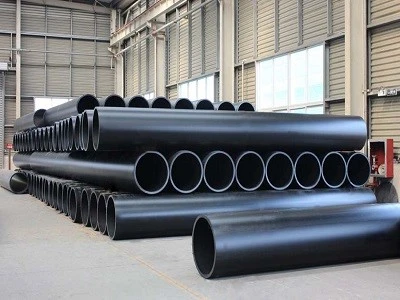
UHMWPE is a polyethylene material with an exceptionally high molecular weight. Its properties make it useful in applications where abrasion, corrosion, and material handling are important considerations.
For iron ore mines, its potential benefits are most relevant when the pipeline transports abrasive solids and when the pipe's pressure rating, temperature limits, dimensions, and connection design are suitable for the actual duty.
Wear Resistance Under Abrasive Service
UHMWPE pipe is selected for applications in which repeated contact with solid particles can gradually reduce the internal wall thickness of conventional pipe materials. Its wear-resistant surface can help reduce the frequency of wear-related maintenance in suitable operating conditions.
However, wear resistance should not be treated as a universal number. Test results depend on the test method, abrasive material, particle size, load, and operating conditions. A comparison between UHMWPE and steel is meaningful only when the test conditions are comparable.
For a mine evaluating replacement materials, the most useful evidence includes the test method, the abrasive medium, the reported result, and the relevance of the test to the actual slurry.
A Smooth Internal Surface
The internal surface of UHMWPE pipe can provide low resistance to flow. This can be beneficial in slurry transport, where pressure losses affect pumping requirements and operating costs.
The final hydraulic performance still depends on the pipeline's internal diameter, length, fittings, elevation changes, slurry characteristics, and operating velocity. A smooth pipe surface alone does not establish the total energy consumption of the system.
Engineers should compare the proposed pipe with the existing installation using a hydraulic calculation rather than assuming that a material change will automatically reduce pumping costs.
Corrosion Resistance
Iron ore operations may use process water containing dissolved salts or other chemicals. Depending on the process, the pipeline may also encounter cleaning agents or treatment chemicals.
UHMWPE generally offers good resistance to many aqueous corrosive environments. Nevertheless, chemical compatibility should be checked against the actual medium, concentration, and temperature. Where oxidizing chemicals or unusual process conditions are present, a specific compatibility review is advisable.
Corrosion resistance can be particularly useful when abrasion and chemical exposure occur together. It does not remove the need to evaluate mechanical loading, pressure, or temperature.
Lower Handling Weight
Compared with many metal pipe systems of equivalent external dimensions, UHMWPE pipe can be lighter, which may simplify transportation and handling at the installation site.
This can be helpful in remote mine locations where equipment access, lifting arrangements, and maintenance logistics affect installation work. The weight advantage does not mean that supports, anchors, or joint loads can be ignored. The support arrangement must account for the pipe's operating condition, contents, span, and installation layout.
3. The First Question Is Not "Which Pipe Is Most Wear-Resistant?"
A more useful question is: Where is the current pipeline failing, and why?
Consider two common maintenance situations.
In the first, a straight section gradually loses wall thickness over a broad area. This pattern may indicate sustained abrasion along the flow path. Reviewing the slurry's particle distribution, solids concentration, and operating velocity can help identify the main contributors.
In the second, damage is concentrated near a bend or a transition. Localized particle impact, flow separation, turbulence, or changes in the internal geometry may be contributing to the problem. In this case, changing the material without reviewing the pipeline layout may not deliver the expected improvement.
Before selecting UHMWPE pipe, maintenance and engineering teams should review the following information.
|
Item to Investigate |
Why It Matters |
|
Existing wear location |
Helps distinguish distributed wall wear from localized damage |
|
Slurry solids concentration |
Influences the amount of abrasive material passing through the pipe |
|
Particle-size distribution |
Helps identify the potential effect of coarse particles and mixed particle sizes |
|
Particle shape and hardness |
Affects the nature and severity of abrasion |
|
Operating flow rate and velocity |
Helps assess both settling risk and excessive wear |
|
Working and transient pressure |
Determines the required pressure capability of the pipe system |
|
Pipeline diameter and elevation profile |
Influences hydraulic performance and solids transport |
|
Current repair history |
Identifies recurring failure locations and maintenance patterns |
These details provide a stronger basis for material selection than a general comparison of pipe materials.
4. Pressure Rating Must Match the Actual Duty
A pipe intended for abrasive slurry transport must also withstand the pressure imposed by the system. Wear resistance cannot compensate for an unsuitable pressure rating.
The design review should distinguish between normal operating pressure and the maximum pressure the system may experience. Pump starts and stops, valve operation, changes in flow, and other operating events can create transient pressure conditions.
Engineers should also consider the effect of temperature on the material's allowable pressure, the dimensions of the pipe, the connection system, and the applicable design standard.
A nominal pressure value should not be selected in isolation. The allowable operating conditions need to be confirmed from the manufacturer's technical documentation and the design requirements of the project.
For an existing steel pipeline being considered for replacement, the engineering review should include the current system pressure, pump characteristics, elevation differences, and any pressure surges that have occurred. The new pipe system must be suitable for these conditions, not simply for the average pressure shown on an operating gauge.
5. Pipe Connections and Installation Can Determine the Result
Even a suitable pipe material can perform poorly if connections are incorrectly assembled or the pipeline is inadequately supported.
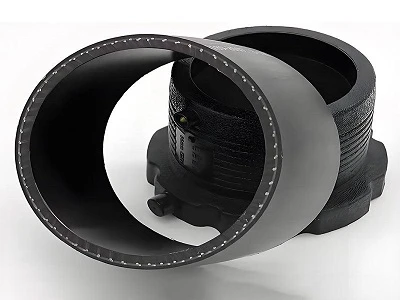
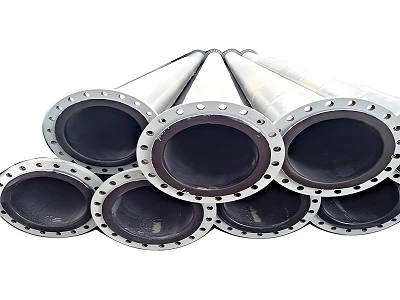
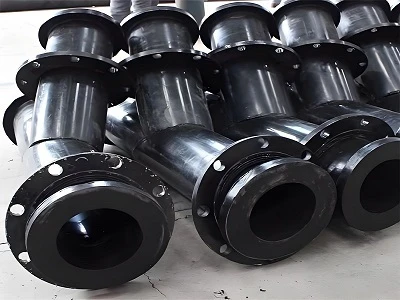
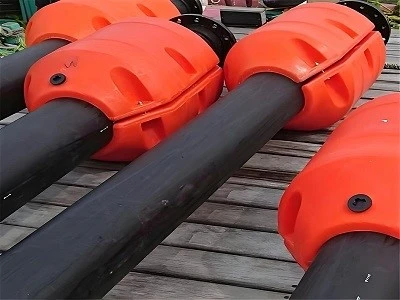
UHMWPE mining pipe systems may use flange connections, depending on the product design and project requirements. Before installation, the contractor should confirm the flange dimensions, sealing arrangement, bolt requirements, alignment tolerances, and the manufacturer's assembly procedure.
The connection should not be forced into alignment by tightening bolts. Excessive misalignment can introduce loads that the joint was not designed to accommodate.
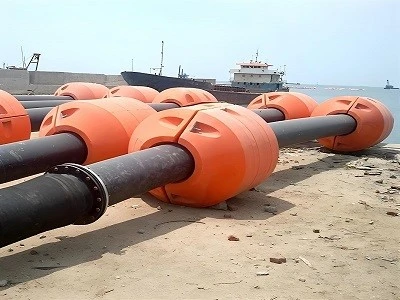
Support and anchoring arrangements also deserve attention. Pipe supports must account for the weight of the pipe and slurry, the geometry of the installation, and loads generated during operation. Changes in direction, equipment interfaces, and transitions between different pipe materials should receive particular attention during installation planning.
For buried pipelines, the installation team should verify the trench condition, bedding, backfill material, compaction, and protection against concentrated external loads. For above-ground systems, support spacing and the management of loads at connections should follow the pipe manufacturer's guidance and the engineering design.
Before commissioning, the contractor should inspect the completed pipeline and carry out the required pressure or other acceptance tests in accordance with the approved project procedure. Test pressure, duration, and acceptance criteria must come from the applicable design and testing requirements rather than from a generic recommendation.
6. UHMWPE Pipe Is Not the Right Answer for Every Pipeline
UHMWPE pipe can be a strong candidate for abrasive slurry duties, but material selection should reflect the actual operating environment.
For clean-water drainage, conventional HDPE pressure pipe may be a more economical and appropriate option when its pressure rating and installation requirements meet the project needs.
For high-pressure mine drainage or process water, an SRTP steel-wire-reinforced polyethylene pipe may be worth evaluating where its construction, pressure capability, connection system, and relevant certifications suit the duty.
For highly abrasive iron ore slurry, UHMWPE may offer advantages, but engineers should still check maximum particle size, solids concentration, flow conditions, operating pressure, temperature, and the manufacturer's documented limits.
A pipeline can also contain different service sections. Slurry transport, clean-water supply, drainage, and tailings handling do not necessarily require the same pipe material. Treating the whole site as one uniform application can lead to unnecessary cost or an unsuitable specification.
The goal is not to choose the most expensive or most wear-resistant pipe for every line. It is to select a system that can handle the actual medium, operating conditions, and maintenance requirements.
UHMWPE Mining Pipe: Technical Information to Confirm
For iron ore slurry transportation, pipe dimensions and material properties must be considered alongside abrasion resistance. The following table presents the published technical specifications for Zhengju UHMWPE mining slurry pipes.
|
Parameter |
Technical Specification |
|
Pipe Material |
UHMWPE (Ultra-High-Molecular-Weight Polyethylene) |
|
Pipe Diameter Range |
DN50–DN800 mm |
|
Wall Thickness |
Generally 5–30 mm |
|
Working Pressure |
0.6–2.5 MPa |
|
Standard Pipe Length |
Usually 6 m |
|
Customized Length |
Available upon request |
|
Material Density |
≥ 0.93 g/cm³ |
|
Tensile Strength |
≥ 21 MPa |
|
Elongation at Break |
≥ 350% |
|
Vicat Softening Temperature |
≥ 120°C |
|
Wear Resistance Test Result |
≤ 0.05 g/1.61 km |
|
Connection Method |
Flange connection |
Conclusion: Choose UHMWPE Pipe Based on Real Mining Conditions
In South African iron ore operations, slurry pipeline wear is not simply a material problem. Particle characteristics, slurry concentration, flow velocity, operating pressure, and pipeline layout all influence how quickly wear develops and where failures are likely to occur.
UHMWPE pipe offers a practical option for abrasive slurry transport, combining wear resistance, a smooth internal surface, and corrosion resistance. Its suitability, however, depends on the actual working conditions and the technical requirements of the pipeline system.
Before replacing an existing pipeline, mine operators and EPC contractors should identify the main wear locations, review operating data, and confirm the required pipe dimensions, pressure rating, and connection method. This approach helps avoid replacing one problem with another.
FAQ
1. Is UHMWPE pipe suitable for iron ore slurry?
It can be suitable for abrasive iron ore slurry when the material, dimensions, pressure rating, temperature limits, and connections match the operating conditions. A final decision should be based on the actual slurry and the manufacturer's technical documentation.
2. Can UHMWPE pipe eliminate slurry pipeline wear?
No pipe material eliminates wear under every condition. UHMWPE can help reduce abrasion-related damage in suitable applications, but particle characteristics, flow velocity, pipeline geometry, and operating conditions continue to influence wear.
3. Is UHMWPE pipe always better than steel pipe?
No. The appropriate choice depends on the duty, pressure, temperature, installation conditions, maintenance requirements, and lifecycle cost. Steel and UHMWPE have different mechanical and operating characteristics, so the comparison should be based on the actual project.
4. What causes localized wear at bends?
Particles may strike the pipe wall as the slurry changes direction. The extent and location of wear depend on the bend geometry, flow conditions, particle characteristics, and pipeline layout. Inspection results can help determine whether a material change, geometry review, or operating adjustment is appropriate.
5. What information is needed to select a UHMWPE slurry pipe?
At minimum, the supplier should know the required diameter, operating and maximum pressure, slurry composition, solids concentration, particle-size distribution, temperature, installation method, and connection requirements. More detailed information may be needed for final engineering approval.
6. Can UHMWPE pipe be used for mine tailings transport?
It may be suitable for certain tailings applications, depending on the solids content, particle characteristics, chemistry, pressure, and pipeline layout. Tailings properties vary between operations, so the pipe should be selected using the actual transport conditions rather than the term "tailings" alone.
7. What should be checked before replacing an existing slurry pipeline?
Review the current failure locations, remaining wall thickness, operating pressure, flow rate, slurry characteristics, pump conditions, and installation layout. These findings help determine whether the replacement should address material wear alone or whether the system design also needs attention.
Primary Keyword
UHMWPE pipe for iron ore slurry
Secondary Keywords
UHMWPE mining pipe, iron ore slurry pipeline, wear-resistant mining pipe, slurry transport pipe, UHMWPE slurry pipe, South Africa mining pipeline, abrasive slurry pipeline, mining pipe material selection.
Request a UHMWPE Pipe Quotation
|
Step |
Process |
|
1 |
Send Requirements - DN, pressure, quantity and application |
|
2 |
Specification Confirmation - Pipe type, size, wall thickness and connection |
|
3 |
Quotation - Price, lead time, packing and shipping terms |
|
4 |
Order & Production - Contract, payment and production |
|
5 |
Inspection & Delivery - Quality inspection and shipment |
For UHMWPE mining pipe, UHMWPE lined steel pipe, UHMWPE elbows and link flanges, send us:
DN + PN + Slurry Type + Solid Concentration + Particle Size + Flow Rate + Pipeline Length + Quantity
Luoyang Zhengju New Materials Technology Co., Ltd.
WhatsApp:+86 19937270645
Email: baibaili456@gmail.com
Wechat: +86 19937270645
Get Best Price for Your Grinding Slurry Pipeline.