Introduction
When an HDPE pipe leaves the extrusion die, it already has a tubular shape, but its final outside diameter has not yet been established.
The polymer is still hot and viscoelastic. It can expand after leaving the die and can also contract as its temperature decreases.
This is why HDPE pipe production requires a sizing stage.
Vacuum sizing is one of the key processes used to establish and stabilize the outside diameter of the pipe before the material is fully cooled.
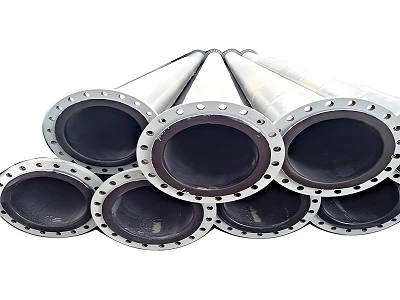
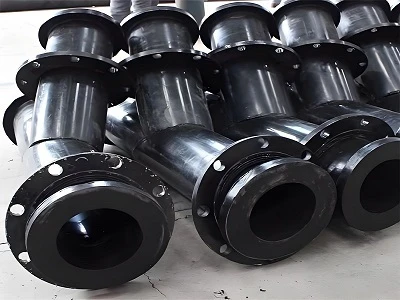
For mining HDPE pipe, this dimensional control is important because outside diameter affects pipe dimensions, roundness, connection compatibility, and installation.
1. What Is Vacuum Sizing?
After leaving the extrusion die, the hot HDPE tube enters a sizing sleeve.
A controlled vacuum is applied around the outside of the pipe. The pressure difference helps bring the hot pipe surface into contact with the internal surface of the sizing sleeve.
The sizing sleeve therefore provides a controlled reference for the outside geometry.
A simplified sequence is:
Extrusion die → hot tubular melt → vacuum sizing → cooling → dimensionally stable pipe
The vacuum does not simply "suck the pipe into shape."
Its function is to help establish a controlled outside geometry while the HDPE is still hot enough to be formed.
2. Why Does HDPE Need Sizing?
HDPE experiences dimensional changes immediately after leaving the die.
Two effects are particularly relevant.
The first is die swell, which occurs because the polymer melt partially recovers from the deformation experienced inside the die.
The second is thermal contraction, which occurs as the polymer cools.
These effects work during different stages of the forming process.
Therefore:
Die diameter ≠ final pipe diameter
The sizing system helps compensate for these effects and establishes the required outside dimension.

3. What Parameters Influence Vacuum Sizing?
Vacuum sizing cannot be treated as an isolated setting.
Its performance depends on several process variables.
|
Parameter |
Influence |
|
Vacuum level |
Controls contact between pipe and sizing sleeve |
|
Melt temperature |
Influences polymer viscosity and forming behavior |
|
Haul-off speed |
Determines residence time through the sizing section |
|
Extrusion output |
Influences material distribution |
|
Sizing sleeve geometry |
Provides the dimensional reference |
|
Cooling conditions |
Stabilize the established dimensions |
The appropriate operating window changes with pipe diameter, wall thickness, material grade, and production speed.
A process suitable for a small thin-wall pipe cannot simply be copied to a large thick-wall mining pipe.
4. What Happens If Vacuum Sizing Is Unstable?
If the sizing process is not stable, the outside dimensions can fluctuate.
Possible results include:
|
Dimensional issue |
Possible consequence |
|
Outside diameter too large |
Connection and installation problems |
|
Outside diameter too small |
Reduced flow area |
|
Poor roundness |
More difficult joining |
|
Longitudinal diameter variation |
Inconsistent pipe dimensions |
|
Unstable sizing |
Increased dimensional variation |
For large-diameter HDPE pipes, dimensional stability becomes particularly important because a small percentage variation represents a larger absolute dimensional difference.

5. How Does Vacuum Sizing Relate to Pipe Wall Thickness?
Vacuum sizing primarily controls the outside geometry. It should not be regarded as the sole mechanism controlling wall thickness.
Wall thickness is influenced by:
extrusion output + die geometry + melt condition + haul-off speed
At the same time, the final outside diameter is influenced by:
die forming + vacuum sizing + cooling + haul-off
The two dimensional systems are therefore connected.
This relationship becomes especially important when producing pipes according to a specific SDR.
For example:
SDR11 = Outside Diameter / Wall Thickness
If the target outside diameter is 225 mm, the theoretical wall thickness is approximately 20.45 mm.
Therefore, stable control of both dimensions is necessary to maintain the intended SDR.
6. Why Does This Matter for Mining Applications?
Mining drainage pipelines are often installed over long distances.
The pipe may be connected into long continuous lines, and the quality of the connection depends partly on consistent pipe dimensions.
For this reason, outside diameter is not merely a cosmetic specification.
It affects:
pipe joining → installation → alignment → hydraulic cross-section
A stable outside diameter also makes dimensional inspection more meaningful because measurements from different sections of the pipe can be compared against the same target.
FAQ
Does vacuum sizing determine the final pipe diameter?
It is a major part of the dimensional-control process, but the final dimension is also affected by melt temperature, die conditions, haul-off, and cooling.
Is higher vacuum always better?
No. The vacuum level must be matched to the material condition, pipe size, production speed, and sizing system. Excessive or insufficient vacuum can both create problems.
Does vacuum sizing control wall thickness?
Not directly. Wall thickness is primarily influenced by material output, die geometry, and line speed, although the complete forming process is interconnected.
Why is vacuum sizing important for large HDPE pipe?
Because dimensional deviations become more significant as pipe diameter increases. Stable sizing helps maintain outside diameter and roundness.
Conclusion
Vacuum sizing is a critical dimensional-control stage in HDPE pipe extrusion.
The hot pipe leaving the die is not yet dimensionally stable. Die swell, thermal contraction, melt temperature, extrusion output, haul-off speed, and cooling all influence its final geometry.
Vacuum sizing provides a controlled reference for establishing the outside diameter before the pipe is fully cooled.
For mining HDPE pipe, stable outside diameter and roundness contribute to more predictable joining, installation, and overall product consistency.
Request an HDPE Pipe Quotation
|
Step |
Process |
Details |
|
1 |
Send Requirements |
DN, pressure, medium, working temperature and application |
|
2 |
Specification Confirmation |
Pipe type, material grade, pressure rating, wall thickness/SDR and connection |
|
3 |
Quotation |
Price, lead time, packing and shipping terms |
|
4 |
Order & Production |
Contract, payment and production |
|
5 |
Inspection & Delivery |
Quality inspection and shipment |
For HDPE Mining Pipe, Send Us:
DN + PN/SDR + Medium + Working Temperature + Installation Method + Pipeline Length + Quantity
For mine drainage and dewatering applications, please also provide:
Application + Working Pressure + Installation Environment
For mineral-containing mine water, if available:
Water Chemistry / pH + Temperature + Suspended Solids
Luoyang Zhengju New Materials Technology Co., Ltd.
WhatsApp: +86 19937270645
Email: baibaili456@gmail.com
WeChat: +86 19937270645
Get Best Price for Your HDPE Mining Pipe.