Introduction
A mining pipeline failure rarely happens because the pipe could not handle pressure on the first day.
The bigger risk is what happens after months or years of continuous operation.
A mine water supply pipeline may run every day, carrying pressurized water through underground areas or remote sections of the mine. Once installed, repairing or replacing the pipeline is often much more difficult than installing it initially.
This is why experienced buyers do not only check the pressure rating of an HDPE pipe. They also need to understand the material's long-term pressure resistance.
This property is known as hydrostatic strength.
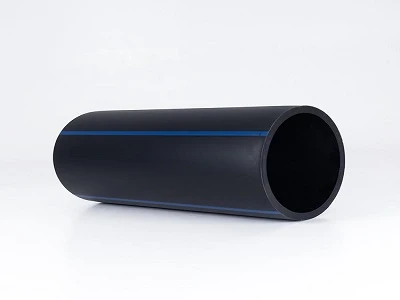
For HDPE mining pipes, hydrostatic strength determines whether the pipe can maintain reliable pressure performance throughout its service life.
A Pipe Can Pass a Pressure Test and Still Face Long-Term Challenges
During production, pressure testing is normally used to confirm whether a pipe can withstand a certain pressure.
However, mining applications are different from short laboratory tests.
A mine pipeline may experience:
Continuous internal water pressure.
Long operating hours.
Temperature changes.
Difficult maintenance conditions.
The pressure inside the pipe constantly pushes outward on the pipe wall. Over a long period, the material must continue resisting this stress without excessive deformation or loss of performance.
This is the difference between short-term pressure resistance and long-term hydrostatic strength.

Why Is Long-Term Pressure Resistance Important in Mining?
Mining operations depend heavily on reliable water systems.
A failure in a mine water pipeline can affect:
Underground water supply.
Dewatering operations.
Equipment cooling systems.
Production schedules.
The cost of a pipeline problem is not only the pipe replacement itself. It may also include downtime, labor, excavation and delayed operations.
Because many mining pipelines are difficult to access after installation, choosing a material with stable long-term pressure performance becomes an important part of pipeline planning.
What Happens Inside HDPE Pipe During Long-Term Operation?
HDPE is a polymer material.
Unlike rigid materials that may crack suddenly under excessive stress, HDPE has a certain level of flexibility and toughness.
However, like all polymers, HDPE experiences gradual changes when exposed to continuous loading.
This long-term behavior is called creep.
For pressure pipes, the material must be able to resist this gradual deformation while maintaining sufficient wall strength.
A high-quality HDPE pipe is designed around this long-term behavior rather than only its initial strength.
That is why hydrostatic strength is a key factor when evaluating HDPE pressure pipe performance.
Why Pressure Rating Alone Is Not Enough
Many buyers first compare PN ratings when purchasing pipes.
Pressure rating is important, but it does not tell the entire story.
Two pipes with the same pressure class may have different long-term performance depending on:
The quality of HDPE resin.
Manufacturing control.
Wall thickness design.
Operating temperature.
Expected service life.
For mining applications, the question should not only be:
"Can this pipe handle the pressure?"
The better question is:
"Can this pipe maintain pressure performance after years of continuous operation?"
How Does HDPE Hydrostatic Strength Benefit Mining Applications?
Good hydrostatic strength provides several practical advantages.
More stable operation
The pipe can maintain its pressure capability during long-term service.
Lower replacement risk
A reliable pipeline reduces the chance of unexpected shutdown caused by pressure-related failure.
Better underground performance
For underground installations, preventing failures is especially important because repair access is often limited.
Longer service planning
Mining companies can better estimate maintenance requirements when the pipeline material has predictable long-term behavior.

Hydrostatic Strength and Temperature Conditions
Temperature is another factor affecting HDPE pressure performance.
A pipeline operating in a cold underground mine and a pipeline exposed to high-temperature conditions may experience different material behavior.
As temperature increases, polymer materials generally become more affected by long-term loading.
Therefore, HDPE mining pipe selection should consider not only pressure but also the actual operating environment.
Typical factors include:
Operating temperature.
Water conditions.
Installation location.
Continuous working pressure.
Expected service period.
Typical HDPE Mining Pipe Parameters
|
Parameter |
Typical Specification |
|
Material |
HDPE PE100 |
|
Application |
Mining water supply, pressure drainage |
|
Diameter Range |
DN50–DN1200 mm |
|
Pressure Rating |
PN1.0–PN10.0 MPa |
|
Standard Length |
6 m / 9 m / 12 m |
|
Operating Temperature |
-40°C to +60°C |
|
Density |
≥930 kg/m³ |
|
Tensile Strength |
≥20 MPa |
|
Elongation at Break |
≥350% |
|
Connection |
Butt fusion / flange connection |
|
Key Performance |
Long-term hydrostatic strength |
How Should Mining Buyers Evaluate HDPE Pressure Pipes?
A reliable HDPE mining pipeline should be evaluated from the actual working condition.
Important information includes:
What pressure will the pipe continuously experience?
How long will the pipeline operate each day?
Is the pipe installed underground or above ground?
What is the water temperature and chemical condition?
Will future maintenance be difficult?
These questions help determine whether the selected HDPE pipe is suitable for the project.
FAQ
What is hydrostatic strength in HDPE pipe?
Hydrostatic strength describes the ability of HDPE pipe material to withstand internal pressure over a long period while maintaining structural performance.
Why is hydrostatic strength important for mining pipes?
Because mining pipelines often operate continuously for years. Long-term pressure stability is more important than only passing an initial pressure test.
Does a higher PN rating mean better long-term performance?
Not always. Pressure rating is only one part of pipe design. Material quality, temperature and operating conditions also affect service life.
Can HDPE pipes be used for underground mining applications?
Yes. HDPE is widely used in underground water supply and drainage systems because of its corrosion resistance, flexibility and long-term performance.
Conclusion
For mining pipelines, the most important pressure test is not only the one performed before delivery.
The real test happens after installation, when the pipe remains under pressure for years.
Hydrostatic strength is one of the key indicators that helps determine whether an HDPE mining pipe can maintain reliable performance during long-term operation.
When selecting a pressure pipeline, buyers should look beyond the initial pressure rating and consider the material's ability to handle continuous service conditions.
Primary Keyword
HDPE mining pipe hydrostatic strength
Secondary Keywords
HDPE pipe hydrostatic pressure, long term hydrostatic strength, HDPE pressure pipe, mining water supply pipe, underground mine water pipe, HDPE pipe pressure rating, polyethylene pipe performance
Request an HDPE Pipe Quotation
|
Step |
Process |
Details |
|
1 |
Send Requirements |
DN, pressure, medium, working temperature and application |
|
2 |
Specification Confirmation |
Pipe type, material grade, pressure rating, wall thickness/SDR and connection |
|
3 |
Quotation |
Price, lead time, packing and shipping terms |
|
4 |
Order & Production |
Contract, payment and production |
|
5 |
Inspection & Delivery |
Quality inspection and shipment |
For HDPE Mining Pipe, Send Us:
DN + PN/SDR + Medium + Working Temperature + Installation Method + Pipeline Length + Quantity
For mine drainage and dewatering applications, please also provide:
Application + Working Pressure + Installation Environment
For mineral-containing mine water, if available:
Water Chemistry / pH + Temperature + Suspended Solids
Luoyang Zhengju New Materials Technology Co., Ltd.
WhatsApp: +86 19937270645
Email: baibaili456@gmail.com
WeChat: +86 19937270645
Get Best Price for Your HDPE Mining Pipe.